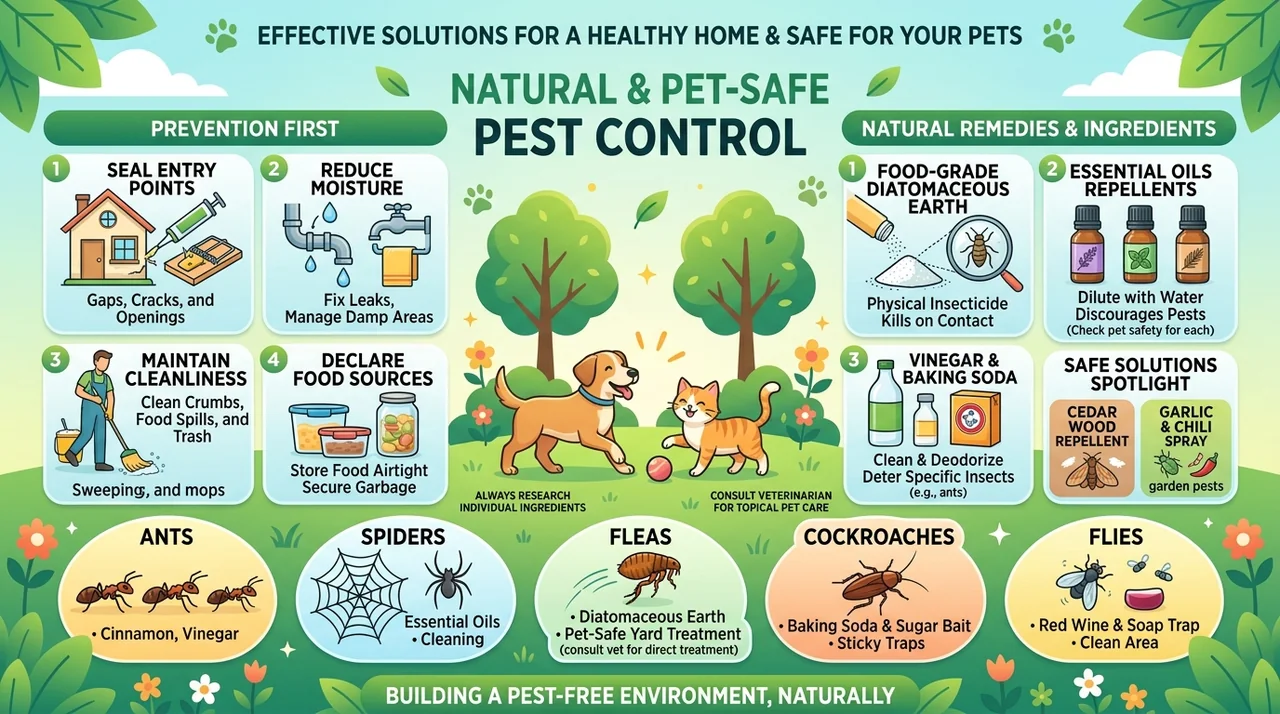


Natural pest control, done prevention-first, handles a large share of everyday pest pressure without heavy chemicals. The trick is knowing which low-risk tool to reach for, and in what order.
Organic Pest Control Methods and Integrated Pest Management
"Organic" or "natural" does not mean chemical-free, and it does not automatically mean safe. Good organic pest control methods favor the lowest-risk approach that will actually solve the problem, and use stronger tools only when gentler ones fall short. This is the core of integrated pest management (IPM): identify the pest correctly, remove what attracts it, use physical controls first, and reach for products last, choosing the least-toxic option that works.
Correct identification matters more than any product. Ants trailing to a sugar spill, pantry moths in old flour, and carpenter ants tunneling in damp wood all look like "bugs in the kitchen" but need different responses. Watch where pests travel and what they feed on before you treat anything.
Prevention First: Exclusion, Caulk, and Physical Controls
Most household pests are searching for three things. Take those away and you solve most problems without spraying anything.
- Food: Store dry goods in airtight glass or hard plastic. Wipe counters nightly, empty the trash often, and pick up pet food between feedings.
- Water: Fix dripping faucets, dry the sink at night, and improve airflow in bathrooms and basements. Damp conditions attract cockroaches, silverfish, and many ants.
- Shelter: Keep firewood and mulch away from the foundation, and repair torn screens.
Sealing entry with caulk and door sweeps
Exclusion is the most durable fix of all. Seal cracks around pipes, outlets, and baseboards with caulk, and add door sweeps. Closing entry points keeps the next generation of pests outside for good.
Physical controls and sticky traps
Physical controls do a lot of quiet work: a fly swatter, a vacuum for cluster flies or the first few ants, and sticky traps to monitor activity. Vacuuming is one of the most underrated tools for spiders, lady beetles, and even early cockroach activity.
Lower-Risk Products: From Diatomaceous Earth to Boric Acid
When you do need a product, several lower-toxicity options are widely used. Lower toxicity still means follow directions exactly.
Food-grade diatomaceous earth for crawling insects
Food-grade diatomaceous earth is a fine powder that damages the exoskeletons of crawling insects like ants, roaches, and bedbugs. Apply a light, barely visible layer in dry cracks and voids; heavy piles are less effective and messier. Wear a mask, since the dust can irritate lungs, and note that it stops working when wet.
Insecticidal soap and horticultural oil for plants
Insecticidal soap and horticultural oil are useful for soft-bodied insects on plants. They work on contact and break down quickly.
Essential oil sprays: peppermint oil and cedar
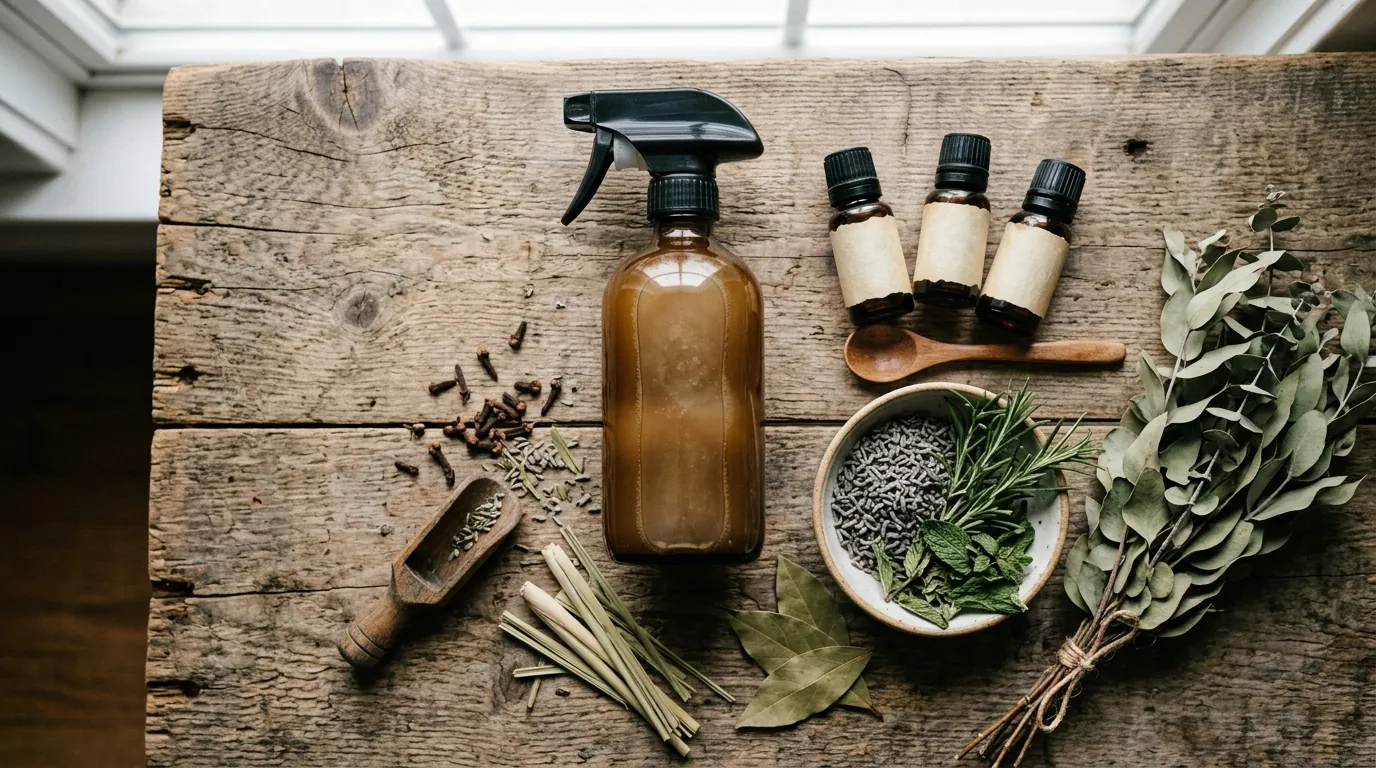
Essential oil sprays based on cedar, rosemary, or peppermint oil are available. Effects are usually short-lived, so they suit spot use, not a whole infestation.
Borax baits and boric acid bait stations
Borax baits and boric acid bait stations are slow-acting, which lets ants and roaches carry the active ingredient back to the colony. Place bait stations along trails, never as a broadcast dust across open surfaces.
Whatever you choose, read and follow the EPA product label. The label is the law: it tells you where a product may be used, how much to apply, and how to store it. Natural products can still harm people, pets, and beneficial insects like bees if misused, so never exceed the labeled rate.
Keeping Pets and Children Safe with Pet-Safe, Least-Toxic Choices
A pet-safe strategy leans hard on prevention, exclusion, and traps, because those carry the least exposure risk. When you do use a product:
- Keep pets and kids out of treated areas until sprays are dry or dusts are cleaned up, following the label's re-entry guidance.
- Place baits inside tamper-resistant stations or behind appliances where curious paws and hands cannot reach.
- Store all products in original containers, up high and out of reach.
Tea tree oil and other cautions
Be cautious with essential oils around pets. Some, including concentrated tea tree oil and pennyroyal oil, can be toxic to cats and dogs. If a person swallows or is exposed to a pesticide and shows symptoms, call Poison Control at 1-800-222-1222 (available 24/7 in the U.S.) or 911 for an emergency. If a pet is exposed or unwell, call your veterinarian right away, and keep the product label handy.
When to Call a Licensed Pest Professional
Prevention-first methods handle most everyday pests, but bring in a licensed pest professional when the situation outgrows DIY: termites or carpenter ants with hidden structural damage, stinging-insect nests in walls, rodents that keep returning, or bedbugs, which rarely clear without a coordinated treatment.
Many companies now offer IPM or "green" service plans that emphasize inspection, exclusion, and targeted low-risk products. Ask what they do besides spraying, how they identify the pest, and how you can prevent a repeat. A good pro teaches you as much as they treat.