

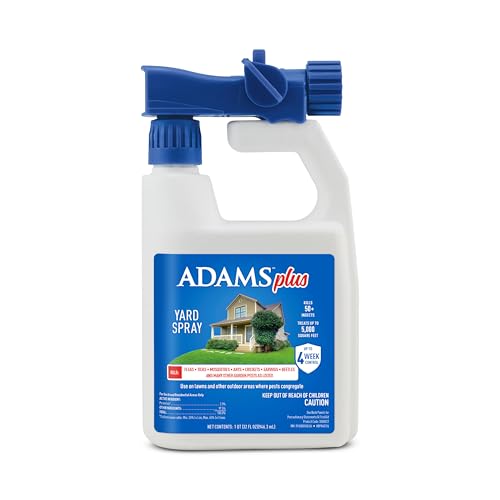
The best yard bug spray depends entirely on your target. Most products fall into two groups. Perimeter sprays leave a residual band on foundations and landscape edges to keep crawling insects out. Broadcast lawn treatments cover the turf for fleas, ticks, and ants.
What the Best Yard Bug Spray Is For
Knowing which problem you are solving prevents buying a whole-yard treatment when a targeted band would do. That is cheaper and lower-impact. The guiding principle is restraint. Treat the specific zones where pests travel and shelter, not the entire property by default. Over-treating a lawn costs money, harms beneficial insects, and rarely improves results.
Barrier and Perimeter Sprays Around the Foundation
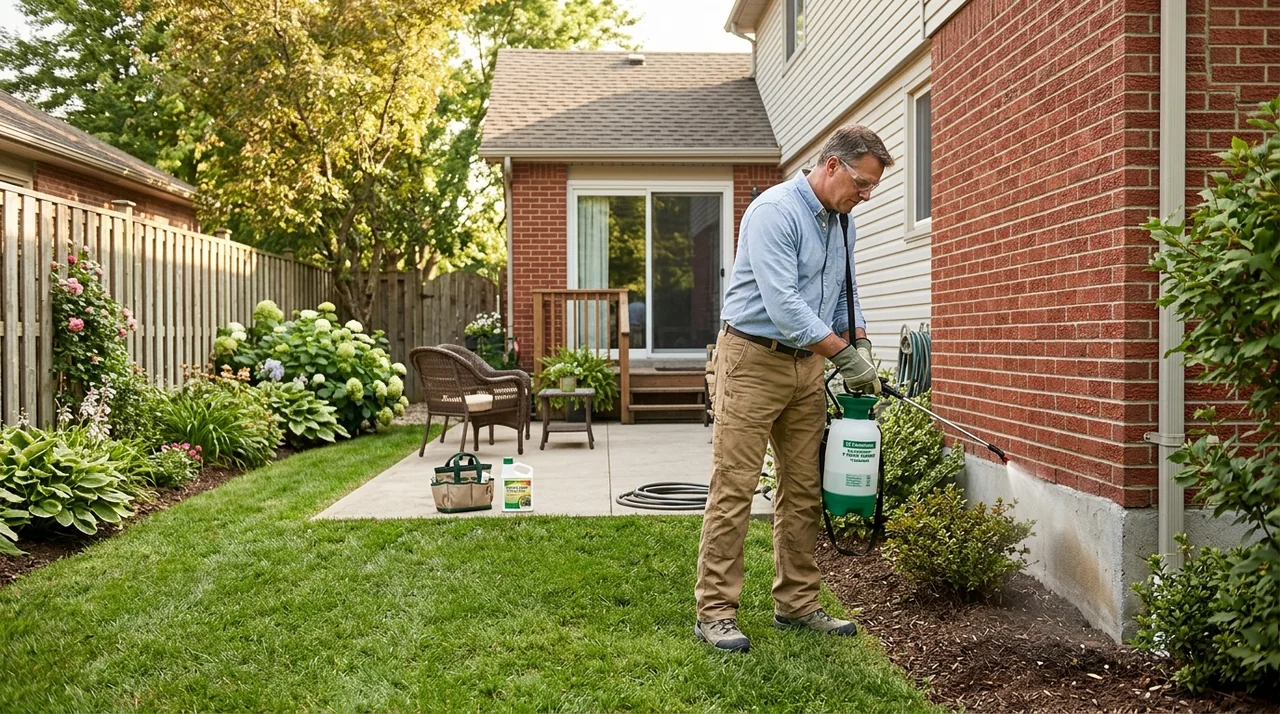
A perimeter treatment, sometimes sold as a barrier treatment, creates a treated band to intercept insects before they get inside. It runs along the foundation, around doors and windows, and a few feet up the wall. This barrier treatment targets the outdoor pests that try to cross it, including ants, spiders, and crickets. Spiders often follow other insects to the foundation, so cutting their prey helps. Insects crossing the band are affected over the following days or weeks. A barrier treatment fits neatly into Integrated Pest Management, because it targets a defined zone rather than the whole property.
Pyrethroids: Bifenthrin, Permethrin, and Lambda-Cyhalothrin
The active is usually a residual insecticide, most often a pyrethroid. Common pyrethroids include bifenthrin, permethrin, and lambda-cyhalothrin. Match the concentrate and dilution to the EPA label. Residuals break down with sun and rain, so you must reapply perimeter sprays periodically through the active season. Check the EPA label for how often you may reapply and the re-entry time.
Hose-End and Backpack Sprayers
Hose-end sprayers make quick work of large areas but give less precise dosing. Pump and backpack sprayers offer better control for a targeted band. Choose the tool that matches the job, and calibrate it before you start so you do not overapply.
Granular Lawn Insecticides for Fleas and Ticks
For pests living in the turf, different products apply. Granular lawn insecticides are spread and watered in to target fleas and ticks, ants, and grubs. Granules can be easier to apply evenly than liquids over large areas. Liquid lawn sprays coat grass and shrubs for the same pests.
Lawn and Mosquito Vegetation Sprays
Mosquito vegetation sprays coat the shady undersides of leaves where adult mosquitoes rest by day. They give temporary relief and must be reapplied. Coverage claims on the box tend to be optimistic. Expect real-world performance to fall short, and never compensate by exceeding the labeled rate.
Protect Pollinators and Follow the EPA Product Label
Yard sprays are broad-spectrum. They do not tell pests from bees and the predators that control pests naturally.
- Do not spray blooming plants or where pollinators forage. Treat when bees are inactive.
- Read and follow the EPA product label for target pests, sites, dilution, and re-entry time.
- Mind water. Many insecticides are toxic to fish, so keep sprays away from ponds and storm drains.
Source Reduction, Standing Water, and Runoff
A yard spray reduces pest pressure. It does not create a permanent force field. Source reduction is the real fix for mosquitoes. Dump standing water weekly, clean gutters, and keep a dry perimeter band. Do not apply before heavy rain that could cause runoff into waterways. Residuals fade, and insects re-enter from neighboring yards, so treat spraying as one layer in a plan.
Pair Spraying With Exclusion and Door Sweeps
Perimeter spraying works best with exclusion. Seal cracks and add door sweeps so the spray discourages while the sealing physically blocks. Skipping that and relying on spray alone leads to repeated applications and disappointment.
When to Call a Professional
Consider a licensed service when pressure stays high despite your treatments and source reduction, when you are targeting ticks or fleas over a large property, when you must treat near water features, or when you prefer a trained applicator handle the products and timing. Professionals calibrate equipment and apply materials within label and local rules, often with fewer, better-timed applications. For any pesticide exposure to a person, call Poison Control at 1-800-222-1222. Contact your veterinarian if a pet enters a treated area before it dries.