
German Cockroach
Blattella germanica · also called German roach, croton bug, steam bug
Quick answer
The German cockroach (Blattella germanica) is a small, tan indoor roach marked by two dark stripes behind its head. It thrives in warm, humid kitchens and bathrooms, breeds faster than any other common roach, and spreads bacteria and allergens. It rarely goes outdoors and infests homes and commercial kitchens year-round.
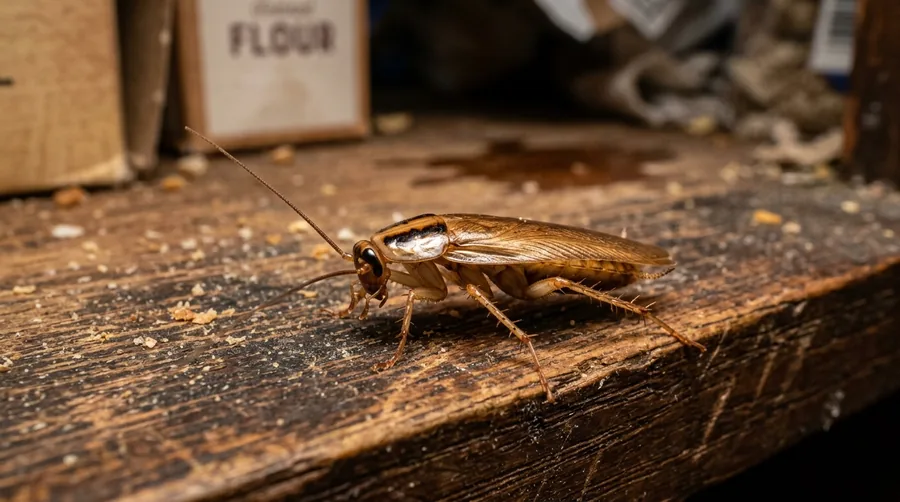
Light tan German cockroach with two dark stripes behind its head on a kitchen surface
Recommended Products


What it does
German cockroaches are nocturnal scavengers that hide by day in tight, warm cracks and emerge at night to feed. They move fast, stay close to food and moisture, and rarely fly. Seeing them in daylight usually signals a heavy, established infestation.
Where it lives
They live almost exclusively indoors, clustering in kitchens and bathrooms near warmth and water: behind refrigerators, dishwashers, and stoves, under sinks, and inside cabinet voids and appliance motors. They are found in homes, apartments, and commercial kitchens nationwide.
How it breeds
A female carries a light-brown egg case (ootheca) holding 30-40 eggs until just before hatching, producing several capsules in her life. Nymphs mature in as little as 6-8 weeks, so a single pair can spawn thousands of roaches within a year across multiple overlapping generations.
What it eats
German cockroaches are omnivorous scavengers. They eat grease, starches, sweets, and meats, and will also consume soap, toothpaste, glue, and other household residues when preferred food is scarce.
Identification
Adults are 1/2 inch (13-16 mm), light tan to brown, with two dark parallel stripes running behind the head. Nymphs are smaller and darker with a similar stripe. Though they have wings, they seldom fly.
Signs of an infestation
- Pepper-like or coffee-ground droppings in drawers and along cabinet edges
- Small brown egg cases (oothecae) tucked into cracks
- A musty, oily odor in heavy infestations
- Live roaches scattering when lights turn on at night
- Dark smear marks in humid corners
Prevention tips
- Keep counters, floors, and sinks free of food and grease
- Store food in sealed containers and take out trash regularly
- Fix leaks and dry out sinks to remove water sources
- Seal cracks and gaps around cabinets, pipes, and baseboards
- Reduce cardboard and paper clutter where they hide
Professional solutions
Light infestations often respond to gel baits and insect growth regulators. But German roaches breed fast and resist many sprays, which can also scatter them and worsen spread. Persistent or large infestations warrant a professional using baiting rotations and monitoring.
Health & safety
German cockroaches do not bite, but they mechanically carry bacteria such as Salmonella and E. coli onto food surfaces. Their droppings and shed skins are a major indoor allergen and asthma trigger, especially for children. Risk is moderate but real in kitchens.
Relevant Products



Frequently asked questions
How do I know if I have German cockroaches?
Look for pepper-like droppings along cabinet edges and drawers, small brown egg cases in cracks, a musty oily odor, and roaches scattering when you turn on a light at night. Seeing them in daylight usually means a heavy infestation.
Do German cockroaches bite?
German cockroaches almost never bite people. The real health concern is that they carry bacteria onto food surfaces and their droppings and shed skins trigger allergies and asthma, especially in children.
Why are German cockroaches so hard to get rid of?
They breed extremely fast, hide in tiny warm cracks, and have grown resistant to many over-the-counter sprays. Sprays can also scatter them and spread the infestation. Gel baits, growth regulators, and sanitation work better, and heavy cases need a pro.
Fact-checked by Morgan Vance, Editorial Director (editorial review, not a professional pest-control or medical sign-off). Last reviewed July 10, 2026. We correct anything a reader shows us is wrong — see our corrections policy.