Subterranean Termite
Reticulitermes spp. · also called subterranean termites, white ants, eastern subterranean termite
Quick answer
Subterranean termites (Reticulitermes species) are soft, cream-colored social insects that eat wood and other cellulose from the ground up. They build mud tubes from soil to your home's structure and can silently hollow out framing for years. They cause more property damage than any other US wood pest and require professional treatment.
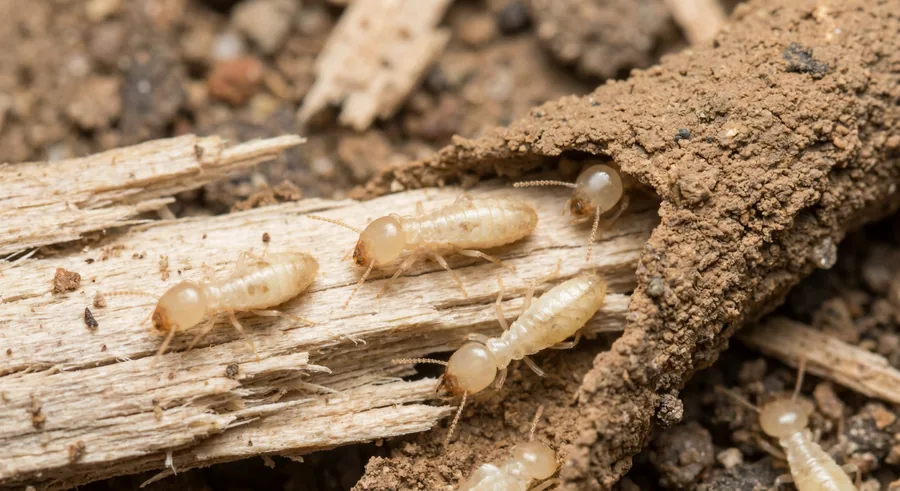
Cream-colored subterranean termite workers on damaged wood beside a soil mud tube
Recommended Products


What it does
Subterranean termites live in large underground colonies and forage for wood through the soil. Workers tunnel day and night, eating cellulose and carrying moisture from the ground. To cross exposed surfaces they build protective mud tubes, staying hidden inside wood, so damage often goes unseen for years.
Where it lives
Colonies nest in moist soil and reach structures through cracks, foundations, and mud tubes. They target wood in contact with soil (sill plates, framing, porch supports, and buried scrap) and favor damp, shaded areas. They occur across the US in every state except Alaska, heaviest in the South.
How it breeds
Colonies follow a caste system of workers, soldiers, and reproductives. In spring, winged swarmers leave to mate and start new colonies, shedding their wings afterward. A queen can live many years, and colonies may grow to hundreds of thousands of members over time.
What it eats
Termites eat cellulose: wood, but also paper, cardboard, and other plant material. Gut microbes let them digest it. They feed continuously, hollowing wood along the grain while leaving a thin outer surface intact.
Identification
Creamy-white, soft-bodied workers stay hidden. Dark, winged swarmers are about 1/4-3/8 inch with two pairs of equal-length wings and a straight, not pinched, waist, which is the key difference from ants. Soldiers have larger orange heads and jaws.
Signs of an infestation
- Pencil-thick mud tubes on foundations, walls, or crawl spaces
- Wood that sounds hollow or crumbles when probed
- Piles of discarded wings near windowsills and doors after a swarm
- Buckling paint or floors resembling water damage
- Swarms of dark winged insects in spring
Prevention tips
- Keep wood, mulch, and firewood away from direct contact with the foundation
- Fix leaks and grade soil so water drains away from the house
- Reduce crawl-space and foundation moisture with ventilation
- Remove buried wood, stumps, and form boards near the structure
- Schedule regular professional termite inspections
Professional solutions
Subterranean termites require professional control; DIY products cannot protect a whole structure. Pros install soil-applied liquid termiticide barriers (such as fipronil) or in-ground bait systems, then monitor over time. Early inspection and treatment prevent costly structural repairs.
Health & safety
Subterranean termites do not bite or sting people and carry no known human diseases, so there is no direct health risk. The danger is structural: they cause more property damage than any other US wood pest, an estimated several billion dollars in damage each year.
Relevant Products


Frequently asked questions
How do I know if I have subterranean termites?
Watch for pencil-thick mud tubes on foundations and walls, wood that sounds hollow or crumbles, piles of discarded wings near windows after a spring swarm, and buckling paint or floors. A professional inspection confirms active infestations.
What's the difference between termite swarmers and flying ants?
Termite swarmers have a straight, uniform waist and two pairs of equal-length wings, while flying ants have a pinched waist and front wings longer than the back. Termite swarmers also drop their wings, leaving piles near windowsills.
Can I treat subterranean termites myself?
Structural subterranean termite infestations need professional treatment; over-the-counter products cannot protect a whole building. Pros install soil termiticide barriers or bait systems and monitor them. DIY steps like reducing wood-soil contact and moisture help prevent, not cure.
Fact-checked by Morgan Vance, Editorial Director (editorial review, not a professional pest-control or medical sign-off). Last reviewed May 12, 2026. We correct anything a reader shows us is wrong — see our corrections policy.