Drywood Termite
Incisitermes spp. · also called drywood termites, western drywood termite
Quick answer
Drywood termites (Incisitermes species) live entirely inside dry, sound wood with no contact with soil, so they build no mud tubes. They infest framing, attics, furniture, and hardwood floors, and push distinctive six-sided fecal pellets out of tiny kick-out holes. Common in the Southwest and coastal South, they damage wood slowly.
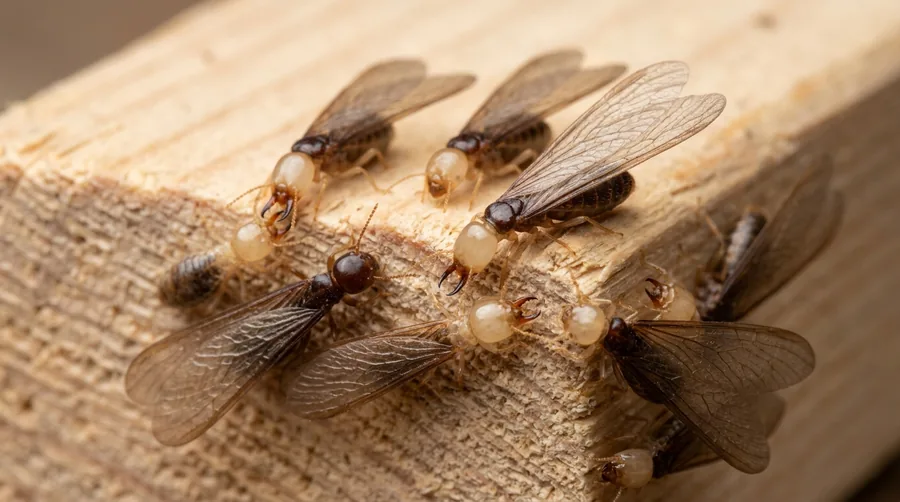
Cream-colored drywood termites inside dry wood beside a small pile of six-sided fecal pellets
Recommended Products


What it does
Drywood termites live and feed entirely within dry wood, never contacting soil, so they build no mud tubes. Small colonies excavate chambers across the grain, and they periodically push fecal pellets out of tiny openings, leaving telltale piles below infested wood.
Where it lives
They infest dry, sound wood: structural framing, attic and roof timbers, window and door frames, hardwood floors, and wooden furniture. They are most common in the arid Southwest, coastal California, and the Gulf and Southeast, and can travel indoors in infested furniture.
How it breeds
Colonies are small, from a few hundred to a few thousand, and grow slowly over years. Winged swarmers leave in late summer to fall, often at night toward lights, to mate and start new colonies inside wood rather than in soil.
What it eats
Drywood termites eat cellulose in dry wood and wood products, consuming both the softer and harder growth layers. Gut microbes let them digest wood, and they need no external moisture source, drawing water from the wood itself.
Identification
Creamy, soft-bodied workers stay hidden in the wood. Dark swarmers are about 1/3 inch with two pairs of equal-length wings and a straight waist. The hard, six-sided fecal pellets that collect below infested wood are the classic identifying sign.
Signs of an infestation
- Small piles of hard, ridged, six-sided fecal pellets
- Tiny round kick-out holes in wood surfaces
- Discarded wings near windows after a swarm
- Wood that sounds hollow or shows surface blisters
- Swarming winged termites indoors in late summer or fall
Prevention tips
- Seal cracks and joints in exterior wood
- Keep wood sealed, painted, or varnished
- Screen attic and foundation vents to block swarmers
- Inspect and treat used furniture before bringing it in
- Schedule regular professional termite inspections
Professional solutions
Drywood infestations need professional treatment. Localized methods (foams, dusts, or spot injection) suit small, contained infestations, while widespread ones may require whole-structure fumigation or heat treatment. A professional should confirm the extent first. Always read and follow the EPA label on any product.
Health & safety
Drywood termites do not bite, sting, or spread disease to people, so there is no direct health risk. The danger is structural: slow but significant wood damage that can go undetected for years, making household risk high.
Relevant Products


Frequently asked questions
How do I tell drywood termites from subterranean termites?
Drywood termites live inside dry wood with no soil contact and build no mud tubes, instead pushing out six-sided fecal pellets. Subterranean termites nest in soil and build mud tubes to reach wood. Finding pellet piles rather than mud tubes points to drywood termites.
What are the little piles of pellets under my furniture?
Hard, ridged, six-sided pellets, often resembling coarse sand or coffee grounds, are drywood termite frass kicked out of the wood. Finding these piles under furniture, windowsills, or baseboards is a common first sign and warrants a professional inspection.
Can I treat drywood termites myself?
Drywood termite infestations should be handled by a professional, since accurately finding all the galleries is difficult. Depending on the extent, treatment may be localized or require whole-structure fumigation or heat. A professional inspection determines the right approach, and any product must follow its EPA label.
Fact-checked by Morgan Vance, Editorial Director (editorial review, not a professional pest-control or medical sign-off). Last reviewed June 1, 2026. We correct anything a reader shows us is wrong — see our corrections policy.