

The best mosquito killer for backyard use depends on your goal. Do you want to kill the larvae, knock down biting adults during a cookout, or keep mosquitoes off your skin? No single gadget does all three. Think of this as the gear patio owners and yard owners buy every summer, and plan to combine a couple of pieces.
Remember the free step that beats every product. Dumping standing water weekly removes the places mosquitoes breed. Mosquito gear works best on top of that foundation, not instead of it.
How to Choose Backyard Mosquito Gear
Mosquitoes are weak fliers drawn to carbon dioxide, body heat, and moisture. Good gear does one of three jobs. It interrupts breeding, targets resting adults, or protects a defined space. Match the tool to the goal and keep your expectations honest. No backyard device makes a whole yard mosquito-free on its own.
Larval Control: Larvicide, Mosquito Dunks, and Standing Water
The highest-leverage products target the water stage. One treated container prevents hundreds of adults.
- Mosquito dunks and granules. A larvicide containing Bti, a naturally occurring soil bacterium, kills mosquito larvae in standing water. It is selective toward mosquitoes and suits rain barrels, ponds, and clogged low spots you cannot drain.
- What to look for. Coverage area, how long each dose lasts, and whether the label clears the larvicide for water with fish. Follow the EPA product label for dosing.
Adult Control: Mosquito Traps, Foggers, and Yard Sprays
Products aimed at adult mosquitoes vary widely in how well they cut biting.
- A CO2 mosquito trap lures host-seeking mosquitoes with carbon dioxide and heat. These traps can help over time but are the priciest option, and placement matters.
- Bug zappers are a poor match. Mosquitoes are not drawn to UV light, so zappers mostly kill harmless insects. Skip them.
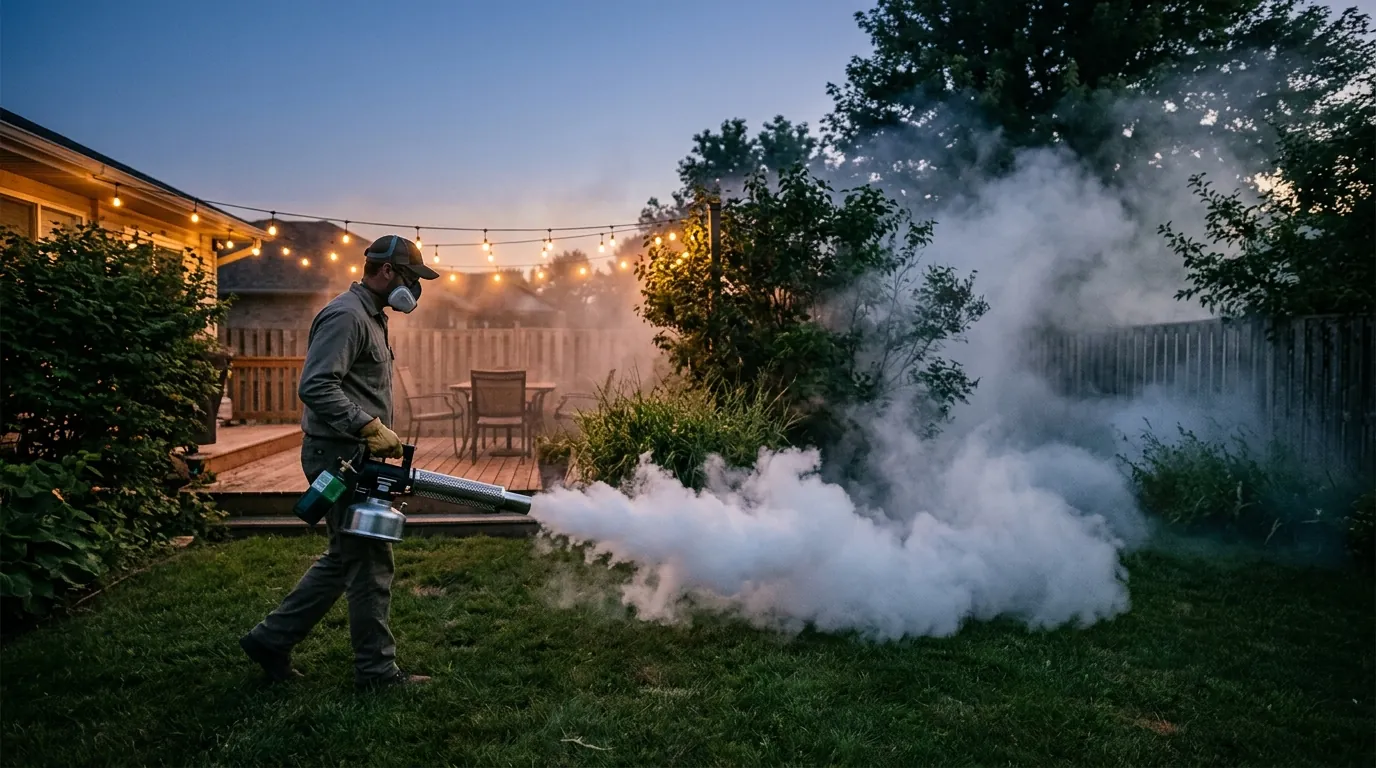
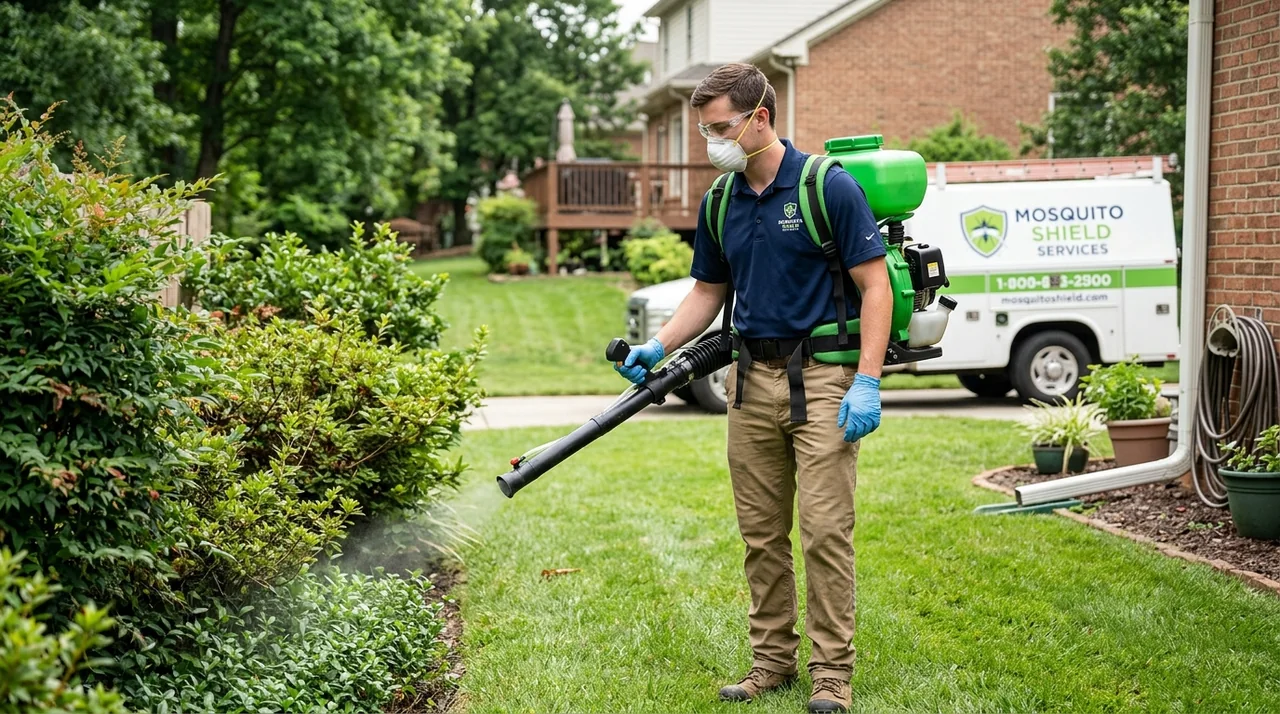
- Yard sprays and foggers coat resting vegetation for short-term knockdown. Keep them off flowering plants where pollinators forage, and reapply after rain.
Spatial Repellent Devices for a Patio
A spatial repellent unit, such as a Thermacell, disperses a repellent to create a protected zone around a patio. It can reduce bites in a small, still area, but it works best with little wind. Foggers give a fast pre-event knockdown but do not last. Follow all label directions on both.
Personal Protection: DEET, Picaridin, and Fans Against Every Bite
Sometimes the simplest gear is the most reliable.
- EPA-registered skin repellents with DEET, picaridin, oil of lemon eucalyptus, or IR3535 protect you directly. The CDC recommends these active ingredients to prevent every bite. Apply per the label, especially for children.
- Outdoor fans are genuinely effective. Because mosquitoes fly poorly, a steady breeze across a seating area keeps them away with zero toxicity.
Screened Netting for the Patio Yard
Screened enclosures and patio netting physically keep mosquitoes off you and need no chemicals. Scale the plan from a small patio to a full yard. For patio yard coverage, a fan plus a skin repellent often beats an expensive trap. Permethrin-treated clothing, never applied to skin, adds protection for yard work and hikes.
Source Reduction Beats Every Gadget
Judge each product on practical criteria, not marketing. Does it target the right stage? Larval products and personal protection have the best track records. Bug zappers have the worst. Match the rated coverage to your real space, and expect lower performance than the box claims. Be skeptical of any product promising a mosquito-free yard. The honest expectation is meaningful reduction, not elimination. Draining standing water remains the cheapest, most reliable step, and it costs nothing.
When to Call a Mosquito-Control Professional
Consider a licensed service or your local mosquito-abatement district when biting pressure stays high despite diligent source reduction, when you cannot drain a breeding source, or when there is local concern about mosquito-borne illness. The CDC tracks these diseases, and professionals run larval surveys, treat hard-to-reach water, and apply barrier treatments legally. If anyone develops fever after bites, see a doctor. For any pesticide exposure, call Poison Control at 1-800-222-1222.