
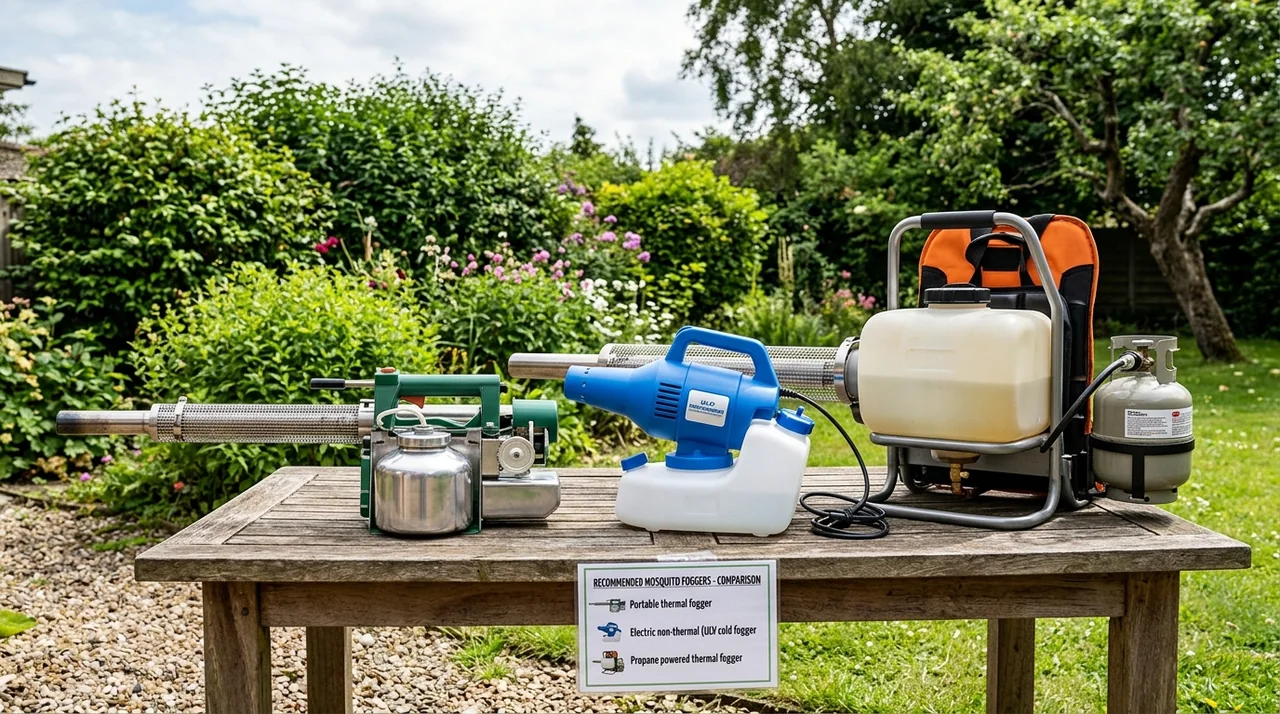


Mosquito foggers disperse insecticide as a fine mist or fog to knock down adult mosquitoes across an outdoor area, most often before a backyard event. They can provide meaningful short-term relief, but they are frequently misunderstood, so this guide focuses on the types, how to choose, and how to use one responsibly, alongside the repellent-selection companion in this section.
Types of Foggers
Rather than a single "best" product, the right fogger depends on your yard and needs:
- Thermal foggers heat an insecticide-and-carrier solution into a dense visible fog. They cover large areas quickly and are popular for pre-event knockdown, but the hot fog and open flame or heating element require care, and they are not for enclosed spaces.
- Cold foggers (ULV, ultra-low-volume) use air pressure instead of heat to create a fine mist. There is no visible cloud or flame, droplet size is more controllable, and many are electric. They tend to cost more but offer more precise application.
- Propane/thermal handheld foggers are portable and convenient for spot treatments around a patio or campsite.
What Actually Matters When Choosing
Effectiveness comes less from the machine and more from the product and how you use it:
- The insecticide, not the sprayer, does the work. Only use a product specifically labeled for use in that fogger and for outdoor mosquito control. The EPA-approved label is the binding instruction set; it dictates legal use sites, dilution, and precautions.
- Coverage and tank size should match your yard; an oversized machine wastes product on a small lot.
- Droplet control matters for reaching mosquito resting spots (shrubs, tall grass, shaded foliage) where adults hide during the day.
- Understand the limitation: foggers kill adult mosquitoes present at the time and provide little lasting residual. They do nothing about the larvae in standing water that produce the next generation.
Use a Fogger Safely and Effectively
Foggers apply real pesticide into the open air, so responsible use is essential:
- Read and follow the product label for the fogger and insecticide together, every time.
- Time it right: fog when mosquitoes are active and winds are calm (often early evening), targeting shaded resting areas rather than open lawn.
- Protect people, pets, and pollinators: keep others away during application and until the label's re-entry time passes, cover fish ponds, and avoid treating blooming plants where bees forage.
- Wear the protective equipment the label specifies and avoid drift onto neighboring property, food, or play areas.
- Pair fogging with source reduction: the durable fix for mosquitoes is dumping standing water weekly (buckets, gutters, saucers, tarps, and toys) so larvae never mature; fogging alone is a temporary patch.
For any accidental exposure, ingestion, or a reaction after using a fogger, call Poison Control at 1-800-222-1222 (free, 24/7) and keep the product label available for the responder.


