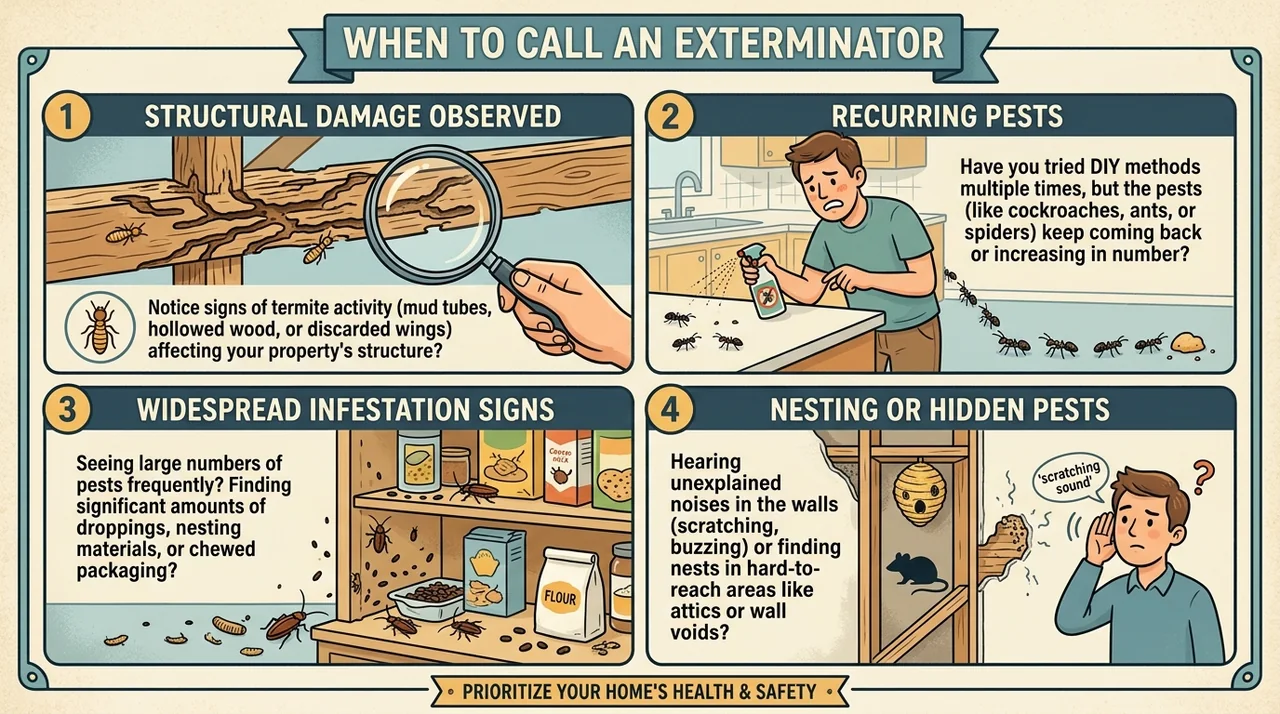
Call an exterminator when the problem is bigger than store-bought products can reach. Call one when the pest keeps coming back after DIY. And call one when the pest poses a structural or health risk. That covers termites, a rodent infestation, bed bugs, wasp nests near entryways, or a cockroach problem. For a few ants or the odd spider, DIY is usually enough. The single clearest signal is recurrence. If you have treated the same pest twice and it returns, it is time to call a professional.
Signs You Need an Exterminator
Some pest problems move past DIY. Watch for the warning signs below. Any one of them is a good reason to call a pro.
- Pests return within days or weeks of you treating them
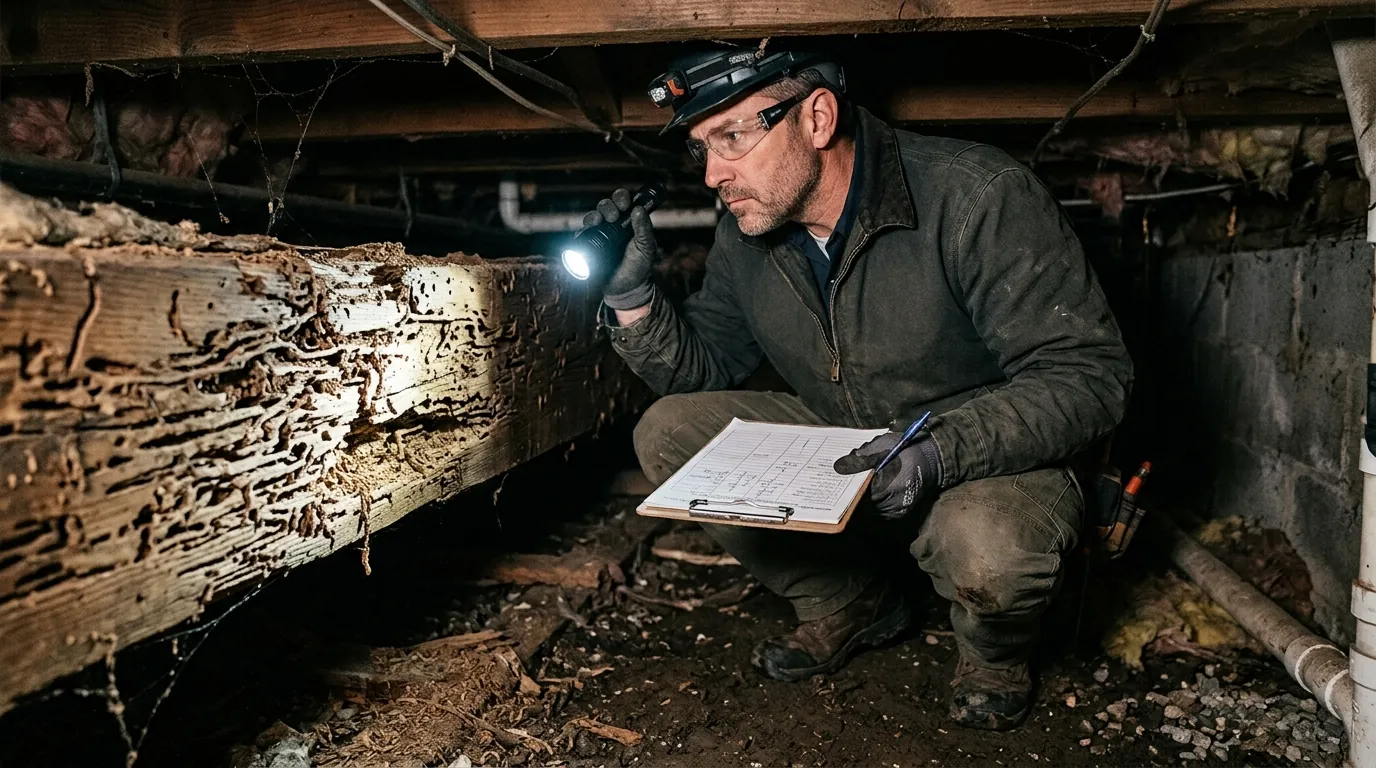
- Live termites, mud tubes, or hollow-sounding wood, which point to structural damage
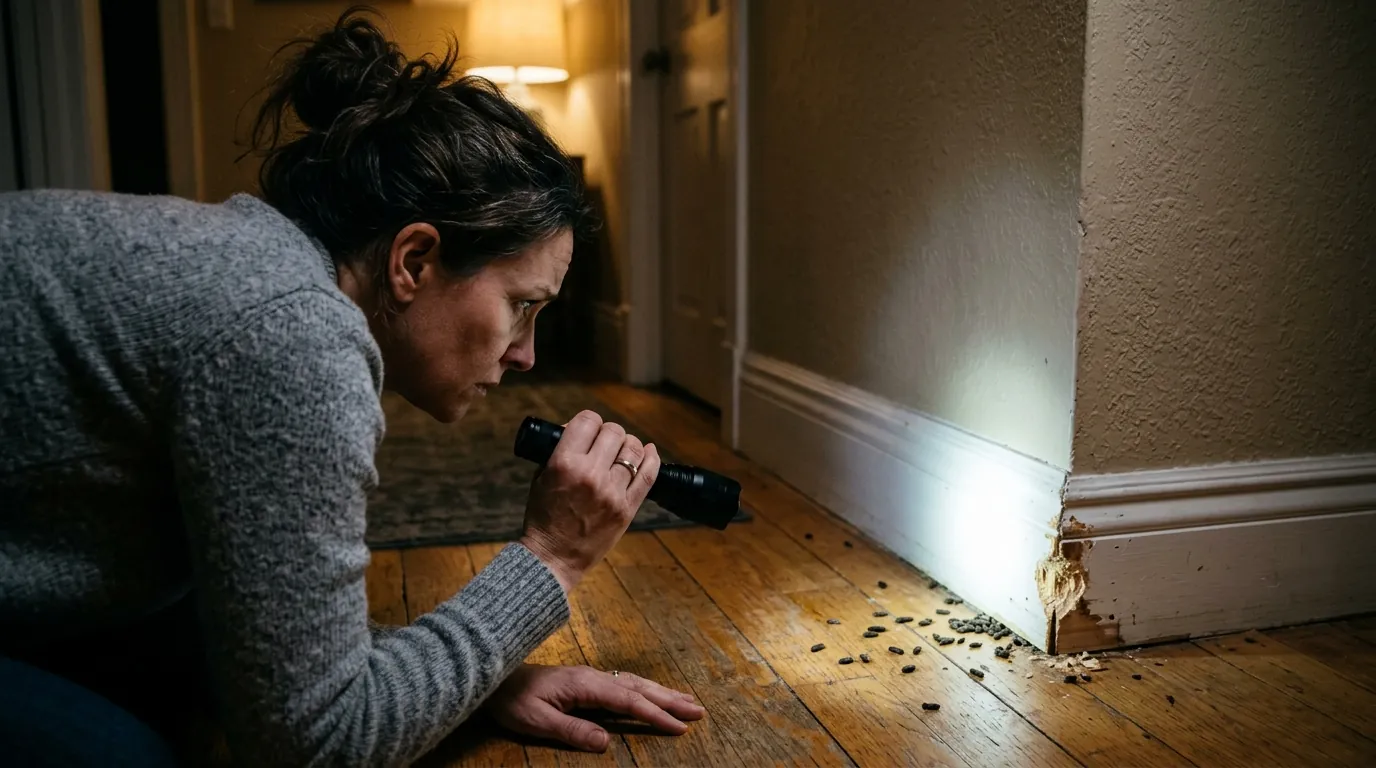
- Droppings, gnaw marks, or scratching in walls, which point to an active rodent infestation
- Bed bugs, shown by bites in a line, blood spots on sheets, or live bugs in mattress seams
- Several wasp or hornet nests, or one nest near a door or window
- Cockroaches seen in daylight, which usually means a large hidden population
- Any pest tied to a health risk for someone in the home
Recurring Infestations Are the Biggest Clue
A recurring pest is the clearest sign of all. You treat it, it fades, and then it comes back. That pattern means the source is still there. Store baits reach the pests you can see. They often miss the nest, the eggs, or the hidden entry point. A professional finds that source and treats it. This is why recurrence should trigger a call to an exterminator.
Droppings, Gnaw Marks, and Damage
Droppings are an easy sign to miss. Small, dark droppings near food or in cupboards often mean rodents. Gnaw marks on wood, wires, or packaging point the same way. Left alone, this damage grows fast. Chewed wires can even become a fire risk. If you spot droppings and damage together, book an inspection.
When Is DIY Pest Control Enough?
DIY works well on small, early problems. A single ant trail is a good example. So is the odd spider, a few pantry moths, or one easy-to-reach wasp nest. The key is to catch the problem early.
Simple DIY Treatment for Small Problems
Start with the basics. Seal the gaps and cracks that let pests in. Clean up food scraps and fix damp spots that draw them. Then use labeled baits and traps where you see activity. Follow the product label exactly, every time. Done right, this simple treatment handles most minor issues. You will not need a pro for these.
DIY vs. Professional — Which Should You Choose?
| Situation | DIY or pro? |
|---|---|
| A few ants or one spider | DIY |
| Pantry moths or a single wasp nest (reachable) | DIY |
| Repeat infestation after DIY treatment | Pro |
| Termites or wood-damaging pests | Pro |
| Rodents inside walls or an established colony | Pro |
| Bed bugs | Pro |
| Cockroach infestation | Pro |
Which Pests Almost Always Need a Professional?
A few pests rarely respond to retail products. They also tend to cause the most damage. For these, professional treatment is usually faster, safer, and cheaper. It beats repeated failed DIY attempts.
Termites and Structural Damage
Termites eat wood from the inside out. By the time you see them, the damage may be well underway. They need special inspection tools and pro treatment. This is not a DIY job. Left untreated, termites can threaten the whole structure.
Bed Bugs and Cockroaches
Bed bugs are very hard to wipe out fully. They hide in tiny cracks and lay eggs that survive many sprays. A cockroach infestation is much the same. Cockroaches breed fast and hide deep in walls and drains. Both usually need professional-grade treatment and follow-up visits.
Rodents in Walls and Crawlspaces
A large rodent infestation is more than a nuisance. Rodents carry health risks and nest out of sight. They also leave droppings that spread mess and odor. A pro seals the entry points so they cannot return. That sealing work is the part most DIY efforts miss.
Wasps and Hornets in Risky Spots
Most reachable wasp nests are a safe DIY job. But some are not. Nests inside walls, high on the roof, or right by a door carry a real sting risk. Several nests at once make it worse. In these spots, wasps and hornets are a job for a pro.
How Soon Should You Call an Exterminator?
Sooner is almost always cheaper. Pest problems compound over time. A small termite colony becomes structural damage. A few roaches become an infestation. Two mice become a nest. The longer you wait, the more the pest control costs.
When to Hire a Professional for an Inspection
You do not have to wait for a crisis to hire help. If you see the signs above, book an inspection now. An early inspection costs far less than months of failed treatment and repair. Not sure whether it is time? Use our exterminator directory to find licensed local companies and get an inspection quote.