
What pest control can I do myself?
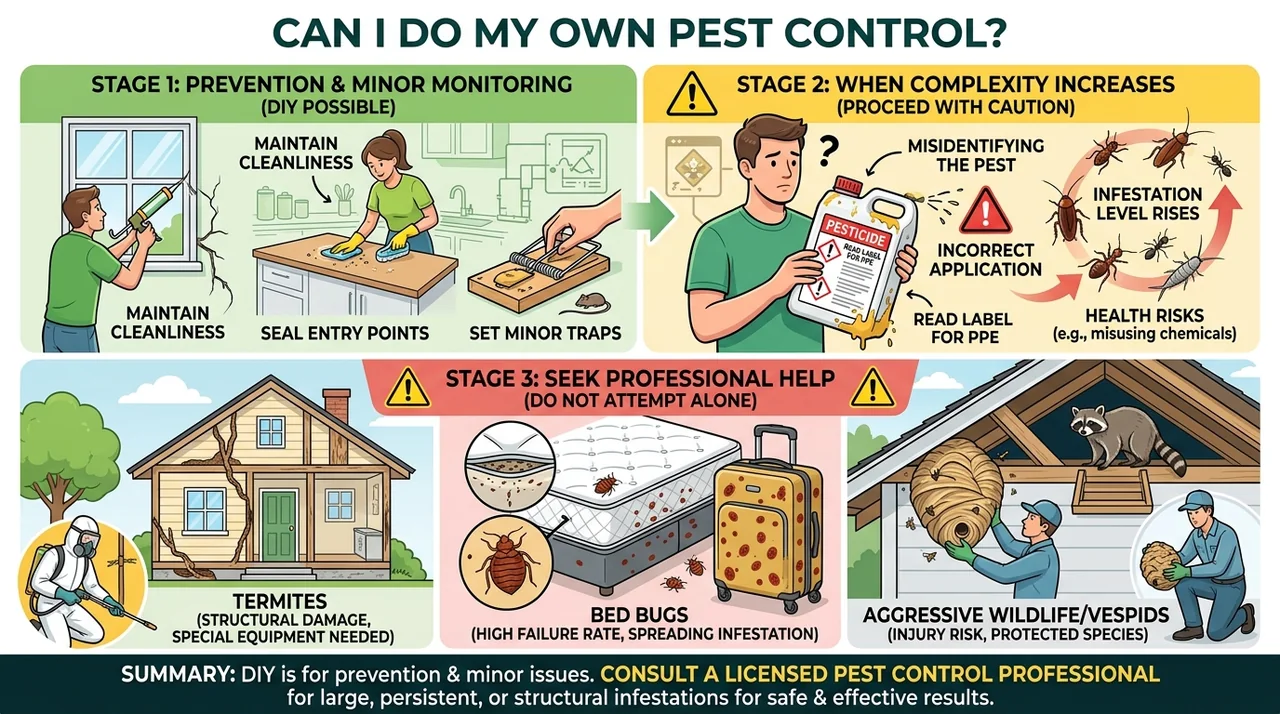
A lot of everyday pest control is really just good housekeeping and exclusion. That is the core of what the EPA calls Integrated Pest Management (IPM): prevent first, monitor what is actually there, then treat with the least-risky method that works. Homeowners can often manage:
- Prevention: sealing cracks, adding door sweeps, repairing screens, and clearing clutter.
- Sanitation: storing food, taking out trash on schedule, and fixing leaks that draw pests.
- Minor issues: ants, pantry moths, fruit flies, or a stray spider, using traps and gel or station baits that workers carry back to the nest.
What is the right order of operations?
Reaching straight for a spray is the most common DIY mistake. A more effective sequence is:
Identifying the pest first saves money and avoids treatments that do nothing.
What tools and products do DIYers use?
For common household pests, the everyday toolkit is simple. You have snap traps and bait stations for rodents, and gel baits and bait stations for ants and cockroaches. Sticky monitors show you what is active, and a caulking gun plus steel wool seal gaps. Many jobs need no liquid pesticide at all.
How do I use pesticides safely?
If you do use pesticides yourself, treat the label as the instruction manual and the law:
- Choose an EPA-registered product labeled for your specific pest and site.
- Read and follow the entire label, which covers where, how, and how much you may apply.
- Never mix products or use more than directed, as that is both illegal and unsafe.
- Store baits and sprays in their original containers, away from children and pets.
When should I call a professional?
Some situations call for licensed help, for both effectiveness and safety:
- Termites, extensive rodent activity, cockroach infestations, or bed bugs, which hide and rebound quickly.
- Stinging-insect nests inside walls or in high places.
- Wildlife such as bats, raccoons, or snakes, which may be legally protected and require permits.
- Any repeat infestation that keeps returning despite your efforts.
Is DIY always cheaper than hiring a pro?
Not necessarily. DIY is usually cheaper for prevention and small, correctly identified problems. But repeated store-bought treatments often miss the source. Over time, they can cost more than one properly targeted professional visit, and they let an infestation grow in the meantime. The honest rule of thumb is simple. Handle prevention and minor pests yourself. Bring in a pro when a problem is structural, health-related, spreading, or simply not responding.