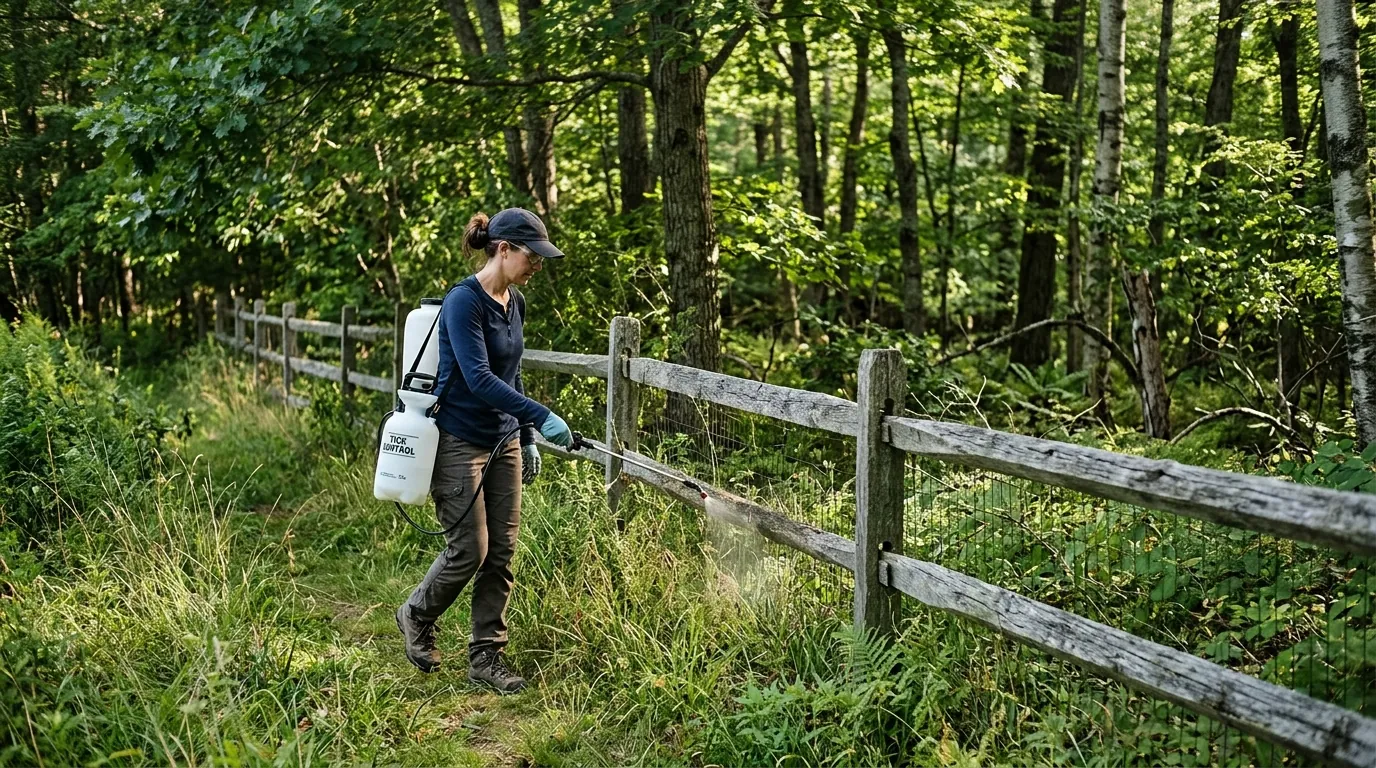



A tidy, well-drained yard is your first and best defense against mosquitoes, ticks, ants, and the insects that eventually try to move indoors. A spray is the last step, not the first.
Start With the Yard: Mosquito Control Yard Spray and Integrated Pest Management
Integrated pest management (IPM) treats the landscape as a system: remove what pests need to breed and shelter, create a clean buffer around the foundation, and use targeted products only where they earn their place. A mosquito control yard spray works far better once the yard itself stops producing mosquitoes. And because most backyard mosquitoes come from water, much of the outdoor battle is really a battle against standing water.
Eliminate Standing Water: The Tip and Toss Rule for Mosquito Larvae
Most backyard mosquitoes develop in water that sits for as little as a week. Females lay eggs in surprisingly small containers, so the highest-impact task in your whole yard is a weekly walk.
Birdbaths, rain barrels, and standing water
- Empty and scrub birdbaths, pet bowls, and plant saucers weekly.
- Turn over buckets, wheelbarrows, kiddie pools, and toys.
- Clean clogged gutters so they drain fully.
- Store tarps so they do not pool water in folds.
- Screen rain barrels, and refresh or aerate ornamental ponds.
Bti dunks for mosquito larvae in water you cannot drain
For water you cannot drain, such as rain barrels or low spots, products based on Bacillus thuringiensis israelensis (Bti) are widely used. Bti is a naturally occurring bacterium, sold as Bti dunks or granules, that targets mosquito larvae. Read and follow the EPA product label for placement and replacement timing.
The Perimeter Buffer and Drainage
Insects and rodents cross from the landscape to the house along a predictable route: mulch beds, dense plantings, and clutter touching the foundation. A clean, dry perimeter buffer breaks that route.
- Keep an 18-inch band of gravel or bare soil, rather than deep mulch, against the foundation.
- Trim shrubs and limbs so they do not touch the siding or roof.
- Move firewood and lumber away from walls and up off the ground.
- Mow regularly, since tall grass holds humidity that mosquitoes and ticks favor.
Ticks and a wood-chip buffer
For ticks specifically, a three-foot buffer of wood chips or gravel between lawn and woodland edge helps separate family space from tick habitat. Good drainage ties it together: regrade low spots, redirect downspouts, and fix irrigation leaks so the soil beside the house stays dry.
Yard Sprays and Foggers: Pyrethroids, Bifenthrin, and Permethrin
A mosquito control yard spray covers several different tools, and matching the tool to the goal matters. Many products contain pyrethroids such as bifenthrin or permethrin.
Hose-end sprays and misting systems for adult mosquitoes
Hose-end sprays coat vegetation where adult mosquitoes rest, such as shady shrubs and the underside of leaves. Coverage is temporary and needs reapplication after rain. Misting systems and foggers knock down adults for a short window before an event, but do nothing about breeding sites and can drift onto neighbors.
Granular yard treatments and breeding sites
Granular yard treatments target ants, fleas, and other lawn insects at the soil surface. No spray, though, replaces removing the breeding sites where the next generation develops.
Protecting pollinators and beneficial insects
Broad-spectrum sprays do not distinguish between pests and beneficial insects, so avoid treating flowering plants where bees forage, and never spray when pollinators are active. Read and follow the EPA product label every time, including the rate, wind restrictions, and how long to keep people and pets off the treated area. More product is not more effective; it is only more risk.
Support Predators, Barriers, and Mosquito Repellents
A resilient yard does some of the work for you. Birds, bats, dragonflies, and predatory insects all eat mosquitoes. You encourage them by spraying less and keeping some habitat diversity. On the personal side, screened porches, outdoor fans (mosquitoes are weak fliers and avoid moving air), and EPA-registered mosquito repellents on skin let you enjoy the yard without treating the whole property.
When to Bring in a Professional
Reach for professional help when the source is bigger than your yard: persistent mosquito pressure despite diligent source reduction, standing water you cannot safely drain, suspected disease-carrying mosquito or tick activity, or recurring stinging-insect nests. Your county or local mosquito-control district may offer surveillance or guidance.
If anyone develops a fever, rash, or flu-like symptoms after mosquito or tick bites, contact a doctor, and for a suspected embedded tick, follow current removal guidance and watch the bite. For any pesticide exposure or ingestion, call Poison Control at 1-800-222-1222. A good professional surveys the property, finds breeding sources you missed, and designs a plan that uses the least product for the most durable result.