




What do stink bugs eat?
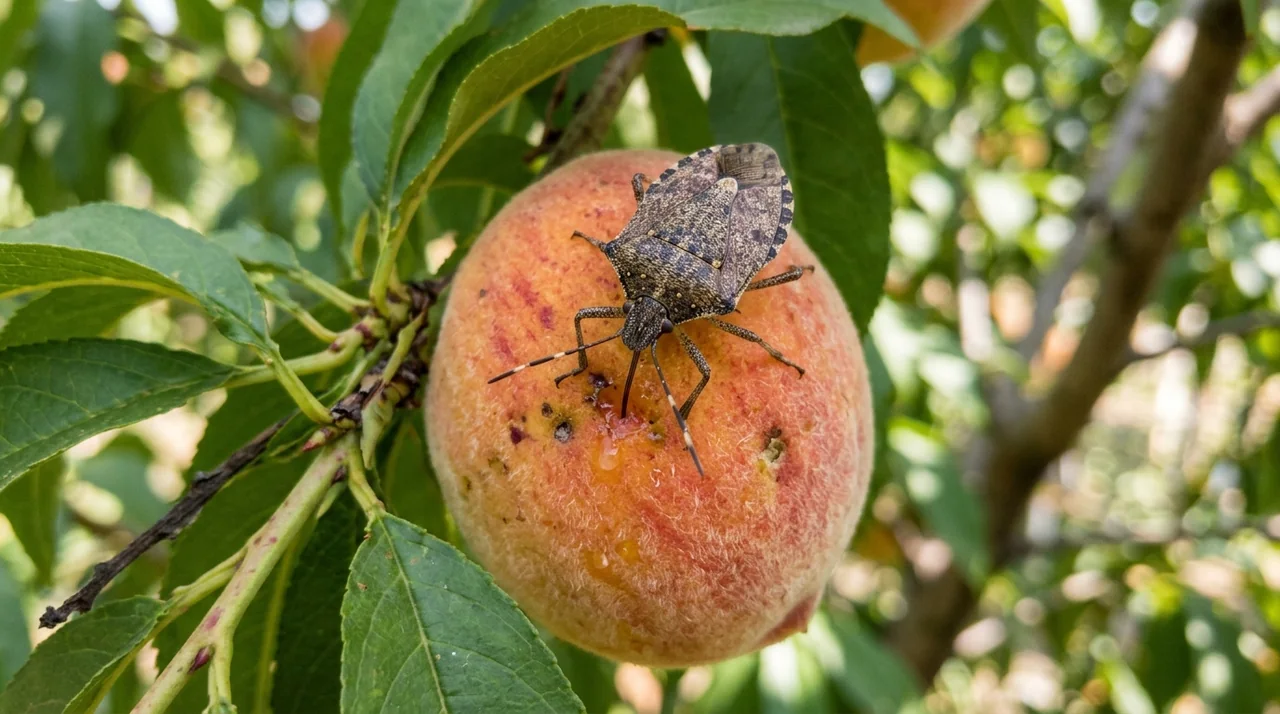
Most stink bugs are plant feeders, including the widespread brown marmorated stink bug (Halyomorpha halys). They do not chew like a caterpillar. Instead, they have a slender, straw-like mouthpart called a proboscis. It pierces plant tissue so the insect can suck out sap and fluids. They feed on such a wide variety of plants that they are a headache for both commercial growers and backyard gardeners.
Their preferred foods span many categories:
- Tree fruits such as apples, peaches, and pears
- Garden vegetables including tomatoes, peppers, and beans
- Field crops like corn and soybeans
- Ornamental plants, seeds, and tender leaves
What does stink bug feeding damage look like?
When a stink bug feeds, it leaves behind small wounds. It also injects saliva that breaks down plant tissue. On fruit, this shows up as dimpling, corky brown spots, or sunken, discolored patches. On peaches and tomatoes, this is sometimes called "cat-facing." The fruit is often still safe to eat, but it looks blemished. For farmers, that is enough to make it unsellable. On developing pods and kernels, feeding can shrivel or deform the crop.
Do stink bugs eat anything inside my house?
This is where stink bugs surprise people. They do not feed indoors and do not reproduce indoors. They do not bite people or pets, and they do not damage the house structure or furnishings. They are not after your food the way cockroaches or ants are.
So why are they inside? In fall, stink bugs look for a warm, sheltered place to spend the winter. This dormant state is called diapause. Your walls, attic, and window frames make an appealing shelter. They stay tucked away through the cold months, then become active again on warm days and in spring. That is when homeowners suddenly notice them crawling toward windows, trying to get back outside.
Are some stink bugs predators instead?
Yes. Not every stink bug is a plant eater. A minority of species are predators that hunt other insects, and a few even help by attacking crop pests. But the ones people find swarming their siding and slipping indoors in autumn are plant feeders looking for shelter, not hunters. That mainly means the brown marmorated stink bug and the similar-behaving boxelder bug.
How do I keep stink bugs out?
They come indoors for shelter rather than food. So sanitation matters far less here than sealing the building. The most effective steps are exclusion:
- Seal cracks and gaps around windows, doors, siding, and utility lines
- Repair or replace damaged window and door screens
- Add door sweeps and screen attic and exhaust vents
- Do this in late summer, before the fall migration begins
Why do stink bugs smell?
The smell is a defense mechanism. Stink bugs have specialized glands that release a pungent chemical. In adults, these sit on the underside of the thorax. They fire when the insect feels threatened, is disturbed, or is crushed. The odor is often described as musty, cilantro-like, or skunky. It discourages predators such as birds and lizards from eating them. For homeowners, this is mostly a reason not to squash them indoors or vacuum them roughly. Triggering the glands leaves a lingering smell that can cling to a vacuum or surface. Handling them gently, or removing them while they are sluggish in cool weather, keeps the odor to a minimum.


