


Do dust mites bite?
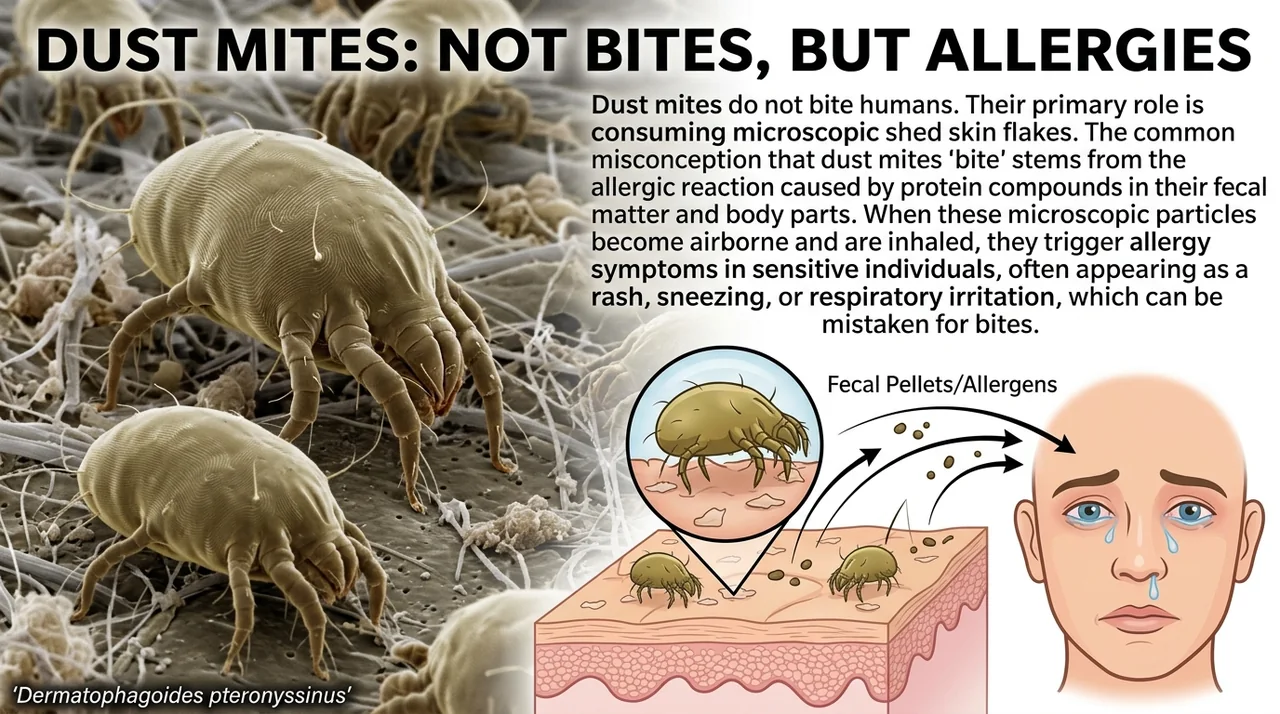
No. Dust mites (genus Dermatophagoides) are often blamed for itchy skin, but they do not bite and cannot. These microscopic relatives of spiders feed on the tiny flakes of dead skin that people and pets shed every day. They have no mouthparts able to pierce skin, and no interest in blood or living tissue. So they never leave bite marks.
Why do people blame dust mites for itchy skin?
The confusion is understandable, because dust mites really can make people miserable, just not by biting. What feels like a reaction is an allergy. Proteins in dust mite droppings and shed body fragments become part of ordinary household dust. Breathing them in or touching them can trigger symptoms in sensitive people.
What do dust mite allergy symptoms look like?
Dust mite allergy tends to cause respiratory and skin symptoms rather than distinct "bites," such as:
- Sneezing, a runny or stuffy nose, and postnasal drip
- Itchy, watery, or red eyes
- Coughing and, in people with asthma, wheezing or flare-ups
- Eczema flare-ups in those prone to it
Where do dust mites actually live?
Dust mites are not out in the open. They live wherever shed skin collects and the humidity stays comfortable for them. The heaviest populations are usually in the bedroom, because we spend hours there shedding skin. Typical hotspots include:
- Mattresses, pillows, and bedding
- Upholstered furniture and cushions
- Carpets, rugs, and curtains
- Stuffed toys and cluttered fabric surfaces
If it is not dust mites, what is biting me?
Because dust mites do not bite, actual bite marks point to a different pest:
- Bed bugs (Cimex lectularius): often lines or clusters of bites, with telltale signs around the mattress.
- Fleas (Ctenocephalides felis): small, itchy bites, commonly around ankles and lower legs.
- Mosquitoes, bird or rodent mites, or chiggers: depending on your setting.
How do I reduce dust mites and their allergens?
You cannot eliminate dust mites entirely, but you can lower their numbers and the allergens they leave behind:
- Wash bedding weekly in hot water, ideally around 130°F (54°C).
- Use allergen-proof (dust-mite) encasements on mattresses and pillows.
- Keep indoor humidity lower, since dust mites need moisture from the air.
- Vacuum with a HEPA filter and reduce heavy carpeting and clutter in bedrooms.
- Dust with a damp cloth so you trap rather than scatter particles.
When should I see a doctor?
If you have persistent congestion, itchy eyes, eczema, or asthma flare-ups, or if you are finding unexplained bites, see a doctor or allergist. They can help pin down whether you are dealing with an allergy or an actual biting pest, and recommend the right treatment. For comparison with true biters, see our dust mite, bed bug, and cat flea library entries.


