House Dust Mite
Dermatophagoides farinae · also called house dust mites, American house dust mite, bed mites
Quick answer
House dust mites (Dermatophagoides farinae and D. pteronyssinus) are microscopic arachnids that live in bedding, upholstery, and carpet, feeding on shed human skin flakes. They do not bite or spread disease, but their droppings and body fragments are a leading indoor allergen that triggers asthma, rhinitis, and eczema in sensitized people.
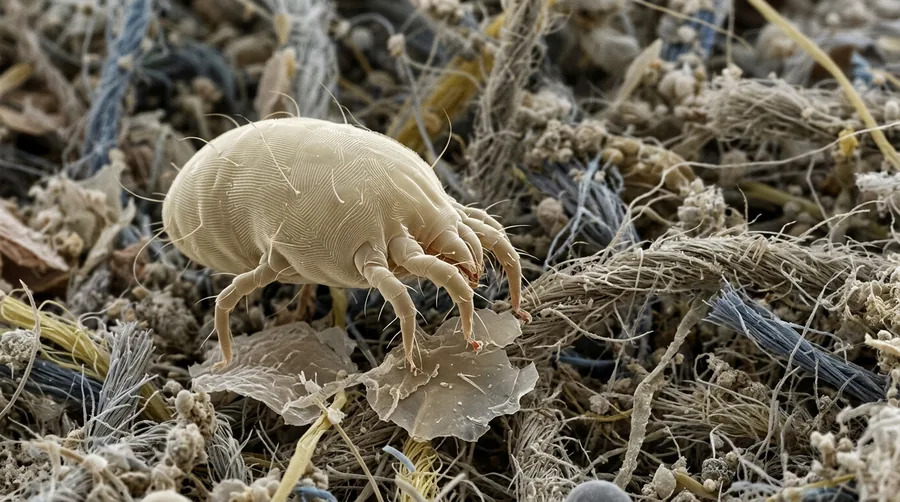
Microscope-style close-up of a translucent house dust mite among fibers and skin flakes in dust
Recommended Products


What it does
Dust mites live unseen deep in fabrics, grazing on the flakes of dead skin that people and pets shed daily. They do not move around the home actively or seek people out; they simply thrive wherever skin debris, warmth, and humidity collect, especially in mattresses and bedding.
Where it lives
They concentrate where people spend time and shed skin: mattresses, pillows, bedding, upholstered furniture, carpets, and soft toys. They need humidity above roughly 50 percent to thrive, so they are worst in damp, poorly ventilated homes and humid climates, and are found nationwide.
How it breeds
Females lay eggs within fabrics; the mites pass through larval and nymphal stages to adulthood in about a month, living several weeks as adults. A single mattress can harbor tens of thousands of mites, with populations rising and falling with indoor humidity.
What it eats
Dust mites eat shed skin cells (dander) from humans and pets, along with mold spores and other organic particles found in household dust. They do not feed on people, fabric structure, or stored food.
Identification
Dust mites cannot be seen with the naked eye at 0.2-0.3 mm; identification is by symptoms, not sighting. Allergy testing confirms sensitization. Unlike bed bugs or fleas, they leave no bites, so unexplained respiratory allergy that is worse in bed or on waking is the practical clue.
Signs of an infestation
- Sneezing, runny nose, or congestion that is worse in bed or on waking
- Itchy or watery eyes indoors that ease outdoors
- Asthma symptoms that flare at night or when making the bed
- Eczema flare-ups linked to bedding and soft furnishings
- Symptoms that improve after washing bedding in hot water
Prevention tips
- Encase mattresses and pillows in zippered allergen-proof covers
- Wash bedding weekly in hot water (130 F / 54 C or hotter)
- Keep indoor humidity below about 50 percent with a dehumidifier
- Vacuum with a HEPA filter and dust with a damp cloth
- Reduce carpet, heavy drapes, and clutter in bedrooms
Professional solutions
Dust mites are managed through cleaning and humidity control rather than pesticides, and DIY steps are usually effective. For allergy or asthma symptoms, the most useful professional is a physician or allergist, who can confirm dust mite sensitization and guide treatment. Pesticides are not a standard control.
Health & safety
Dust mites do not bite or transmit disease, but their fecal pellets and body fragments contain potent allergens that trigger allergic rhinitis, eczema, and asthma in sensitized people, including children. The health impact can be significant, so reducing exposure in the bedroom is the priority for those affected.
Relevant Products


Frequently asked questions
Do dust mites bite?
No. Dust mites do not bite, burrow, or land on your skin. If you have itchy bumps or bite marks, another pest such as bed bugs, fleas, or mites is more likely. Dust mite reactions are allergic (sneezing, congestion, asthma), not bites.
How do I know if dust mites are causing my symptoms?
Suspect dust mites if allergy or asthma symptoms are worse in bed, on waking, or when making the bed, and ease outdoors. An allergist can confirm sensitization with testing. Symptoms improving after hot-washing bedding and using allergen-proof covers is another clue.
Can you completely get rid of dust mites?
You cannot eliminate them entirely, but you can cut their numbers and allergen load sharply. Allergen-proof mattress and pillow encasements, weekly hot-water bedding washes, HEPA vacuuming, and keeping indoor humidity under about 50 percent are the most effective steps.
Fact-checked by Morgan Vance, Editorial Director (editorial review, not a professional pest-control or medical sign-off). Last reviewed August 5, 2026. We correct anything a reader shows us is wrong — see our corrections policy.