
Common House Spider
Parasteatoda tepidariorum · also called common house spider, American house spider, cobweb spider
Quick answer
The common house spider (Parasteatoda tepidariorum) is a small yellow-brown spider that builds messy, tangled cobwebs in corners, ceilings, and garages. It is harmless to people, rarely bites, and feeds on insects it snares. It is often the culprit behind the dusty webs found around windows and in undisturbed indoor rooms.
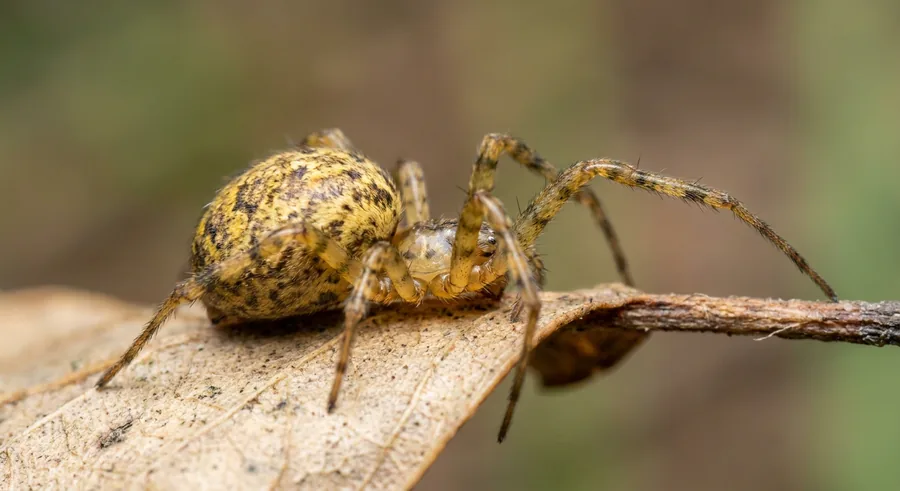
Small yellow-brown common house spider on a tangled cobweb in a ceiling corner
Recommended Products
See the full ranking →


What it does
Common house spiders are solitary web-builders that spin irregular, tangled cobwebs in quiet corners, ceilings, window frames, garages, and sheds. They wait at the web for prey rather than hunting actively. If a web catches little food, the spider abandons it and builds elsewhere, which is why unused webs collect dust. They are shy and flee from people.
Where it lives
They favor undisturbed, sheltered spots indoors and around structures: ceiling corners, behind furniture, in basements, garages, sheds, barns, and under eaves and porch lights where insects gather. Found throughout the US, it is one of the most common spiders inside American homes and outbuildings.
How it breeds
Females produce round, brownish papery egg sacs, each holding roughly a hundred or more eggs, and may make several sacs over their life. Spiderlings hatch, disperse, and molt several times as they mature. Adults can live about a year, and in heated buildings they remain active year-round.
What it eats
House spiders eat insects and other small arthropods caught in their webs, including flies, mosquitoes, ants, and even other spiders. By trapping these pests, they act as natural, if untidy, pest control indoors.
Identification
Adults have a rounded abdomen and are yellowish-brown to gray with mottled, often chevron-like darker markings and faintly banded legs. Females are about 5-6 mm; males are smaller. The messy, irregular tangle web is a key clue, unlike the neat spokes of an orb weaver. They are easily confused with harmless cellar spiders.
Signs of an infestation
- Messy, irregular cobwebs in ceiling corners and window frames
- Dusty, abandoned webs in undisturbed rooms and garages
- Small round tan egg sacs suspended in the webbing
- Occasional spiders scurrying along walls or floors
- Dead insects wrapped in silk within the web
Prevention tips
- Vacuum away webs and egg sacs regularly
- Reduce indoor insects that spiders feed on
- Seal cracks and gaps around windows, doors, and vents
- Swap outdoor white bulbs for yellow lights that attract fewer insects
- Declutter storage areas, garages, and basements
Professional solutions
Common house spiders are harmless and rarely need professional treatment. Routine vacuuming, decluttering, and reducing their insect prey usually keep numbers down. If webbing is persistent or spiders are numerous, a pest professional can apply perimeter treatments and knock down the insect populations that draw spiders indoors. Suspected widow or recluse spiders warrant expert identification.
Health & safety
The common house spider is not considered dangerous. It is timid and bites only if trapped against skin, and its venom is not medically significant to people, typically causing at most minor, brief irritation. If you are unsure whether a spider is a black widow or brown recluse, avoid handling it and seek identification; for any bite with spreading pain, a wound, or illness, contact a doctor or Poison Control.
Relevant Products





Frequently asked questions
Is the common house spider dangerous?
No. The common house spider is harmless to people. It is shy, bites only if trapped against the skin, and its venom is not medically significant. It is not a black widow or brown recluse, though those should be identified by an expert if you are unsure.
Why do house spiders make such messy webs?
House spiders are cobweb or tangle-web spiders, so their webs are irregular rather than the neat spoked wheel of an orb weaver. If a web is not catching enough insects, the spider abandons it and builds a new one nearby, leaving dusty old webs behind.
How do I keep house spiders out?
Vacuum webs and egg sacs regularly, seal cracks around windows and doors, declutter garages and basements, and reduce the insects spiders feed on. Switching outdoor lights to yellow bulbs draws fewer insects and, in turn, fewer spiders.
Fact-checked by Morgan Vance, Editorial Director (editorial review, not a professional pest-control or medical sign-off). Last reviewed August 11, 2026. We correct anything a reader shows us is wrong — see our corrections policy.