

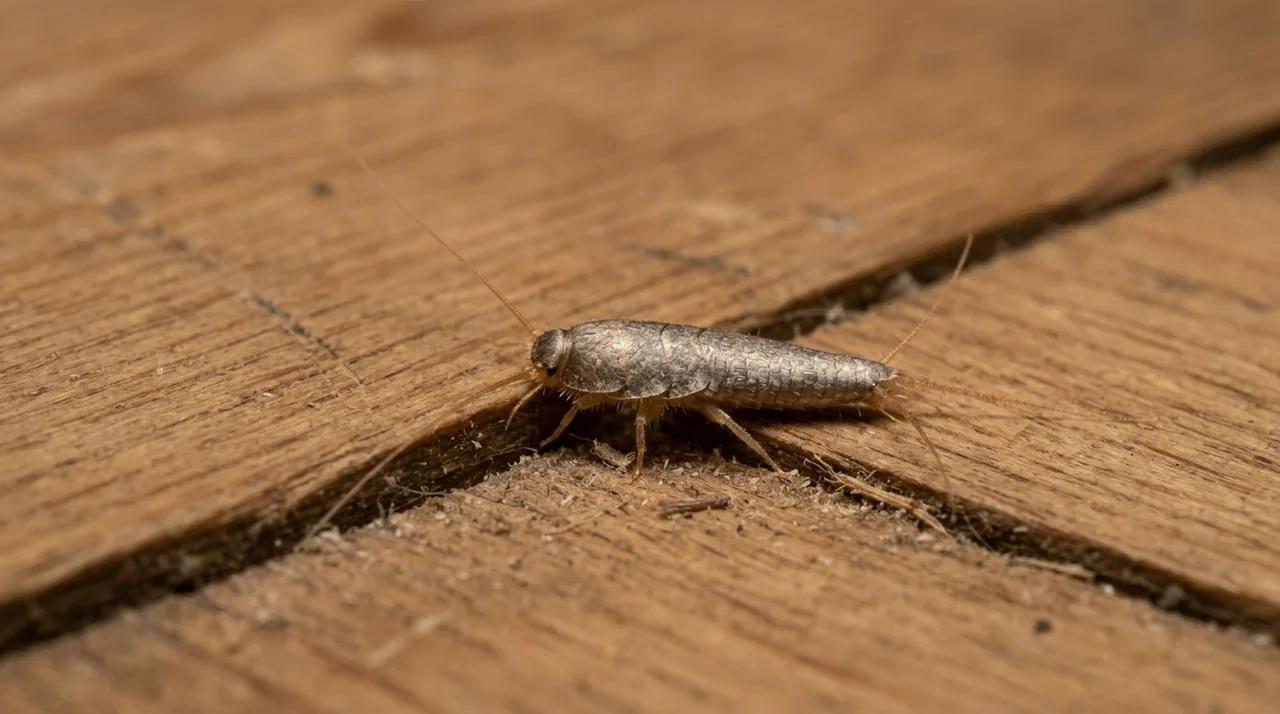



What is a silverfish?
Silverfish (Lepisma saccharina) are among the most ancient insect designs still around today. They are small, primitive, wingless insects covered in fine silvery-gray scales. Their name comes from both that metallic sheen and their darting, side-to-side motion, which looks a bit like a fish swimming. Because they are nocturnal and shy, most people meet them by surprise. You might spot one stranded in a bathtub or sink, or scattering when a box of old papers is opened.
How do I identify a silverfish?
A few features make silverfish easy to recognize:
- A flattened, teardrop or carrot-shaped body, usually about a half to three-quarters of an inch long.
- Silvery or grayish scales that can rub off.
- Three long, thread-like tails (called cerci) at the rear.
- Two long antennae at the front and no wings.
What do silverfish eat?
Silverfish are drawn to starches and sugars. Their diet includes:
- Paper, cardboard, and book bindings
- Wallpaper paste and other glues
- Cereal, flour, and pantry crumbs
- Sugars, and sometimes natural fabrics such as cotton, linen, or silk
Where do they live in a home?
Silverfish crave dampness and darkness, so they gravitate to humid, undisturbed places:
- Bathrooms and around plumbing
- Basements, crawl spaces, and attics
- Closets, cabinets, and cardboard storage boxes
Are silverfish harmful?
No. Silverfish do not bite, sting, or spread disease, and they do not damage your home's structure. The trouble they cause is cosmetic and material. An established population can leave holes, notches, and yellowish stains on paper goods, books, wallpaper, and stored keepsakes.
Does finding silverfish mean my house is dirty?
Not necessarily. Silverfish are drawn by moisture and starchy materials far more than by mess. So even a tidy, well-kept home can host them if a bathroom, basement, or closet stays humid. Seeing silverfish is a better sign that an area is damp than that it is dirty. That is why controlling humidity usually matters more than extra scrubbing.
How long do they live?
Silverfish are unusually long-lived for small insects. They often survive a few years and keep molting throughout their lives. They also reproduce slowly compared with many pests. As a result, an infestation typically builds up gradually rather than exploding overnight.
How do I get rid of silverfish?
Control centers on drying out their habitat:
- Reduce humidity with ventilation, exhaust fans, or a dehumidifier.
- Fix plumbing leaks and reduce condensation.
- Store food, papers, and keepsakes in sealed containers.
- Declutter damp basements, attics, and closets to remove hiding spots.


