
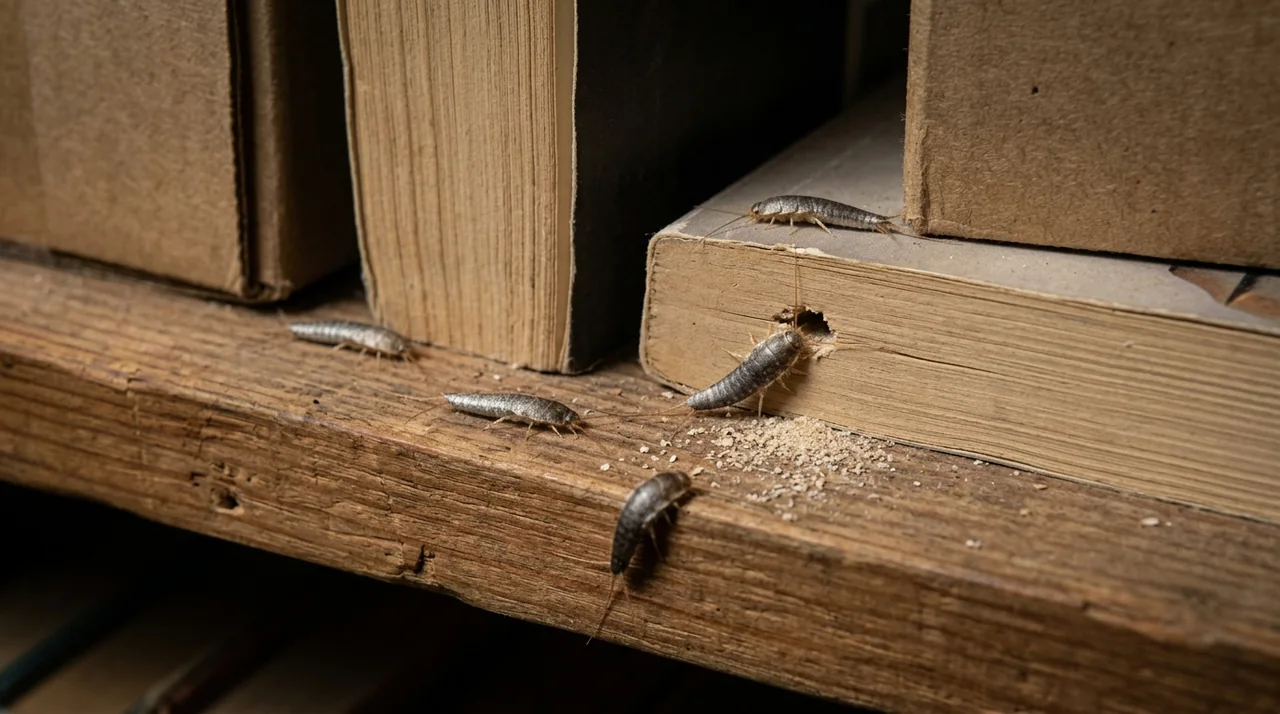



Do silverfish bite people or pets?
Silverfish (Lepisma saccharina) can look unsettling as they dart across a bathroom floor. But they pose no biting threat to humans or animals. Their mouthparts are weak and built to rasp at soft, starchy surfaces, so they cannot break skin. They do not sting, they are not venomous, and they are not known to spread disease. If you have felt a bite in a room where you have also seen silverfish, another pest is almost certainly responsible.
Why do silverfish seem creepy but stay harmless?
Their fast, wriggling movement and antenna-and-tail silhouette trigger an instinctive "yuck" reaction. They also tend to appear suddenly in sinks, tubs, and dark boxes. That startle factor is really the main way they bother people. By nature they are shy and nocturnal, and they would rather flee than approach a person.
Could silverfish affect my health at all?
While they do not bite, there is one indirect point to note. As silverfish grow, they shed their scales and skins. In some sensitive people, these fragments can add to household dust allergens over time, like other indoor insect debris. This is a general point about indoor air. It is not evidence that silverfish attack or infest people. If anyone in the home has unexplained allergy or asthma symptoms, a doctor or allergist is the right person to evaluate the cause.
Are silverfish dangerous to children or pets?
No. Silverfish are not toxic, they do not bite or sting, and they are not known to carry disease that would put a child or pet at risk. If a curious pet eats one, it is not considered poisonous, though, as with any insect, it is not something you want to encourage. In a child's room or play area, the practical concern is protecting books, papers, and stored items from damage, not protecting people from the insect itself.
What is actually biting me, then?
Because silverfish do not bite, real bite marks point to a different culprit:
- Bed bugs (Cimex lectularius): often bites in lines or clusters, with signs around the mattress and headboard.
- Fleas (Ctenocephalides felis): small, itchy bites, frequently around the ankles and lower legs.
- Mosquitoes or certain mites: depending on your environment.
What damage do silverfish cause?
The real problem with silverfish is what they eat. Over time an established population can leave holes, notches, and yellow staining on:
- Books, papers, and photographs
- Wallpaper and its paste
- Cardboard boxes and stored documents
- Dry pantry goods and, occasionally, natural fabrics
How do I keep silverfish away?
Since they thrive in humidity, control means drying things out and removing food and shelter:
- Run a dehumidifier or improve ventilation in damp rooms.
- Fix leaks and reduce condensation.
- Store papers, keepsakes, and dry food in sealed containers.
- Declutter basements, attics, and closets where they hide.


