
Cat Flea
Ctenocephalides felis · also called cat fleas, common flea, pet flea
Quick answer
The cat flea (Ctenocephalides felis) is the tiny, reddish-brown, wingless insect behind most flea problems on US cats and dogs. It jumps onto pets to feed on blood, then its eggs drop into carpets and bedding, where larvae develop. Its itchy bites, rapid breeding, and ability to carry tapeworm and other pathogens make prompt pet and home treatment important.
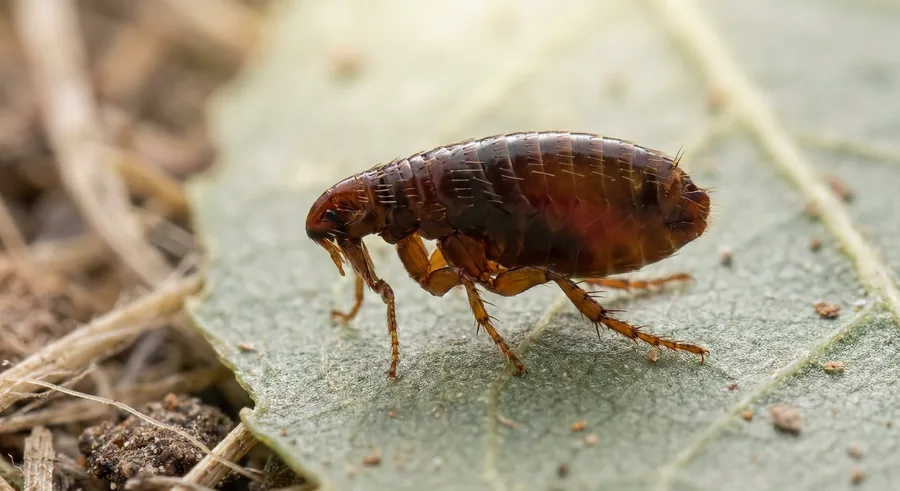
Close-up of a dark reddish-brown cat flea, a flattened wingless insect, in pet fur
Recommended Products
See the full ranking →

What it does
Adult cat fleas live on a host animal, feeding on blood and beginning to lay eggs within a day or two. They are powerful jumpers, leaping onto passing pets or people. Eggs are not sticky and fall off the animal into carpets, pet bedding, and yard soil, so most of an infestation lives in the home environment rather than on the pet.
Where it lives
Immature fleas develop wherever pets rest: carpet fibers, upholstery, pet bedding, cracks in flooring, and shaded, humid soil outdoors. Warmth and humidity speed their growth. Cat fleas are found nationwide and thrive indoors year-round in heated homes, with outdoor activity peaking in warm, humid months.
How it breeds
Fleas undergo complete metamorphosis: egg, larva, pupa, adult. A female can lay dozens of eggs a day, potentially hundreds over her life. Larvae feed on dried blood, called flea dirt, then spin cocoons; pupae can stay dormant for weeks to months and emerge when they sense a host, which is why infestations rebound suddenly.
What it eats
Adult cat fleas feed exclusively on the blood of their host, usually cats and dogs but also other mammals and occasionally people. Larvae do not bite; they feed on organic debris and flea dirt, the dried blood excreted by feeding adults.
Identification
Adults are about 1-3 mm, dark reddish-brown, wingless, and flattened from side to side so they slip through fur. They have long hind legs built for jumping and backward-pointing bristles. To the naked eye they look like fast-moving dark specks; a hand lens reveals the comb-like bristles on the head.
Signs of an infestation
- Pets scratching, biting, or grooming excessively
- Small itchy red bites, often around human ankles and lower legs
- Dark flea-dirt specks in pet fur or bedding that turn red-brown when wet
- Fast-moving dark specks jumping in carpet or on pets
- Hair loss or scabbing on pets from persistent scratching
Prevention tips
- Use a veterinarian-recommended flea preventive on pets year-round
- Wash pet bedding in hot water regularly
- Vacuum carpets, rugs, and upholstery often and empty the vacuum
- Keep the yard mowed and reduce shaded, humid debris where pets rest
- Check pets for fleas after time outdoors or around other animals
Professional solutions
Light infestations often clear with combined pet treatment, thorough vacuuming, and washing bedding. Because dormant pupae keep emerging, control takes several weeks and repeat treatment; insect growth regulators help break the cycle. Heavy or recurring infestations, or homes with many pets, may need a professional to treat the house and yard. Always follow the EPA label and treat pets under a veterinarian's guidance.
Health & safety
Cat flea bites cause itchy welts and can trigger flea-allergy dermatitis in sensitive pets and people. Fleas can transmit flea-borne (murine) typhus and the bacteria behind cat-scratch disease, and they are the intermediate host of a common tapeworm that pets and, rarely, children can ingest. Risk is moderate; see a doctor for infected bites or illness and a veterinarian for pet care.
Relevant Products


Frequently asked questions
Where do cat fleas come from if my cat stays indoors?
Fleas or their eggs can enter on other pets, on your clothing and shoes, on rodents, or on secondhand furniture. Because cat fleas are powerful jumpers and their eggs travel easily, even strictly indoor cats can pick them up from a visiting animal or from you.
Why do fleas keep coming back after I treat?
Most of an infestation is eggs, larvae, and dormant pupae hidden in carpets and bedding, not adults on the pet. Pupae can stay dormant for weeks and emerge later, so control takes repeated vacuuming, washing, and treatment over several weeks to break the cycle.
Can cat fleas bite people?
Yes. Cat fleas will bite people, usually leaving small itchy welts around the ankles and lower legs, though they prefer cats and dogs as hosts. They can also transmit certain pathogens, so treating pets and the home promptly matters. See a doctor for infected or worsening bites.
Fact-checked by Morgan Vance, Editorial Director (editorial review, not a professional pest-control or medical sign-off). Last reviewed May 22, 2026. We correct anything a reader shows us is wrong — see our corrections policy.