



What are dust mites?
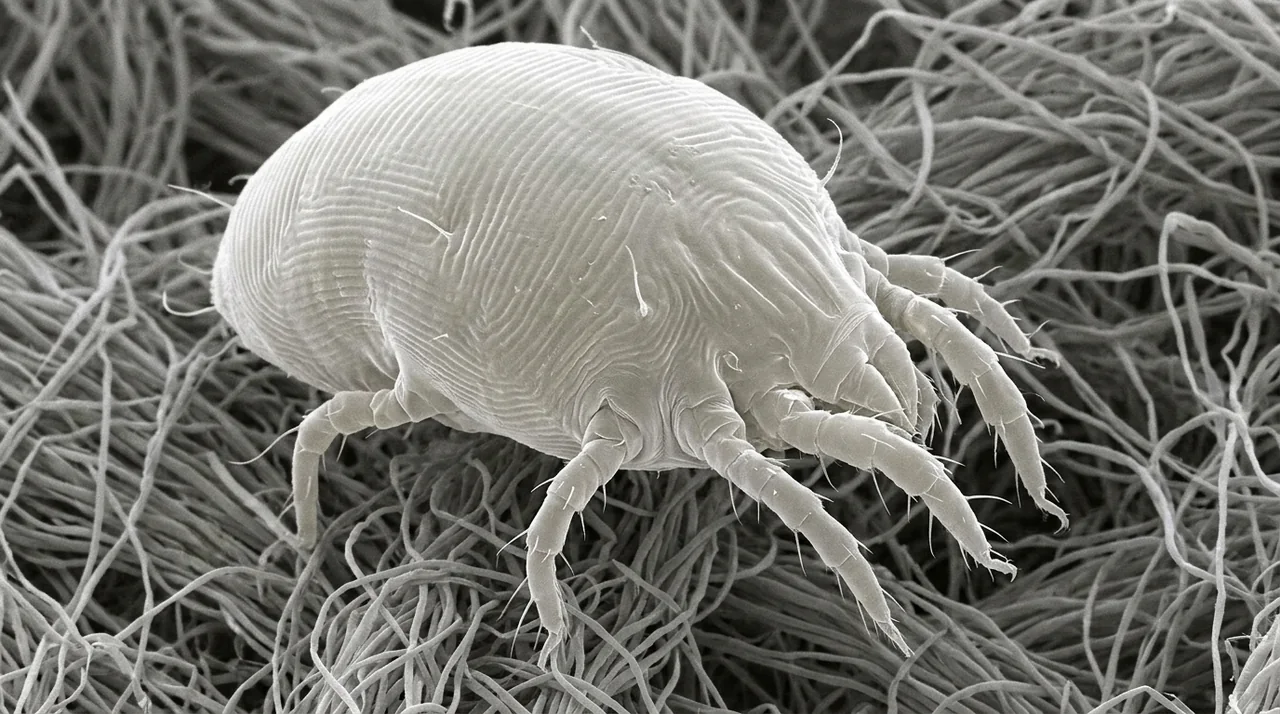
Dust mites (genus Dermatophagoides) are tiny arachnids. They belong to the same broad group as spiders, ticks, and scorpions, not insects. Each one measures only about a quarter of a millimeter. That is far too small to see without a microscope. They do not bite, sting, or burrow into skin, and they are not parasites. Instead, they quietly graze on the flakes of dead skin that people and pets shed each day.
The two species most common in homes are Dermatophagoides farinae and Dermatophagoides pteronyssinus. Both are found worldwide wherever people live. You can read more about them on our dust mite library page.
What do dust mites look like and where do they live?
Under a microscope, a dust mite is a translucent, eight-legged, oval creature with no visible eyes. To the naked eye, though, they are invisible. That is why most people never realize how many share their home.
They gather where warmth, humidity, and shed skin come together:
- Mattresses, pillows, and bedding
- Upholstered sofas and chairs
- Carpets and area rugs
- Curtains and stuffed toys
What do dust mites eat and what helps them thrive?
Dust mites feed mainly on dead skin cells. They also eat some mold spores and other organic debris in dust. Their numbers depend heavily on humidity, because they absorb moisture from the air rather than drinking it. Warm, humid rooms suit them best, while dry air makes it hard for them to survive. Many allergy resources suggest keeping indoor relative humidity below about 50 percent. This makes conditions less welcoming for them.
Why do dust mites matter for health?
The mites themselves are harmless. But proteins in their droppings and shed body fragments are a well-known indoor allergen. For sensitive people, exposure can trigger:
- Sneezing and a runny or stuffy nose
- Itchy, watery, or red eyes
- Coughing, wheezing, or worsening asthma symptoms
- Eczema flare-ups in some people
How do I reduce dust mites at home?
You generally cannot get rid of dust mites entirely. But you can lower their numbers and your exposure, which often eases symptoms:
- Wash bedding weekly in hot water (many guides recommend around 130°F / 54°C) and dry it thoroughly.
- Encase mattresses and pillows in allergen-proof (dust-mite-proof) covers.
- Lower indoor humidity with ventilation or a dehumidifier, since mites struggle in dry air.
- Vacuum carpets and upholstery regularly, ideally with a HEPA filter. Dust with a damp cloth so you trap particles instead of scattering them.
- Reduce clutter, heavy drapes, and, in the bedrooms of sensitive people, wall-to-wall carpet where practical.
Do dust mites bite? Common myths
A common myth is that dust mites bite and cause itchy welts. They do not. Bite-like marks are far more likely to come from other pests, such as fleas or bed bugs. They can also come from a skin reaction to the allergen, not an actual bite. Another myth is that a spotless home has no dust mites. Even well-kept homes host them, because they live on the skin cells we naturally shed.
When should I see a doctor?
Reducing dust mites is a home task, not a medical treatment. Talk with a doctor or allergist if you or a family member has ongoing sneezing, congestion, itchy eyes, or asthma symptoms that do not improve. They can confirm whether dust mites are the trigger through testing. They can also suggest a management plan suited to you. This article is general information and is not a substitute for medical advice.


