

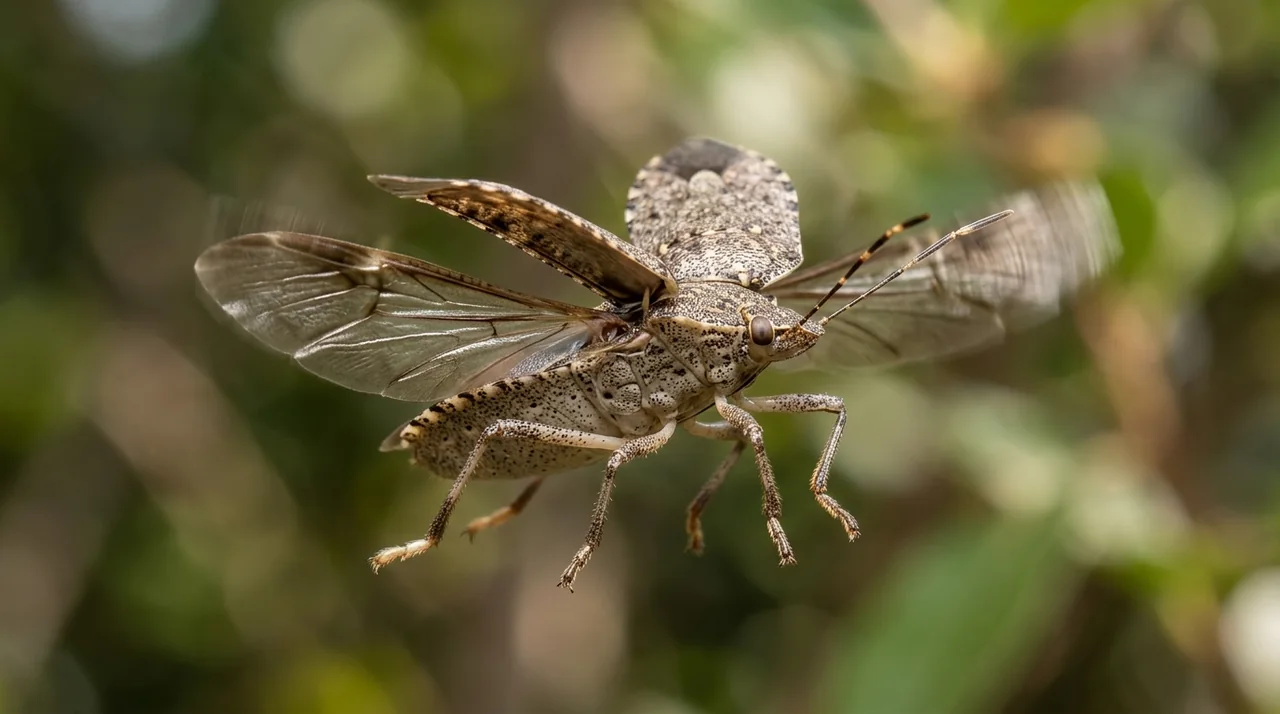



Can stink bugs fly?
Yes. Adult stink bugs are capable fliers, even if they are not graceful ones. They are "true bugs" with two pairs of wings. The leathery forewings are membranous at the tip and protect the body at rest. The hind wings do the real work of flight. When a stink bug is not flying, the wings tuck neatly beneath the triangular plate you can see on its back. In flight they move slowly and awkwardly, with a low buzzing drone. That is why they seem to blunder into lamps, screens, and windows rather than steer around them.
Why do stink bugs fly into my house?
Most of the flying you notice indoors is the brown marmorated stink bug (Halyomorpha halys). It is looking for a place to spend the winter. As the weather cools, these bugs fly toward buildings and gather on warm, sunny exterior walls. Then they crawl inside through gaps around windows, doors, vents, and utility lines. Once inside wall voids or attics, they may drift into living spaces on warm days, seeming to appear from nowhere. They are following warmth and shelter, not food. They are not seeking you out.
When are stink bugs most active?
Flight peaks at two times of year. In fall, stink bugs fly to buildings to overwinter. This is when most people first notice them clustering on siding. In spring, the survivors become active again and fly back outdoors to feed and reproduce on plants. Some wander through the house on their way out. During the coldest part of winter they are mostly dormant and hidden, so activity is lowest then.
Do stink bugs bite or cause damage?
Indoors, stink bugs are a nuisance rather than a threat. They do not bite or sting people. They do not carry disease. And they do not chew wood or fabric or damage your home's structure. Their name comes from the pungent, cilantro-like odor they release from glands. This happens when they are crushed, handled, or alarmed, and it is a defense against predators. Outdoors, some species are agricultural pests that feed on fruit and crops. But inside your home, the main issues are the smell and the sheer number that can gather.
How do I keep them out?
Because stink bugs enter from outside, exclusion is the most effective strategy:
- Seal cracks and gaps around windows, doors, siding, utility lines, and the foundation with caulk.
- Repair torn window and door screens.
- Install door sweeps and weatherstripping.
- Cover attic, soffit, and crawl-space vents with fine mesh screening.
What is the best way to remove ones already inside?
For the bugs that make it indoors, physical removal is best. Vacuum them up rather than crushing them, since squashing releases the odor. A bag or canister that fills with stink bugs will hold that smell, so empty it promptly, ideally with a disposable bag. You can also sweep them into a container of soapy water. Do you want to use a pesticide around exterior entry points? Choose an EPA-registered product, and follow the label directions for exactly where and how it may be applied.
Do stink bugs reproduce indoors?
No, and this is reassuring. Brown marmorated stink bugs that overwinter in your home do not lay eggs or breed inside. They are simply sheltering in a dormant state, and they will try to leave in spring. So the group you see in fall will not multiply into a larger indoor population over the winter. Sealing them out and removing stragglers is enough to keep the problem in check.


