
Brown Marmorated Stink Bug
Halyomorpha halys · also called BMSB, stink bug, shield bug
Quick answer
The brown marmorated stink bug (Halyomorpha halys) is a shield-shaped, mottled-brown insect with white bands on its antennae. An invasive pest from Asia, it gathers on and enters homes to overwinter in fall, then emerges in spring. It doesn't bite or damage houses, but it releases a pungent odor and harms crops and gardens.
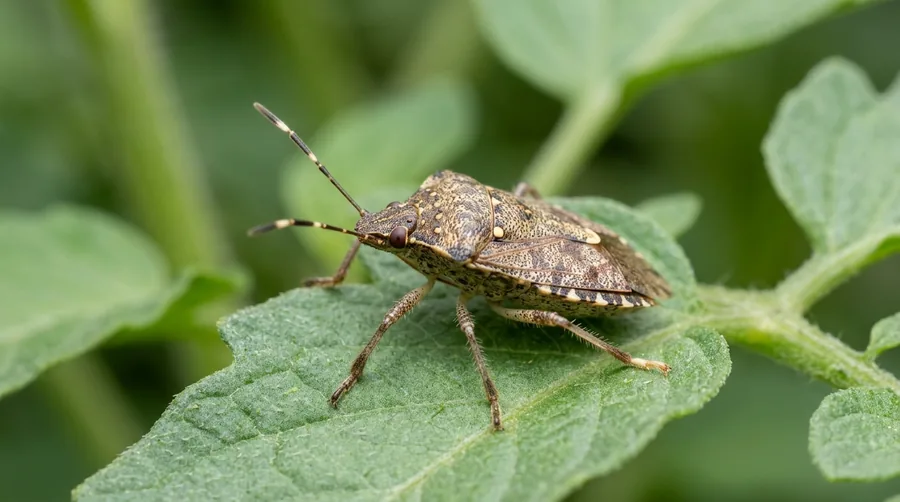
Shield-shaped mottled brown marmorated stink bug with white antenna bands on a window screen
Recommended Products
See the full ranking →


What it does
Brown marmorated stink bugs are shield-shaped plant feeders that gather in large numbers on sunny walls in fall and squeeze indoors to overwinter in attics, wall voids, and around windows. They become active again on warm days and in spring, and release a pungent odor when crushed or disturbed.
Where it lives
In the warm season they live outdoors on fruit trees, vegetables, ornamentals, and field crops. To overwinter they move inside homes and buildings, sheltering in attics, wall voids, and behind siding and trim. Invasive from Asia, they are now found across much of the US, heaviest in the Mid-Atlantic and Northeast.
How it breeds
Females lay clusters of light green-to-white eggs on the undersides of leaves. Nymphs pass through five instars over the summer, and there are one or more generations a year depending on climate. Adults overwinter, then emerge in spring to feed and breed.
What it eats
They are plant feeders that pierce and suck juices from fruits, vegetables, ornamentals, and field crops with a needle-like mouthpart. They do not feed indoors, so overwintering bugs inside a home are not eating anything there.
Identification
Adults are about 1/2 inch, shield-shaped, and mottled brown, with alternating light-and-dark bands along the edge of the abdomen and white bands on the antennae and legs. The white antenna bands help separate them from native stink bugs.
Signs of an infestation
- Clusters of shield-shaped bugs on sunny exterior walls in fall
- Bugs at windows, lights, and indoors on warm days
- A pungent cilantro-like or skunky odor when disturbed
- Bugs emerging inside from attics and wall voids in spring
- Dimpled or damaged fruit and vegetables in the garden
Prevention tips
- Seal cracks, gaps, and around windows and doors before fall
- Repair torn screens on windows, doors, and vents
- Vacuum up indoor bugs and empty promptly to avoid odor
- Reduce exterior lighting that attracts them at night
- Screen attic and soffit vents to block entry
Professional solutions
For heavy fall invasions, professionals apply exterior perimeter treatments before bugs enter and help seal entry points. Indoors, removal and exclusion are preferred over spraying inside wall voids, where dead bugs can attract other pests. Always read and follow the EPA label on any product.
Health & safety
Brown marmorated stink bugs do not bite, sting, or spread disease, and they do not damage the house structure. The main issues are the odor they release when disturbed and their damage to crops and garden plants; some people find the odor irritating. Household risk is low.
Relevant Products




Frequently asked questions
Why are stink bugs all over my house in the fall?
As temperatures drop, brown marmorated stink bugs look for sheltered places to overwinter and gather on warm, sunny walls before slipping indoors through gaps. They cluster in attics and wall voids until spring, then try to get back outside.
Should I squish stink bugs indoors?
It is better not to. Crushing them releases their pungent odor and can stain surfaces. Vacuuming them up and emptying the canister promptly, or sweeping them into soapy water, avoids the smell. Sealing entry points is the longer-term fix.
Do brown marmorated stink bugs damage my home?
No. They do not bite, feed, or reproduce indoors and cause no structural damage. Their impact is as a nuisance invader and as an agricultural pest that damages fruit, vegetable, and ornamental plants outdoors.
Fact-checked by Morgan Vance, Editorial Director (editorial review, not a professional pest-control or medical sign-off). Last reviewed July 26, 2026. We correct anything a reader shows us is wrong — see our corrections policy.