
Boxelder Bug
Boisea trivittata · also called boxelder bugs, maple bug, box elder bug
Quick answer
The boxelder bug (Boisea trivittata) is a black, elongated bug with three orange-red stripes behind its head and red-edged wings. It feeds on boxelder, maple, and ash seeds in summer, then clusters on sunny walls and enters homes to overwinter in fall. It's harmless but can stain surfaces and smells if crushed.
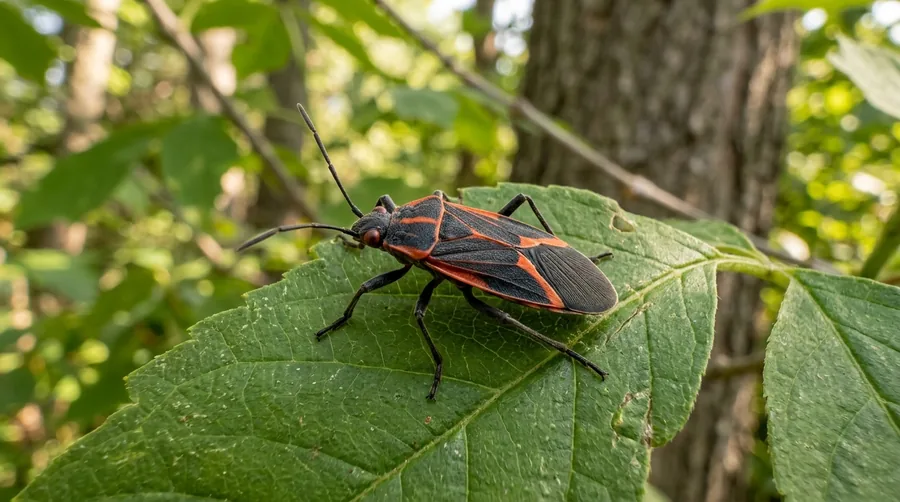
Black boxelder bug with three orange-red stripes and red-edged wings on a sunny wall
Recommended Products
See the full ranking →


What it does
Boxelder bugs feed on the seeds of boxelder and related trees through summer, then gather in large sunny clusters on south- and west-facing walls in fall and work into homes to overwinter. They re-emerge on warm winter days and in spring, and can leave fecal stains or smell if crushed.
Where it lives
Outdoors they live on and around boxelder, maple, and ash trees. To overwinter they move into wall voids, attics, and around windows and doors. They are common across the US wherever host trees grow, and are especially noticeable in the Midwest and West.
How it breeds
Adults emerge in spring, and females lay reddish eggs on host trees and bark. Nymphs, bright red at first and later red-and-black, develop over summer. There are one or two generations a year before adults seek shelter to overwinter.
What it eats
Boxelder bugs feed primarily on the seeds and seed pods of boxelder, maple, and ash trees, plus some leaves and fruit. They do not feed indoors and do not damage the home while overwintering.
Identification
Adults are about 1/2 inch, elongated, and black with three orange-red stripes on the thorax and red veins edging the wings. The nymphs are bright red. The distinctive red-and-black pattern makes them easy to recognize.
Signs of an infestation
- Large clusters of red-and-black bugs on sunny walls in fall
- Bugs at windows and indoors on warm winter days
- Small dark fecal stains on siding, curtains, or walls
- Bright red nymphs on or near boxelder and maple trees
- Bugs emerging indoors from wall voids in spring
Prevention tips
- Seal cracks and gaps around windows, doors, and utility lines
- Repair torn screens and screen vents
- Vacuum up indoor bugs rather than crushing them
- Reduce clustering spots by sealing sunny wall gaps
- Consider managing nearby female boxelder trees if practical
Professional solutions
Boxelder bugs are harmless and usually handled with exclusion and vacuuming. For very heavy fall invasions, a professional can apply an exterior perimeter treatment before they enter. Indoor spraying is generally unnecessary. Always read and follow the EPA label on any product.
Health & safety
Boxelder bugs do not bite, sting, or spread disease and cause no structural damage. They are a nuisance: their fecal spots can stain fabrics and surfaces, and crushing them releases a foul odor. Household risk is low.
Relevant Products




Frequently asked questions
Are boxelder bugs harmful?
No. Boxelder bugs do not bite, sting, spread disease, or damage the structure of a home. They are a seasonal nuisance whose main downsides are clustering in large numbers, staining surfaces with fecal spots, and releasing an odor if crushed.
Why do boxelder bugs cluster on my house in fall?
They are looking for warm places to overwinter, so they gather on sunny south- and west-facing walls and slip inside through gaps. Sealing cracks and repairing screens before fall is the most effective way to keep them out.
How do I get rid of boxelder bugs inside?
Vacuum them up rather than crushing them, and empty the canister promptly to avoid the odor. Sealing entry points around windows, doors, and utility lines keeps more from getting in. Indoor spraying is usually unnecessary for this harmless bug.
Fact-checked by Morgan Vance, Editorial Director (editorial review, not a professional pest-control or medical sign-off). Last reviewed May 5, 2026. We correct anything a reader shows us is wrong — see our corrections policy.