
Firebrat
Thermobia domestica · also called firebrats, fire brat
Quick answer
The firebrat (Thermobia domestica) is a mottled gray-brown, wingless insect closely related to the silverfish, but it thrives in hot, humid spots near ovens, furnaces, water heaters, and boiler rooms. It feeds on starchy materials like paper, glue, and cereals. It does not bite but can damage stored goods.
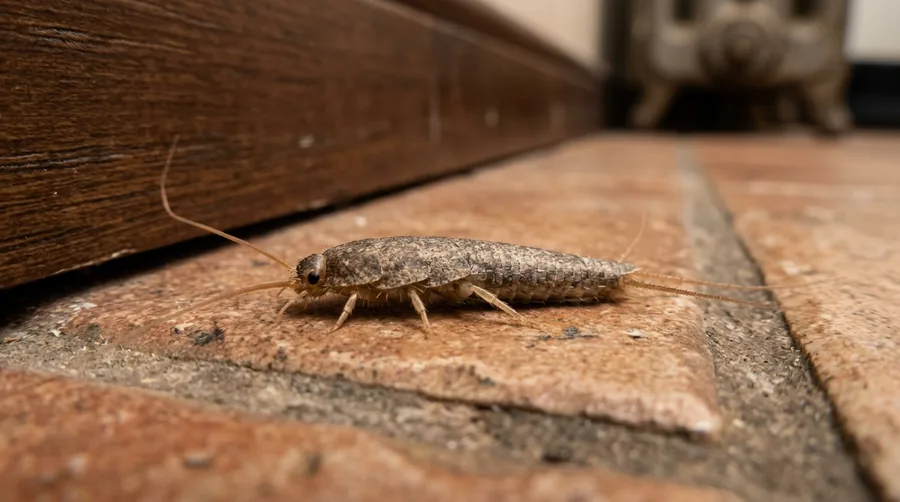
Mottled gray-brown firebrat with long antennae and tail bristles near a warm pipe
Recommended Products
See the full ranking →


What it does
Firebrats are nocturnal, fast-moving, and secretive, darting into cracks when disturbed. They behave much like silverfish but seek out heat, congregating near warm appliances and pipes. They are wingless and stay close to their food and warm harborage, foraging at night for starchy materials and crumbs.
Where it lives
Firebrats favor hot, humid locations, thriving at temperatures many other pests avoid: around ovens, furnaces, water heaters, boilers, hot pipes, bakeries, and warm attics or utility rooms. They hide in cracks near heat sources and are found nationwide, especially where warmth and moisture occur together.
How it breeds
Females lay eggs in warm cracks, and the young resemble small adults, molting repeatedly as they grow. In the warm conditions they prefer, firebrats develop faster than silverfish, maturing in a few months. They continue molting as adults and can live for a couple of years under favorable warm, humid conditions.
What it eats
Firebrats eat starches and carbohydrates: paper, cardboard, book bindings, glue and paste, flour, cereals, and other dried food, along with some fabrics. Like silverfish, they can go long stretches without food, helping them persist around stored goods and in warm utility spaces.
Identification
Firebrats are about 1/2 inch, wingless, with the same tapered, teardrop body and three tail bristles as silverfish, but they are mottled gray-brown and speckled rather than silvery. Two long antennae extend from the front. Their preference for hot areas near appliances helps distinguish them from silverfish, which tolerate cooler damp spots.
Signs of an infestation
- Speckled gray-brown insects near ovens, furnaces, or water heaters
- Fast, wriggling bugs in warm utility rooms at night
- Notched or grazed paper, cardboard, and book bindings
- Tiny pepper-like droppings and shed skins near heat sources
- Damage to stored dry goods in warm pantry or attic areas
Prevention tips
- Reduce heat and humidity buildup in utility and boiler rooms
- Vent and insulate around hot appliances and pipes where possible
- Store paper, books, and dry food in sealed containers
- Seal cracks and crevices near heat sources where they hide
- Vacuum warm baseboard and appliance areas regularly
Professional solutions
Firebrat infestations usually respond to reducing warmth and humidity, sanitation, and crack-and-crevice treatments or desiccant dusts near heat sources. Persistent problems in warm commercial spaces like bakeries or boiler rooms, or widespread activity, may need a professional to treat harborage areas and identify the heat and moisture conditions sustaining them.
Health & safety
Firebrats do not bite, sting, or transmit disease, so they present no meaningful health risk to people. Like silverfish, their scales and shed skins may add slightly to indoor allergens for sensitive individuals. Their significance is as a nuisance and a cause of damage to paper, books, and stored dry goods.
Relevant Products




Frequently asked questions
What's the difference between a firebrat and a silverfish?
They are close relatives with the same teardrop shape and three tails, but firebrats are mottled gray-brown while silverfish are silvery. The biggest difference is temperature preference: firebrats seek out hot spots near furnaces, ovens, and water heaters, while silverfish prefer cooler, damp areas like bathrooms and basements.
Are firebrats dangerous?
No. Firebrats do not bite, sting, or spread disease. They are a nuisance pest whose main harm is damaging paper, book bindings, cardboard, and stored dry foods as they feed on starches. Controlling heat, humidity, and food sources keeps their numbers down.
Why do I have firebrats near my water heater?
Firebrats thrive in the warm, humid microclimate around water heaters, furnaces, and hot pipes, which most other insects avoid. That heat lets them breed faster, so utility rooms are a classic hotspot. Reducing moisture and sealing nearby cracks makes the area less hospitable.
Fact-checked by Morgan Vance, Editorial Director (editorial review, not a professional pest-control or medical sign-off). Last reviewed June 29, 2026. We correct anything a reader shows us is wrong — see our corrections policy.