
House Centipede
Scutigera coleoptrata · also called house centipedes, hundred-legger, hundred leggers
Quick answer
The house centipede (Scutigera coleoptrata) is a fast, grayish-yellow arthropod with 15 pairs of very long legs. It hunts other household pests like roaches, silverfish, and spiders in damp basements and bathrooms. Though it can deliver a mild bite if handled, it is essentially harmless and even beneficial indoors.
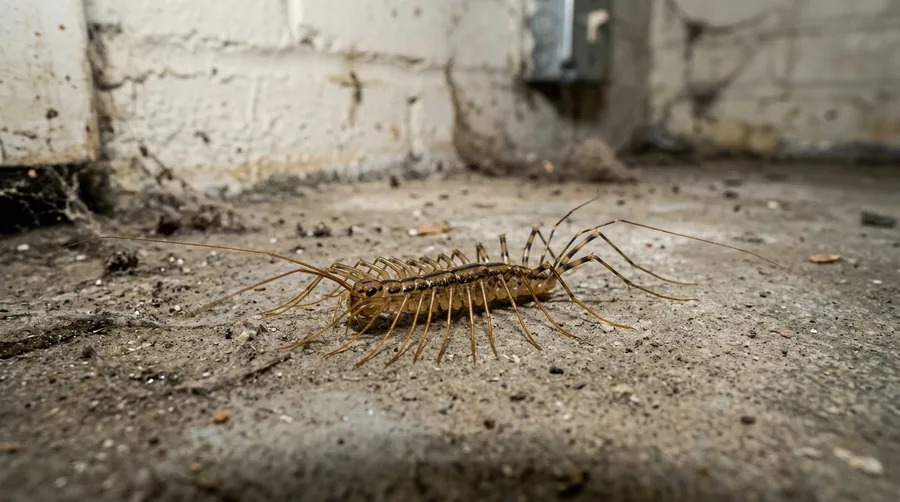
Grayish-yellow house centipede with many long legs on a basement wall
Recommended Products
See the full ranking →


What it does
House centipedes are nocturnal, remarkably fast predators that hunt other small pests, darting across walls and floors and freezing when spotted. Unlike most centipedes they are adapted to live indoors year-round. They are shy and flee from people, and their presence often signals other insects in the home that they are feeding on.
Where it lives
They favor cool, damp areas: basements, bathrooms, crawl spaces, closets, and under sinks, hiding in cracks and behind clutter by day. Outdoors they live under stones, logs, and leaf litter. They are found nationwide and move indoors especially where moisture and prey insects are plentiful. Though grouped here as an insect, the centipede is actually a many-legged arthropod, not a true insect.
How it breeds
House centipedes develop slowly and are long-lived, sometimes several years. Females lay eggs in damp soil or hidden cracks, and the young hatch with fewer leg pairs, adding more with each molt until they reach the adult 15 pairs. They reproduce slowly compared with typical household insects, so numbers stay relatively low.
What it eats
House centipedes are predators that eat other household arthropods: cockroaches, silverfish, firebrats, spiders, bed bugs, ants, and other small insects. This diet is why entomologists consider them beneficial indoors, since a house centipede is effectively a natural pest-control agent working at night.
Identification
The house centipede has a flattened, grayish-yellow body about 1 to 1.5 inches with three dark lengthwise stripes and 15 pairs of very long, delicate legs that make it look far bigger and more alarming than it is. The rear legs are especially long. Its extreme speed and long legs distinguish it from soil centipedes and millipedes.
Signs of an infestation
- Fast, many-legged insects darting across walls or floors at night
- Sightings in damp basements, bathrooms, or utility rooms
- Shed legs or bodies in sinks and tubs they cannot climb out of
- Presence alongside other pests like silverfish or roaches
- Occasional daytime sightings when clutter is disturbed
Prevention tips
- Lower humidity with dehumidifiers and better ventilation
- Fix leaks and dry out basements, crawl spaces, and bathrooms
- Reduce the prey insects they feed on, which removes their food supply
- Seal cracks, gaps, and entry points around the foundation
- Declutter damp storage areas that offer hiding spots
Professional solutions
House centipedes seldom need professional treatment; controlling moisture and the other insects they eat usually makes them leave on their own. If numbers are high or sightings are distressing, a perimeter and crack-and-crevice treatment reduces them, but addressing the underlying pest and moisture problem is more effective and longer-lasting than spraying the centipedes directly.
Health & safety
House centipedes are among the more beneficial 'pests' because they eat other insects. They can bite if handled, using venomous claws to subdue prey, but they are shy, and most cannot pierce human skin; a rare bite feels like a mild bee sting and is not dangerous. They do not spread disease or damage property.
Relevant Products




Frequently asked questions
Are house centipedes dangerous?
Not really. House centipedes are shy and flee from people. They can bite if picked up, using venomous claws meant for prey, but most cannot penetrate human skin, and a rare bite feels like a mild bee sting. They do not spread disease or damage the home, and they actually eat other pests.
Should I kill house centipedes?
Many entomologists suggest leaving them alone, since they prey on roaches, silverfish, bed bugs, and other pests, acting as free pest control. If you find them unsettling, the best long-term fix is to reduce moisture and the insects they feed on, which removes their food and encourages them to leave.
Why do I have house centipedes in my bathroom?
Bathrooms offer the damp conditions and small prey insects that house centipedes need. Their presence often means there is enough moisture and other bugs to sustain them. Running a fan, fixing leaks, and reducing other pests usually makes the space far less attractive to them.
Fact-checked by Morgan Vance, Editorial Director (editorial review, not a professional pest-control or medical sign-off). Last reviewed July 26, 2026. We correct anything a reader shows us is wrong — see our corrections policy.