
Millipede
Diplopoda · also called millipedes, thousand-legger, thousand leggers
Quick answer
Millipedes are slow, cylindrical, many-segmented arthropods with two pairs of legs per segment that curl into a spiral when disturbed. Detritivores that eat decaying plant matter, they invade homes in large numbers during wet weather. They do not bite, sting, or damage property, though some secrete a mildly irritating fluid.
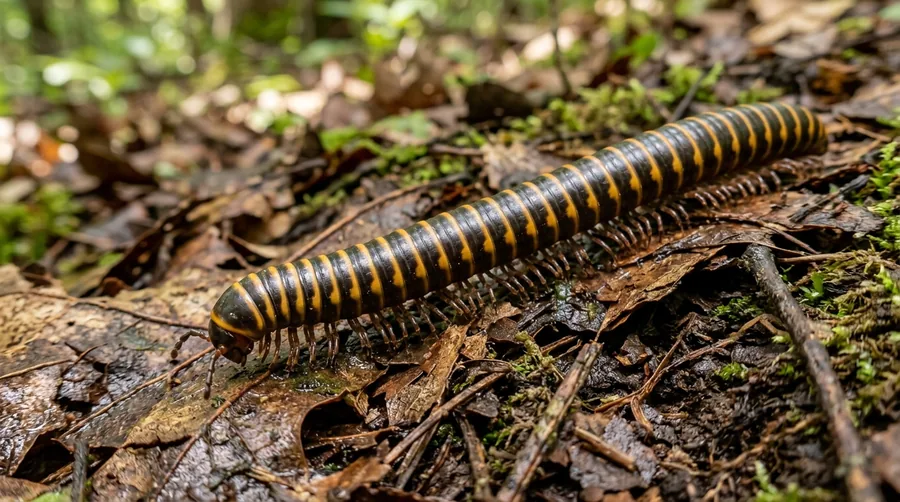
Dark cylindrical millipede coiled into a spiral on damp soil and leaf litter
Recommended Products
See the full ranking →


What it does
Millipedes are slow-moving, harmless scavengers that curl into a tight spiral when threatened and may secrete a defensive fluid. They are nocturnal and moisture-dependent, staying in damp soil and litter. In fall or during heavy rains, or conversely during drought, large numbers may migrate and wander into homes, though they cannot survive long in dry interiors.
Where it lives
They live in moist, organic-rich places: under mulch, leaf litter, logs, stones, and in garden soil and compost. Indoors they appear in damp basements, garages, and around ground-level door thresholds after migrating in, usually dying quickly once inside. Millipedes are found nationwide wherever there is decaying plant matter and moisture. Though grouped here as an insect, a millipede is actually a many-legged arthropod, not a true insect.
How it breeds
Females lay clusters of dozens to hundreds of eggs in the soil. The young hatch with only a few segments and legs, adding more with each molt as they grow, and can take one to several years to mature. Millipedes are relatively long-lived and continue the cycle in moist outdoor habitats.
What it eats
Millipedes are detritivores, feeding on decaying leaves, wood, and other organic matter, which makes them beneficial recyclers in soil and compost. They occasionally nibble tender seedling roots or soft, damaged plants, but they do not eat structural wood, stored food, or fabrics in the home.
Identification
Millipedes have long, rounded, cylindrical bodies with many segments, each bearing two pairs of legs, giving a dense fringe of short legs and a slow, wave-like crawl. Most household invaders are brown to black and 1 to 1.5 inches, though some native species are larger. Curling into a coil when disturbed is a key identifying trait that separates them from centipedes.
Signs of an infestation
- Slow, cylindrical many-legged bugs that curl into a spiral
- Large numbers appearing indoors after heavy rain or in fall
- Dead millipedes accumulating near doors, garages, or basements
- Live ones found under mulch, logs, or flowerpots outdoors
- A faint odor from their defensive secretion when crushed
Prevention tips
- Move mulch, leaf litter, and debris away from the foundation
- Improve drainage and reduce moisture around the home's perimeter
- Seal gaps under doors and around the foundation and vents
- Use weatherstripping and door sweeps at ground level
- Water lawns in the morning so soil dries before nightfall
Professional solutions
Millipedes rarely require professional control, since indoor ones die quickly and the fix is habitat and moisture reduction outdoors. For repeated mass invasions, a perimeter barrier treatment around the foundation during migration periods helps, and a pest professional can apply an exterior treatment and advise on drainage and harborage reduction to prevent future waves.
Health & safety
Millipedes pose almost no health risk. They do not bite, sting, or transmit disease, and they do not damage the home. When handled or crushed, some species secrete a defensive fluid that can irritate skin or eyes and stain, so it is best to sweep them up rather than crush them and to wash hands after contact.
Relevant Products




Frequently asked questions
What's the difference between a millipede and a centipede?
Millipedes have rounded, cylindrical bodies with two pairs of short legs per segment, move slowly, eat decaying plants, and curl into a coil when disturbed. Centipedes are flatter, faster, have one pair of legs per segment, and are predators that can bite. Millipedes are harmless; centipedes can deliver a mild bite.
Why are millipedes invading my house?
Millipedes migrate in large numbers during very wet weather, in fall, or sometimes during drought, wandering indoors from damp mulch and leaf litter near the foundation. They cannot survive long in dry interiors and usually die within a day or two. Reducing moisture and moving mulch away from the walls limits invasions.
Are millipedes harmful?
No. Millipedes do not bite, sting, spread disease, or damage buildings, wood, or stored food. Their only nuisance is showing up in numbers and, if crushed, releasing a defensive fluid that can irritate skin or eyes and leave a stain, so it is best to sweep or vacuum them up.
Fact-checked by Morgan Vance, Editorial Director (editorial review, not a professional pest-control or medical sign-off). Last reviewed June 7, 2026. We correct anything a reader shows us is wrong — see our corrections policy.