Pillbug (Roly-Poly)
Armadillidium vulgare · also called pillbug, pill bug, roly-poly
Quick answer
The pillbug, or roly-poly (Armadillidium vulgare), is a small, gray, armored land crustacean, not an insect, that rolls into a tight ball when disturbed. It needs constant moisture and feeds on decaying vegetation. Harmless to people and homes, it wanders indoors from mulch but usually dries out and dies quickly.
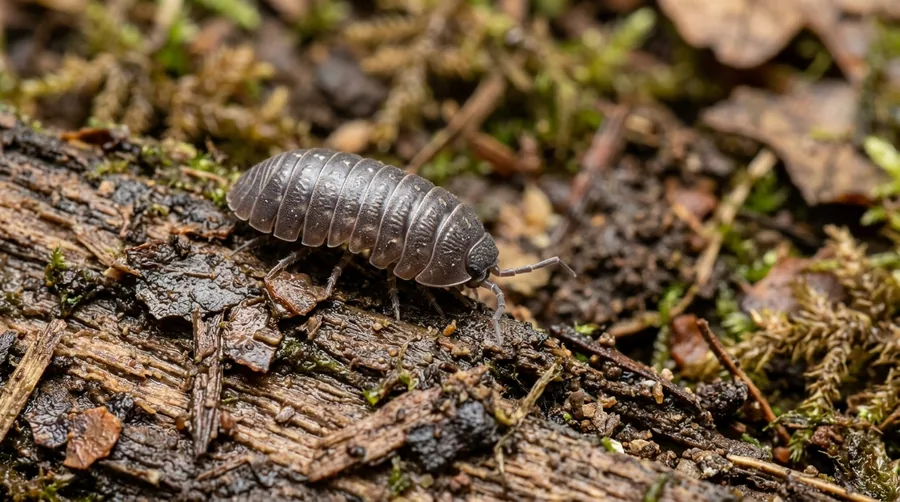
Gray armored pillbug partially rolled into a ball on damp soil beside mulch
Recommended Products
See the full ranking →


What it does
Pillbugs are slow, harmless, nocturnal scavengers best known for rolling into a tight ball when disturbed, a defense that gives them the 'roly-poly' name. They depend on moisture because they breathe through gill-like structures and dry out easily. They stay in damp harborage by day and forage at night on decaying plant matter.
Where it lives
They live in moist, sheltered spots: under mulch, leaf litter, stones, logs, flowerpots, and boards, and in compost and damp soil. Indoors they appear in damp basements, garages, and around ground-level thresholds after wandering in, but they cannot survive long in dry interiors. Pillbugs are found nationwide in gardens and landscaped areas.
How it breeds
Pillbugs are crustaceans, so females carry their eggs and newly hatched young in a fluid-filled brood pouch on the underside of the body. Broods number a few dozen young, which look like tiny adults and molt as they grow. There are usually one to two broods a year, and adults can live two to three years in moist habitats.
What it eats
Pillbugs are detritivores that feed on decaying leaves, rotting wood, and other decomposing organic matter, playing a useful role in breaking down litter and recycling nutrients. They occasionally nibble tender seedlings, roots, or ripe fruit resting on damp soil, but they do not damage structures, stored food, or fabrics.
Identification
Pillbugs are 1/4 to 3/4 inch, oval, slate-gray, with a segmented, armored back of overlapping plates and seven pairs of legs. The defining trait is their ability to roll into a tight ball when threatened. They are often confused with sowbugs, which look similar but cannot roll up and have two small tail-like projections.
Signs of an infestation
- Small gray armored bugs that roll into a ball when touched
- Pillbugs found under mulch, pots, stones, or boards
- Occasional wandering indoors into damp basements or garages
- Dead, dried-out pillbugs near ground-level doors and thresholds
- Activity increasing in damp weather and around watered beds
Prevention tips
- Move mulch, leaf litter, and debris back from the foundation
- Improve drainage and let soil near the house dry between waterings
- Seal gaps under doors and around the foundation and vents
- Add door sweeps and weatherstripping at ground level
- Store firewood and boards off the ground and away from walls
Professional solutions
Pillbugs almost never require professional treatment, since indoor ones die quickly and the solution is reducing outdoor moisture and harborage. For persistent perimeter invasions, an exterior barrier treatment during damp periods can help, and a pest professional can apply it and recommend drainage and landscaping changes to keep the moist conditions they need away from the house.
Health & safety
Pillbugs are completely harmless to people and property. They do not bite, sting, or transmit disease, and they cause no structural, food, or fabric damage. At most they can nibble seedlings in a very damp garden. Because they need moisture to survive, the ones that wander indoors simply dry out and die, making them a minor nuisance at worst.
Relevant Products




Frequently asked questions
Is a pillbug an insect?
No. A pillbug is actually a terrestrial crustacean, more closely related to shrimp and crabs than to insects. It breathes through gill-like structures, which is why it needs constant moisture and dries out quickly indoors. That crustacean biology is why it behaves so differently from true insects.
What's the difference between a pillbug and a sowbug?
The easiest test is rolling: pillbugs can roll into a tight ball when disturbed, while sowbugs cannot. Sowbugs also have two small tail-like projections at the rear that pillbugs lack. Both are harmless, moisture-loving crustaceans that feed on decaying plant matter.
How do I keep pillbugs out of my house?
Because pillbugs need dampness, the key is drying out the perimeter: move mulch and leaf litter away from the foundation, improve drainage, and let the soil dry between waterings. Sealing gaps under doors and adding door sweeps blocks the ones that wander in, and any that get inside usually dry out and die on their own.
Fact-checked by Morgan Vance, Editorial Director (editorial review, not a professional pest-control or medical sign-off). Last reviewed June 17, 2026. We correct anything a reader shows us is wrong — see our corrections policy.