Formosan Subterranean Termite
Coptotermes formosanus · also called Formosan termite, super termite, Formosan subterranean termite
Quick answer
The Formosan subterranean termite (Coptotermes formosanus) is the most destructive termite in the US. Its colonies can hold millions and consume wood far faster than native subterranean termites. It builds mud tubes and moisture-holding carton nests, sometimes even above ground inside walls. It swarms at dusk in late spring and needs professional control.
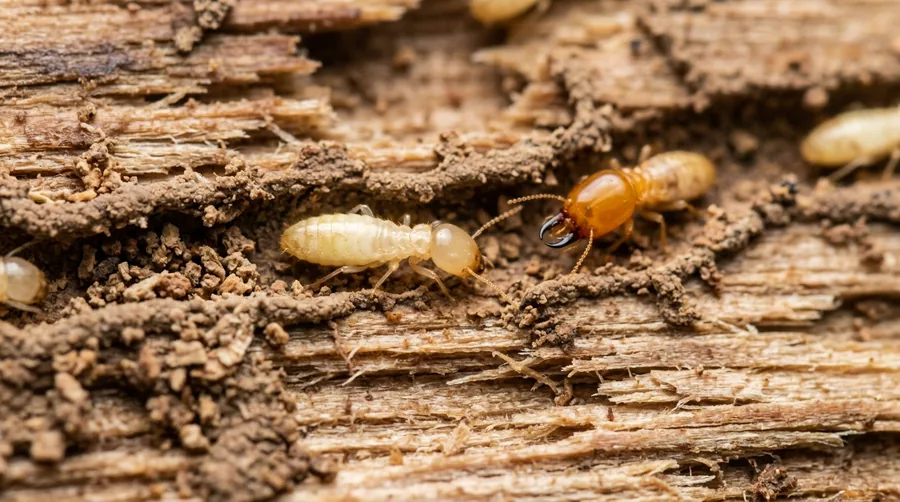
Creamy-white Formosan subterranean termites on damaged wood beside soft papery carton nest material
Recommended Products


What it does
Formosan termites forage from huge underground colonies through mud tubes and feed on wood day and night. Unusually, when they find a water source they can build moisture-holding carton nests inside walls or above ground, letting them persist without direct soil contact.
Where it lives
Colonies nest in soil but reach structures through mud tubes and can establish aerial carton nests in wall voids, roofs, and even boats where moisture is present. They are established across the Gulf Coast and Southeast, including Louisiana, Florida, and Texas, plus Hawaii.
How it breeds
Mature colonies can exceed several million termites, with a caste system of workers, soldiers, and reproductives. Huge swarms of yellowish-brown winged reproductives fly at dusk in late spring to early summer, and queens are long-lived, so colonies grow enormous over time.
What it eats
Formosan termites eat cellulose: structural wood, cardboard, paper, and other plant material. Because their colonies are so large, they consume wood far faster than native subterranean termites, causing damage more quickly.
Identification
Creamy workers and soldiers are hidden; soldiers have a rounded, teardrop-shaped head that exudes a defensive fluid. Swarmers are about 1/2 inch, yellowish-brown, with hairy wings, and swarm in large numbers at dusk. Mud tubes and soft, papery carton material are key signs.
Signs of an infestation
- Mud tubes on foundations, walls, and crawl spaces
- Wood that sounds hollow or crumbles when probed
- Large dusk swarms in late spring to early summer
- Piles of discarded wings after a swarm
- Soft, papery carton material inside wall voids
Prevention tips
- Reduce soil-to-wood contact around the structure
- Fix leaks and improve drainage to cut moisture
- Remove wood debris, stumps, and buried scrap wood
- Keep mulch and firewood away from the foundation
- Schedule regular professional termite inspections
Professional solutions
Formosan termites require professional control; their colony size and carton nests make DIY inadequate. Professionals use soil termiticide barriers, baiting systems, and sometimes direct nest treatment, then monitor over time. Early inspection is critical to limit damage. Always read and follow the EPA label on any product.
Health & safety
Formosan termites do not bite, sting, or transmit disease to people, so there is no direct health risk. The danger is severe and rapid structural damage; this is the most destructive termite species in the country, making household risk high.
Relevant Products


Frequently asked questions
Why is the Formosan termite called a super termite?
Formosan colonies can number in the millions, far larger than native subterranean termite colonies, and they consume wood much faster. Their size, aggressiveness, and ability to build moisture-holding carton nests earned them the nickname super termite.
Can Formosan termites live without soil contact?
Sometimes. Unlike typical subterranean termites, Formosan termites can build carton nests that hold moisture inside walls or above ground when they find a water source, such as a roof leak. This lets a colony persist even without direct contact with soil.
Do I need a professional for Formosan termites?
Yes. Their enormous colonies and hidden carton nests make DIY products inadequate for protecting a structure. A licensed professional uses soil barriers, baiting systems, and monitoring, and early inspection is important because they cause damage quickly. Any product must follow its EPA label.
Fact-checked by Morgan Vance, Editorial Director (editorial review, not a professional pest-control or medical sign-off). Last reviewed July 28, 2026. We correct anything a reader shows us is wrong — see our corrections policy.