Dampwood Termite
Zootermopsis spp. · also called dampwood termites, Pacific dampwood termite, rottenwood termite
Quick answer
Dampwood termites (Zootermopsis species) are the largest termites in the US and live only in wood with high moisture, such as logs, stumps, and structural wood soaked by leaks or poor drainage. They build no mud tubes and rarely contact soil. Their presence usually signals a moisture problem to fix along with the termites.
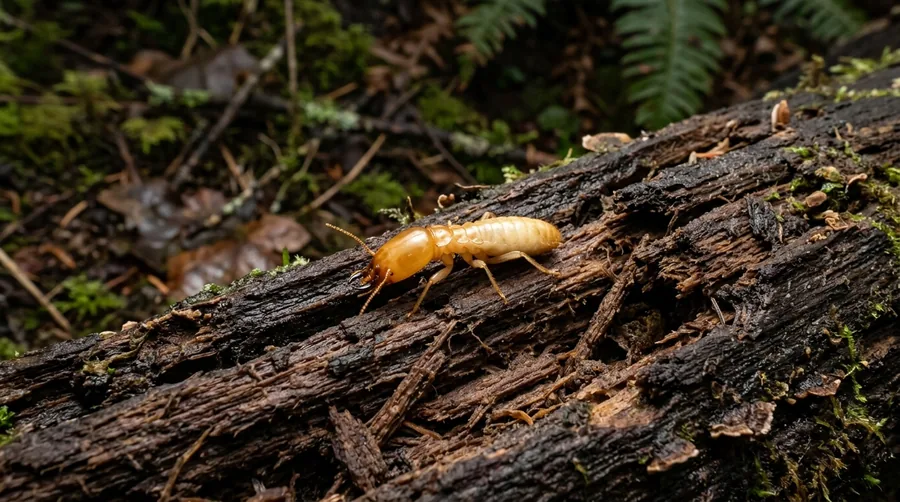
Large creamy-tan dampwood termites in moist, decaying wood with a soldier showing a dark head
Recommended Products


What it does
Dampwood termites infest wood with high moisture content and need no soil contact, so they build no mud tubes. Their colonies are relatively small and slow-growing, and large winged reproductives fly toward lights on warm, humid evenings to found new colonies.
Where it lives
They live in moist, decaying wood: dead trees, stumps, logs, and structural wood dampened by leaks, condensation, or ground contact. Pacific species concentrate along the humid West Coast, while other species occur in the arid Southwest and desert areas near moisture.
How it breeds
Colonies are small, often a few thousand, with no true worker caste; immature termites do the colony's work. They mature slowly, and winged reproductives swarm in late summer to fall to start new colonies in damp wood.
What it eats
Dampwood termites eat cellulose in moist wood, consuming across the grain and often packing their galleries with distinctive fecal pellets. They rely on the wood's high moisture content rather than drawing water from soil.
Identification
They are the largest US termites; winged reproductives reach about 1 inch with wings. They are creamy to tan, and soldiers have large dark heads and mandibles. The absence of mud tubes and a clear link to wet, decaying wood help distinguish them.
Signs of an infestation
- Large fecal pellets in and around galleries
- Damaged wood that is damp or decaying
- Discarded wings after a swarm
- Large swarmers near lights in late summer and fall
- Galleries in wood near leaks, plumbing, or ground contact
Prevention tips
- Fix leaks and eliminate sources of wood moisture
- Improve drainage and ventilation around the structure
- Replace decayed or water-damaged wood
- Keep structural wood off the ground and away from soil
- Correct standing water and condensation near wood
Professional solutions
Because dampwood termites signal a moisture problem, control pairs correcting the moisture source with professional treatment of infested wood. A professional should assess the extent and the underlying water issue, since fixing moisture is essential to prevent return. Always read and follow the EPA label on any product.
Health & safety
Dampwood termites do not bite, sting, or spread disease to people, so there is no direct health risk. The concern is structural damage in moist wood, which also flags a moisture or decay problem worth addressing, making household risk moderate.
Relevant Products


Frequently asked questions
Does finding dampwood termites mean I have a moisture problem?
Usually, yes. Dampwood termites only infest wood with high moisture, so their presence typically points to a leak, poor drainage, condensation, or wood in contact with soil. Fixing the moisture source is a key part of both treating and preventing them.
Are dampwood termites as destructive as subterranean termites?
They are generally less of a widespread structural threat because they need consistently wet wood and form smaller, slower-growing colonies. Still, they can cause significant damage in chronically damp wood, and the moisture that attracts them can cause decay of its own.
How do I prevent dampwood termites?
Keep wood dry and separated from soil: fix leaks, improve drainage and ventilation, replace decayed wood, and address condensation. Because they depend on moisture, controlling water around the home is the most effective prevention, alongside professional treatment of any active infestation.
Fact-checked by Morgan Vance, Editorial Director (editorial review, not a professional pest-control or medical sign-off). Last reviewed June 22, 2026. We correct anything a reader shows us is wrong — see our corrections policy.