
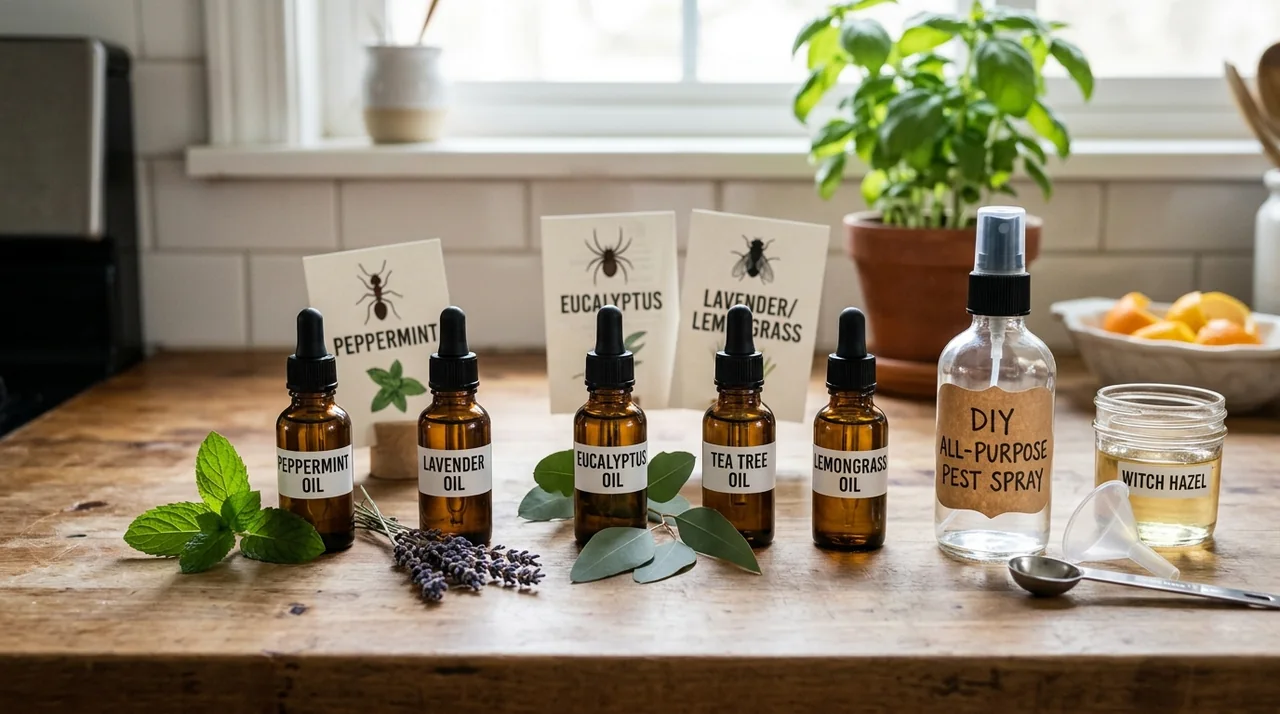


Essential oils are widely marketed as natural pest control, and there is real science behind why some insects avoid certain plant-derived scents. But there is also a lot of overpromising. This guide sorts what essential oils can realistically do from what they cannot, and, importantly, covers the safety issues people often overlook, especially around pets.
What Essential Oils Can and Cannot Do
Many essential oils, peppermint, cedarwood, lemongrass, citronella, eucalyptus, and others, contain compounds that some insects find repellent, and a few oil-derived ingredients appear in registered products. As a supplement for minor nuisance situations, an oil-based spray may briefly discourage some pests from a specific surface. What they generally cannot do is eliminate an established infestation. Oils evaporate quickly, so any effect is short-lived; they do not kill eggs or hidden life stages; and pests routinely route around treated areas to reach food, water, or harborage. If you already have a colony of ants, a mouse population, or a roach infestation, essential oils will not resolve it, and relying on them can let the problem grow.
Realistic Uses
Where oils fit best is prevention and nuisance reduction alongside the methods that do the heavy lifting. For example, wiping counters with a diluted solution as part of regular cleaning, refreshing a scent at an entry point, or using citronella-type products outdoors for temporary personal comfort. Pair these with the real fundamentals: sealing entry points, removing food and moisture, and cleaning. Think of oils as a minor supporting player, not the lead.
Safety First, Especially With Pets
This is the part that gets overlooked. "Natural" does not mean "harmless." Many essential oils are toxic to pets, particularly cats, whose livers process these compounds poorly. Oils such as tea tree (melaleuca), peppermint, citrus, eucalyptus, pennyroyal, and others can cause serious illness in cats and dogs through ingestion, skin contact, or even diffusing in the air in some cases. Never apply essential oils to a pet or in areas a pet grooms or rests without veterinary guidance, and keep concentrated oils well out of reach. If you diffuse oils, do it where pets can leave the room.
Oils can also irritate human skin, eyes, and airways, especially undiluted, and some can trigger reactions in sensitive people or children. Keep concentrated oils away from children. If a pet ingests or is exposed to essential oil and shows signs of illness (drooling, wobbliness, vomiting, lethargy), contact your veterinarian or an animal poison control line right away. If a person ingests essential oil or has a serious reaction, call Poison Control at 1-800-222-1222.
The Bottom Line
Essential oils can play a small, pleasant role in a prevention routine, but they are not a reliable standalone pest control method, and their safety around pets deserves genuine caution. For anything beyond minor nuisance prevention, put your effort into exclusion, sanitation, and, when needed, EPA-registered products used per the label or a licensed professional. If you are drawn to natural methods specifically to protect pets or family, remember that some "natural" oils pose their own risks, so choose based on safety, not just because a product is labeled natural.