

What is the most effective way to kill ants?
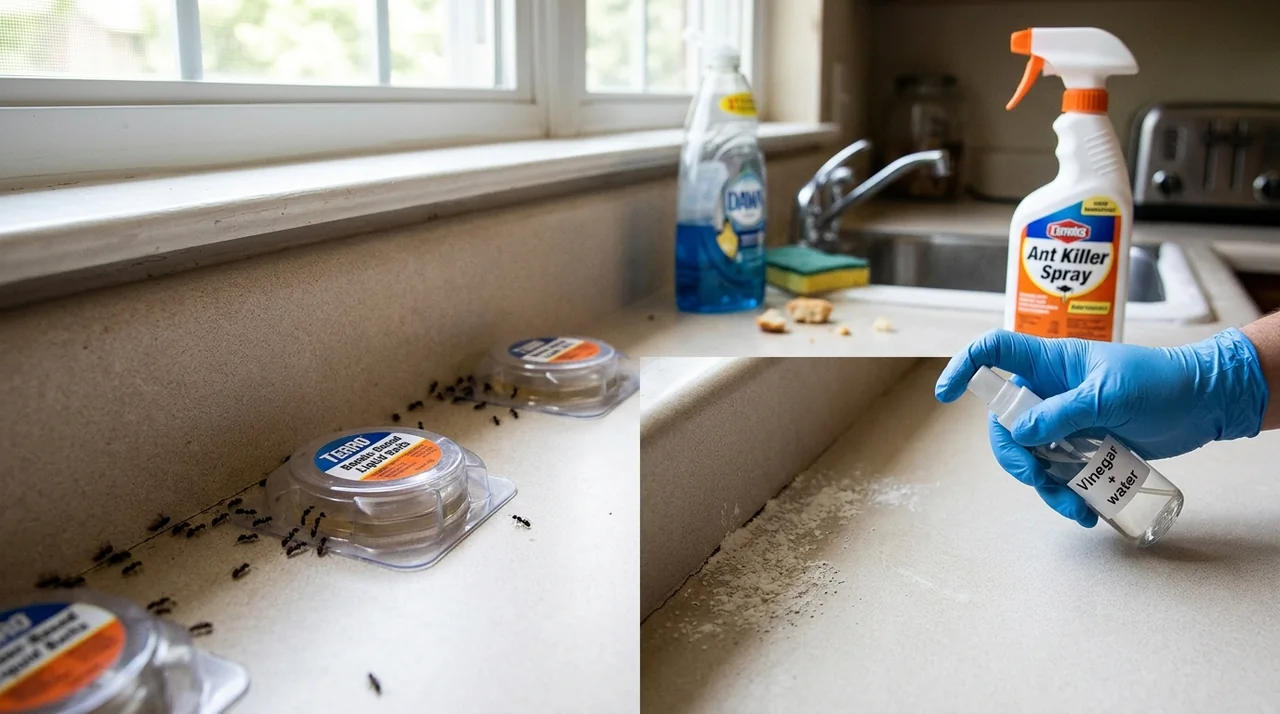
The ants on your counter are only a tiny fraction of the colony. Squashing or spraying them on sight almost never solves the problem. The most reliable approach is a slow-acting bait. Foraging workers pick up the bait and carry it back to the nest. There they share it through the colony. This gradually kills the workers, the brood, and the egg-laying queen. Because the poison acts slowly, the ants have time to spread it before they die.
A simple baiting plan looks like this:
- Place ant baits labeled for indoor use right on the trails and near where ants enter.
- Leave the baits alone and be patient. It can take several days for the colony to decline.
- Do not spray insecticide near the bait. Spray can repel or kill workers before they carry it home.
- Keep the bait stocked until activity stops completely, then remove it.
Why do sprays often make ant problems worse?
Contact sprays feel satisfying because ants die instantly. But they only reach the visible foragers. The hidden nest keeps producing more. Worse, some species scatter when a repellent spray disturbs them. This stress response is called budding, and it can split one colony into several. Have you used a lot of spray and suddenly have ants in more places? This may be why. Reserve sprays for the outdoor perimeter or for knocking down a swarm. Rely on bait for the colony itself.
How do I match the treatment to the ant?
Correct identification matters, because different ants respond to different baits. Sugar-feeding ants take sweet, liquid baits. These include the odorous house ant and the Argentine ant. Other ants prefer protein or grease-based baits. If a bait sits untouched for a day, switch to the other type. Two situations need special care:
- Carpenter ants tunnel into damp or damaged wood. They rarely respond to a single bait station. They also often signal a moisture problem in the structure.
- Red imported fire ants build outdoor mounds and sting. Treat these with a fire-ant-specific bait, broadcast per the label. Keep children and pets clear.
Which home remedies actually work?
Some kitchen remedies have real, if limited, effects. A borax-and-sugar homemade bait works on the same principle as commercial bait. It is just slower and messier. Wiping trails with soapy water erases the invisible scent path ants follow. That buys short-term relief, but it does not kill the nest. Diatomaceous earth can kill ants that walk through it, but only while it stays dry. Treat all of these as supplements to real baiting, not replacements.
How do I stop ants from coming back?
Killing the current colony works best when you also remove what drew the ants inside. Ants forage for food and water, so:
- Wipe up crumbs, spills, and grease, and store food in sealed containers.
- Empty the trash regularly and rinse recyclables.
- Fix drips and leaks, since ants are often searching for moisture.
- Seal cracks around windows, doors, and utility lines where trails enter.
When should I call a professional?
Most kitchen ant trails clear up with patient baiting. Consider a licensed professional in a few cases. Call one if you have carpenter ants or a suspected structural moisture problem. Call one for a stinging fire ant colony near play areas. And call one if trails keep returning no matter how carefully you bait. A pro can locate hidden nests and apply targeted treatments safely. Our guide on when to call an exterminator explains what to expect. Whatever product you choose, DIY or professional, read and follow the EPA-registered label exactly. Keep baits and sprays away from children and pets.