


Can bed bugs be fully exterminated?
Yes. Bed bugs (Cimex lectularius) can be completely eliminated from a home. But they are one of the more stubborn household pests to clear. They wedge themselves into mattress seams, headboards, baseboards, and furniture joints. They even hide in electrical outlets. Their eggs shrug off many sprays. Success almost always depends on combining several approaches and treating more than once. A single pass rarely reaches every hiding insect and unhatched egg.
What methods actually kill bed bugs?
No single product is a magic bullet. The reliable approaches work together:
- Heat treatment raises a room to a lethal temperature and kills all life stages, including eggs, in areas the heat reaches
- Steam can treat mattress seams, cracks, and furniture that professionals heat-treat as part of a wider plan
- Targeted insecticides and desiccant dusts labeled for bed bugs, applied into cracks and harborage points
- Mattress and box-spring encasements that trap bugs inside and starve survivors while making inspection easier
- Laundering bedding and clothing on hot water and drying on high heat
- Frequent vacuuming of seams and edges, discarding the bag or contents immediately
How long does it take to get rid of bed bugs?
Expect a process measured in weeks, not days. Even after a strong first treatment, eggs that were missed can hatch. So follow-up visits or repeat applications are standard, usually about one to two weeks apart. Monitors and interceptor traps under bed legs help confirm whether activity is truly declining. Patience and consistency matter more than any one product.
Should I try DIY or hire a professional?
You can knock down a light, early infestation yourself. It takes diligent vacuuming, laundering, encasements, and repeat treatments. Heavier or spreading infestations usually justify a professional. They can apply whole-room heat and monitor results over several weeks. Whatever product you choose, read and follow the EPA-registered label exactly. Never apply anything to a mattress that is not labeled for that use. Foggers or "bug bombs" are generally a poor choice. They scatter bugs deeper into hiding rather than reaching them.
Why do bed bug treatments sometimes fail?
Most failures trace back to a few predictable reasons:
- Missed harborage — bugs surviving in a spot that was never treated
- No follow-up — stopping after one round before hatching eggs are dealt with
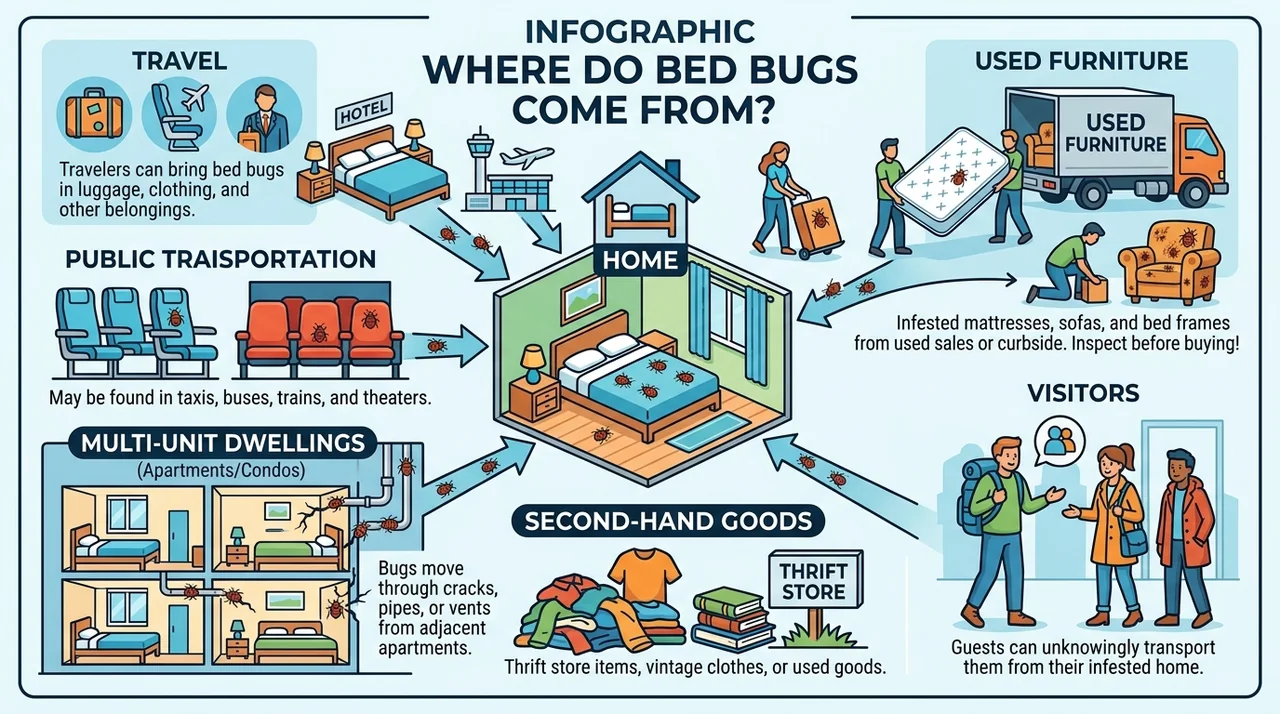
- Reintroduction — bringing bugs back on luggage or used items after treatment
- Reduced effectiveness of some products, which is why rotating methods and leaning on heat helps
How do I keep them from coming back?
Prevention is mostly about vigilance. Inspect secondhand furniture before bringing it inside. Keep luggage off beds and floors while traveling. Check mattress seams periodically for live bugs or rusty spots. Reducing clutter gives them fewer places to hide. It also makes any recurrence easier to spot early. Bed bugs are not known to spread disease, though their bites can itch. So the goal is comfort and control rather than panic.