


What do bed bug bites do to your skin?
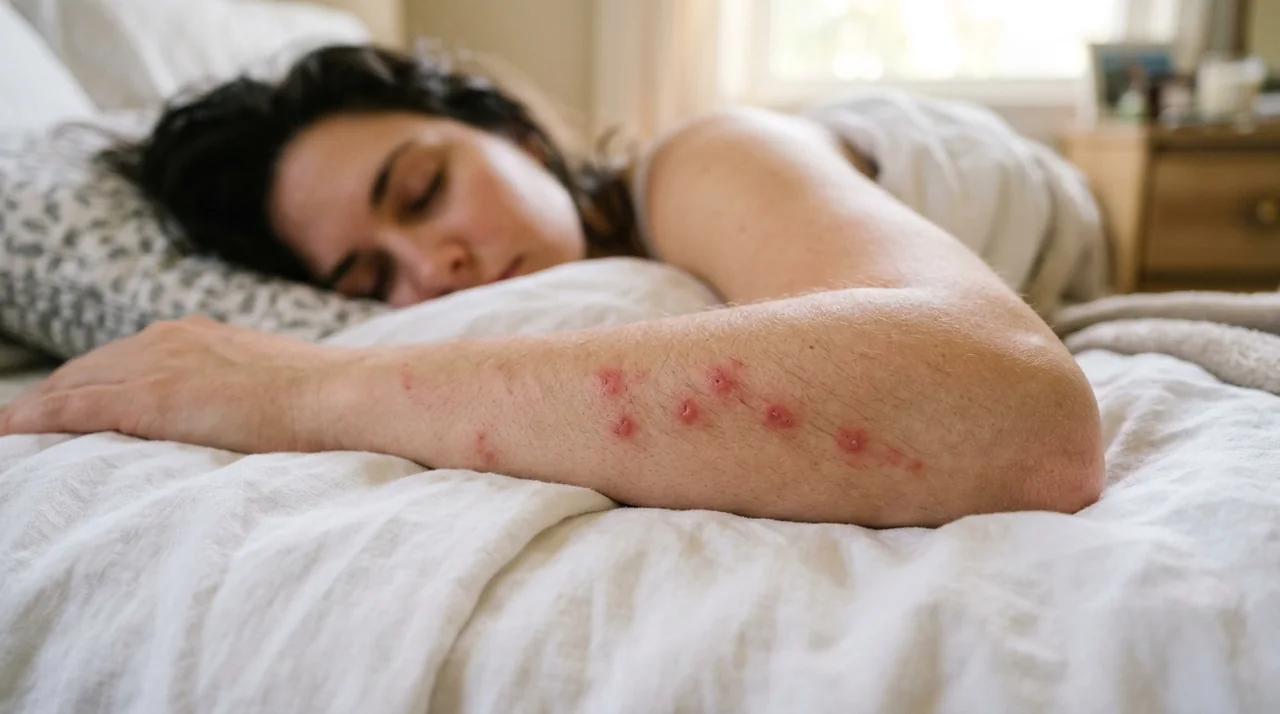
Bed bugs (Cimex lectularius) feed on blood, usually at night. They target skin left uncovered while you sleep, such as the arms, shoulders, neck, face, and legs. The bites commonly appear as small, flat or slightly raised red bumps. They are frequently arranged in a rough line or a small cluster, tracing where the bug moved along the skin as it fed. The bites themselves do not damage the skin the way a burn or a deep wound would. The visible reaction is your body responding to the bug's saliva.
What do bed bug bites look like compared with other bites?
Bed bug bites are easy to confuse with other bites. Appearance alone cannot confirm them. Still, a few patterns are suggestive:
- Rows or clusters of bites in a small area, sometimes called a breakfast-lunch-dinner pattern
- Bumps mostly on skin exposed during sleep
- Bites that appear over successive nights as new ones show up
Why do some people react and others do not?
Skin reactions to bed bug bites are remarkably variable. Some people develop pronounced, very itchy welts. Others in the same bed show no marks at all and never realize they are being bitten. A minority of sensitive individuals get larger, hive-like swellings. Reactions can also change over time. Some people become more sensitive after repeated exposure. This variability is one reason bed bug infestations often go undetected for a while.
Can bed bug bites cause complications?
For most people the bites are a nuisance rather than a danger. The marks fade within a week or two. Bed bug bites are not known to transmit disease. The main complications come from scratching. Broken skin can allow a secondary bacterial infection. Watch for increasing redness, warmth, swelling, or pus. Rarely, a person may have a stronger allergic reaction. A common myth is that bed bugs burrow into or live under the skin. They do not. They feed briefly and then retreat to cracks and seams to hide.
How do I care for the bites?
To ease symptoms and avoid problems:
- Wash the bites with soap and water
- Apply a cold compress or an over-the-counter anti-itch cream
- Consider an oral antihistamine if itching is bothersome
- Keep fingernails short and resist scratching
Will treating the bites solve the problem?
No. Soothing the skin only manages symptoms. It does nothing to the insects. As long as bed bugs remain in the room, new bites will keep appearing. The real fix is to inspect the mattress, box spring, and headboard for live bugs and rusty spots. Then address the infestation itself with heat, EPA-labeled products, or a professional's help.