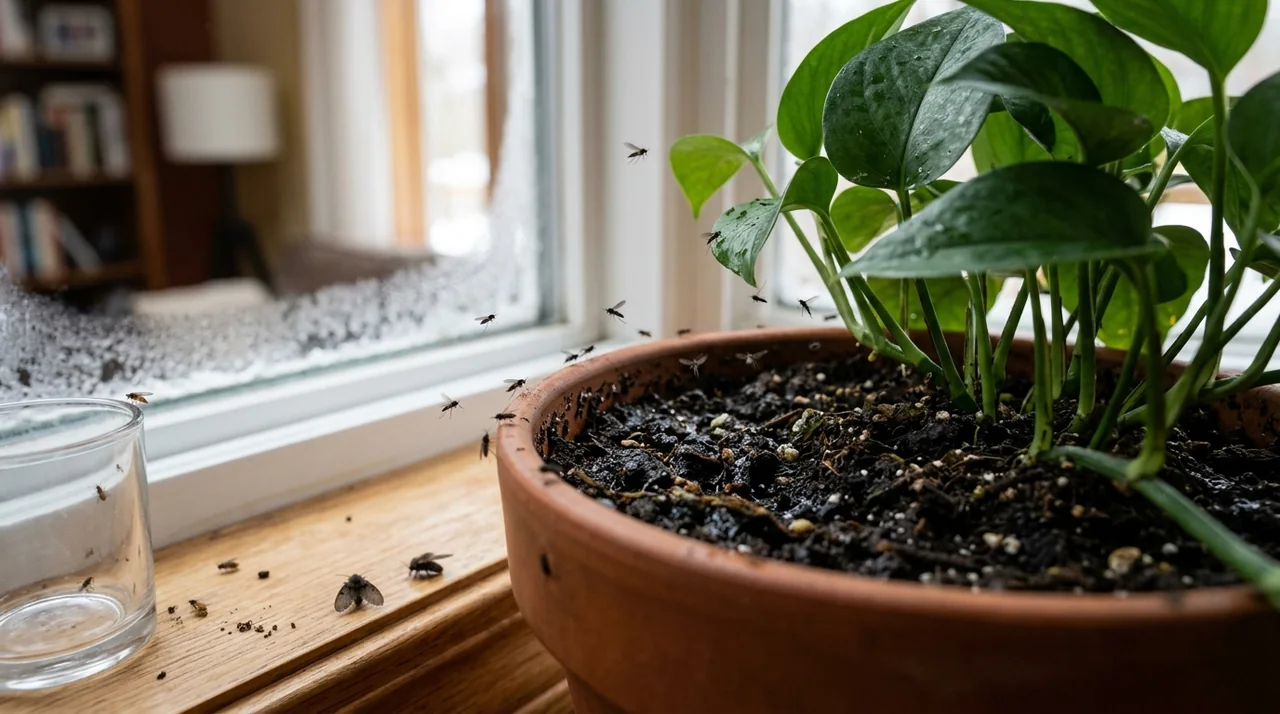
A detailed companion guide: overwintering pests: gnats & indoor invaders.
By Dana Shaw, Senior Pest Control Writer · Updated July 3, 2026
When the weather cools, indoor pest problems shift. Some insects overwinter as adults in wall voids and attics, then wander into living space on warm days. Others, like fungus gnats and fruit flies, are not really "coming in from the cold" at all, they are breeding on moisture and organic matter already inside the home. Telling these two situations apart is what makes control work, and it builds on the seasonal-prevention approach in this section.
Gnats: Usually a Moisture Problem, Not an Invasion
The tiny flies hovering around houseplants and drains in winter are typically breeding indoors rather than sneaking in from outside.
Fungus gnats lay eggs in damp potting soil; larvae feed on fungus and roots in the top inch. They thrive when houseplants are overwatered. The fix is cultural: let the soil surface dry between waterings, improve drainage, avoid leaving standing water in saucers, and consider a layer of dry material on top. Sticky yellow cards trap adults and help you gauge whether numbers are dropping.
Fruit flies and drain flies breed in ripening produce, spills, recycling residue, and the organic film inside drains. Remove or refrigerate produce, take out recycling, and clean drains mechanically with a brush and hot water. A cup of vinegar with a drop of dish soap in a jar covered with pierced plastic wrap makes a simple, effective trap. To confirm a drain is the source, tape a clear cup loosely over the drain overnight; if flies collect inside it in the morning, that drain needs a mechanical cleaning rather than just a chemical pour.
For all of these, eliminating the moist breeding site is the real solution. Fogging the air kills visible adults but does nothing to the eggs and larvae, so the swarm returns within days.
True Overwintering Invaders
A separate group, cluster flies, lady beetles (Asian lady beetles), leaf-footed bugs, and similar insects, spends winter as dormant adults tucked into attics, soffits, and wall voids. On sunny or heated days they become active and appear at windows, drawn to light and warmth. Like fall invaders, they do not breed indoors, bite, or damage the structure; they are simply seeking shelter.
The most durable control is exclusion done in late summer and fall: caulk gaps around windows, siding, and utility penetrations; screen attic, soffit, and gable vents; and add weatherstripping. Once they are already inside, vacuum up the wanderers and empty the canister outdoors. Insecticides sprayed into wall voids are largely ineffective and can leave dead insects that feed carpet beetles.
A Simple Seasonal Routine
Keeping winter pests down comes from steady habits, not spraying:
Water houseplants only when the topsoil is dry, and empty drainage saucers.
Keep counters, drains, and recycling clean and dry.
Seal exterior gaps in late summer, before overwintering insects move in.
Vacuum the occasional indoor invader rather than reaching for aerosols.
If you ever do use a pesticide indoors, follow the EPA-approved label precisely and keep it away from food and food-prep surfaces. For any accidental exposure, call Poison Control at 1-800-222-1222.
Frequently Asked Questions
Most winter gnats are breeding indoors, not entering from outside. Fungus gnats develop in the damp soil of overwatered houseplants, while fruit and drain flies breed in ripening produce, spills, recycling residue, and the film inside drains. Because the source is indoor moisture and organic matter, letting soil dry out and cleaning breeding sites stops them far better than spraying.
Only briefly. Aerosols kill the adults you can see but leave the eggs and larvae in the soil, drains, or produce untouched, so a new generation emerges within days. The lasting fix is removing the breeding site: dry out overwatered plants, clean drains mechanically, and discard or refrigerate ripe fruit. Sticky traps help monitor whether numbers are truly falling.
Seal them out in late summer and early fall, before they move in. Caulk gaps around windows, siding, and utility lines, and add screening behind attic, soffit, and gable vents. These insects are harmless and do not breed inside, so once a few appear on warm days, simply vacuum them up and empty the canister outdoors rather than spraying wall voids.