Fungus Gnat
Bradysia spp. (Sciaridae) · also called fungus gnats, houseplant gnat, soil gnat
Quick answer
Fungus gnats (Bradysia species) are tiny, delicate, dark flies that hover around houseplants and damp soil. The adults are harmless, but their larvae feed on fungi, algae, and tender roots in consistently moist potting mix. They are one of the most common indoor plant pests, thriving in overwatered containers.
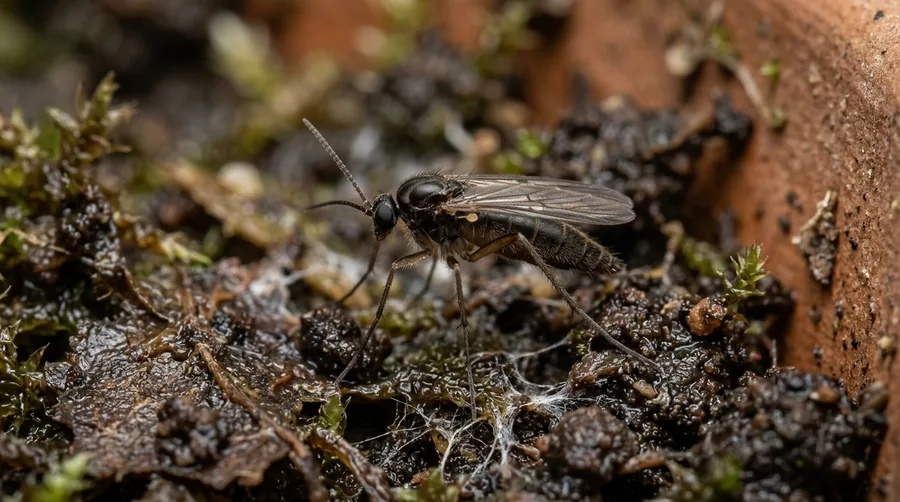
Tiny dark fungus gnat with long legs on the soil surface of a potted plant
Recommended Products
See the full ranking →

What it does
Fungus gnats are weak, fluttering fliers that stay near the plants they emerged from, often running or hopping across the soil surface. Adults are mainly a nuisance; the damage comes from larvae in the soil. They are drawn to moisture and are most numerous where potting mix stays constantly wet.
Where it lives
They live in the top layer of damp, organically rich potting soil in houseplants, greenhouses, and around overwatered containers. Larvae need consistent moisture and fungal growth to develop. Fungus gnats are found indoors nationwide and are especially common in winter when plants are watered but dry slowly.
How it breeds
Females lay eggs in moist soil. The eggs hatch into translucent larvae with shiny black heads that feed on fungi, algae, and roots, then pupate in the soil. A generation can complete in about three to four weeks indoors, so populations overlap and build quickly in continually damp pots.
What it eats
Larvae feed on soil fungi, algae, decaying plant matter, and fine plant roots and can damage seedlings. Adults feed little, taking only water and nectar, and live only about a week.
Identification
Adults are 2-4 mm, slender, and grayish-black with long legs, long antennae, and a single pair of clear wings, giving a mosquito-like but tiny appearance. Larvae are up to 6 mm, thread-like, and translucent with a distinct shiny black head capsule.
Signs of an infestation
- Tiny dark flies rising when a plant is disturbed
- Gnats hovering low around plant pots and windows
- Shiny slime trails or larvae on the soil surface
- Seedlings wilting or failing to thrive
- Most activity around the wettest, densest pots
Prevention tips
- Let the top inch or two of soil dry between waterings
- Avoid overwatering and empty saucers of excess water
- Use well-draining potting mix and cover with sand or grit
- Quarantine and inspect new plants before adding them
- Remove dead leaves and organic debris from pots
Professional solutions
Fungus gnats are one of the easier indoor pests to manage without a professional. Letting soil dry, using yellow sticky cards to catch adults, and treating soil with a Bti larvicide (the same active ingredient in mosquito dunks) usually clears them. A professional is rarely needed except in large greenhouse settings.
Health & safety
Fungus gnats do not bite, sting, or spread disease to people, and they do not damage the home itself. They are essentially a nuisance and a plant-health issue: heavy larval feeding can harm seedlings and stress houseplants. There is no meaningful health risk to humans or pets.
Relevant Products




Frequently asked questions
How do I get rid of fungus gnats in my houseplants?
Let the top inch or two of soil dry out between waterings to kill larvae, use yellow sticky traps to catch adults, and treat the soil with a Bti larvicide such as mosquito dunks steeped in water. Reducing moisture is the single most effective step.
Are fungus gnats harmful to people?
No. Fungus gnats do not bite, sting, or spread disease to people or pets. They are a nuisance, and their soil-dwelling larvae can damage seedlings and stress houseplants, but they pose no direct health risk.
What is the difference between fungus gnats and fruit flies?
Fungus gnats are dark, mosquito-like flies with long legs that hover around plant soil, while fruit flies are tan with red eyes and gather around ripe fruit and drains. Fungus gnats breed in damp potting mix, so drying the soil is the key control.
Fact-checked by Morgan Vance, Editorial Director (editorial review, not a professional pest-control or medical sign-off). Last reviewed June 3, 2026. We correct anything a reader shows us is wrong — see our corrections policy.