
Phorid Fly
Megaselia scalaris (Phoridae) · also called humpbacked fly, scuttle fly, coffin fly
Quick answer
Phorid flies (Megaselia scalaris and relatives) are tiny humpbacked flies that run in quick, erratic bursts rather than flying. They breed in moist, decaying organic film inside drains, garbage, and under appliances. Also called scuttle flies, they are a common and stubborn drain-breeding pest in homes and kitchens.
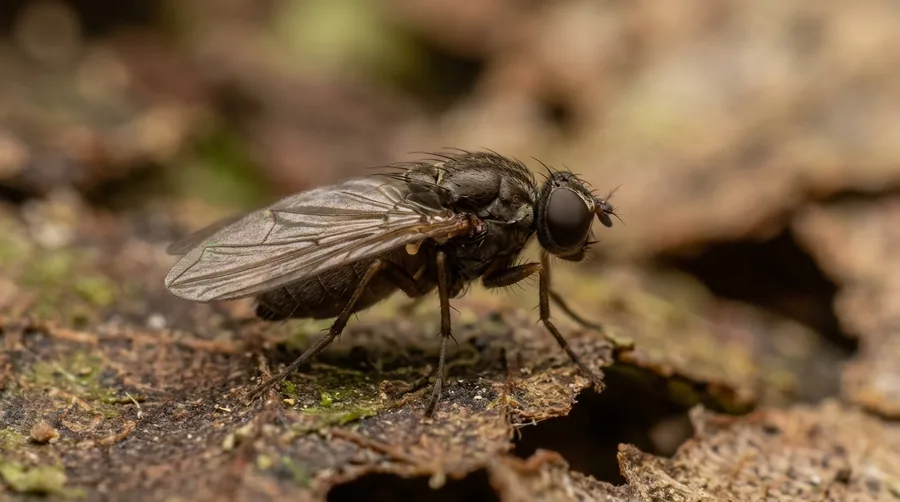
Tiny humpbacked phorid fly with an arched back on a white surface
Recommended Products
See the full ranking →


What it does
Phorid flies are named for their habit of scuttling rapidly across surfaces in short, jerky runs instead of flying away. They are weak fliers and stay close to their breeding site. The telltale arched, humpbacked profile and running behavior separate them from fruit flies and fungus gnats.
Where it lives
They breed in the moist, gelatinous film of organic gunk inside drains, garbage disposals, trash cans, mop buckets, damp mulch, and under leaking appliances. In severe cases they develop in sewage leaks or decaying matter beneath floors. Phorid flies are found nationwide, especially in kitchens and food-service settings.
How it breeds
Females lay eggs on or near decaying organic matter. Tiny larvae feed within the moist film, then pupate nearby. The full cycle can finish in as little as two to three weeks in warm indoor conditions, so a small unnoticed source can quickly build a large, persistent population.
What it eats
Adults feed on decaying organic liquids and films. The larvae feed on the bacteria-rich organic sludge in drains, rotting produce, damp soil, and other decaying matter.
Identification
Phorid flies are 2-4 mm, tan to brownish, with a distinctly humped or arched thorax that gives them a hunchbacked look from the side. They lack the red eyes of fruit flies and the long legs of fungus gnats, and their scuttling run is a key clue.
Signs of an infestation
- Tiny flies running across counters, walls, or floors
- Small flies emerging from or hovering near drains
- Flies persisting after fruit fly measures fail
- Activity concentrated around a slow or dirty drain
- Flies near a leak, damp floor, or trash area
Prevention tips
- Clean drains and disposals to remove organic film buildup
- Fix plumbing leaks and dry out damp areas
- Empty and wash garbage cans and recycling bins
- Remove rotting produce and clean under appliances
- Repair cracked or leaking drain lines promptly
Professional solutions
Because phorid flies breed inside drains, pipe leaks, and voids, control means finding and cleaning every breeding site, which surface sprays cannot reach. Persistent infestations, especially those linked to broken sewer or drain lines under a slab, often need a professional to trace the source and clean or treat it.
Health & safety
Phorid flies do not bite or sting, but because they develop in drains, decay, and sometimes sewage, they can mechanically carry bacteria to food and surfaces. In hospitals and kitchens this makes them a hygiene concern. Their larvae can rarely cause accidental myiasis. Keep them away from food-prep areas.
Relevant Products




Frequently asked questions
How are phorid flies different from fruit flies?
Phorid flies have a humped back, dark eyes, and run in quick bursts rather than flying, while fruit flies have red eyes and hover around ripe produce. Phorid flies also breed in drains and moist organic film rather than fruit, so drain cleaning is the key fix.
Why do phorid flies keep coming back?
They breed inside drains, leaks, or damp voids that surface sprays cannot reach, so the population rebuilds until that hidden source is cleaned. Recurring infestations, especially with no visible cause, sometimes trace to a broken drain or sewer line and may need a professional to locate.
Are phorid flies harmful?
They do not bite, but because they develop in drains and decaying matter they can carry bacteria onto food and surfaces, which is why they are taken seriously in kitchens and hospitals. Keeping them out of food-prep areas and cleaning breeding sites addresses the risk.
Fact-checked by Morgan Vance, Editorial Director (editorial review, not a professional pest-control or medical sign-off). Last reviewed July 8, 2026. We correct anything a reader shows us is wrong — see our corrections policy.