
Fruit Fly
Drosophila melanogaster · also called fruit flies, vinegar fly, pomace fly
Quick answer
The fruit fly (Drosophila melanogaster) is a tiny tan fly about 1/8 inch long, usually with bright red eyes, that swarms around ripe or rotting fruit, spilled juice, and damp drains. It breeds in fermenting organic residue and multiplies fast. Though mainly a nuisance rather than a health threat, its rapid breeding makes fruit flies hard to clear without removing the source.
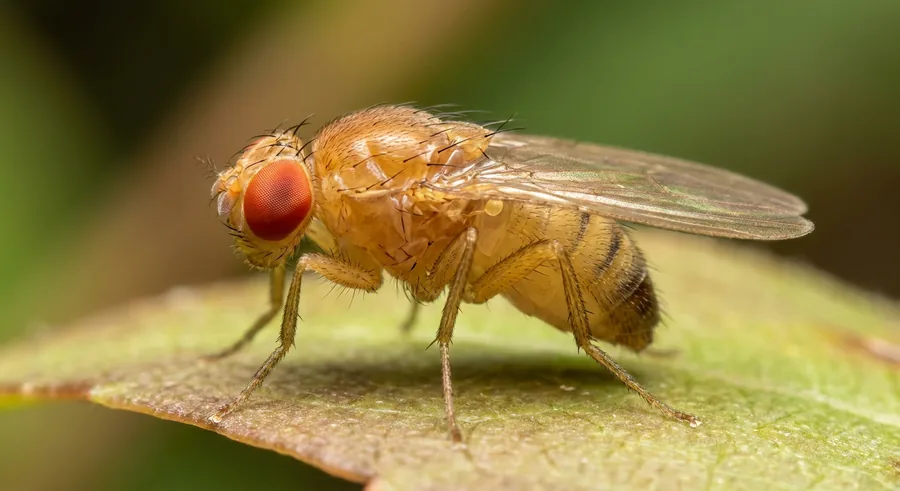
Tiny tan fruit fly with bright red eyes on a piece of overripe fruit
Recommended Products
See the full ranking →


What it does
Fruit flies hover and dart around ripening or fermenting produce, recycling bins, and moist drains, drawn by the smell of fermentation. They are weak fliers that stay near their breeding source. Because they can complete a generation in little more than a week and lay hundreds of eggs, a few flies become a persistent cloud quickly if the source is not removed.
Where it lives
Indoors, fruit flies breed in overripe fruit and vegetables, spilled juice, soda, beer or wine, and the damp organic film inside drains, garbage disposals, recycling bins, and mop buckets. They also arrive on produce from the store or garden. They are found nationwide and are most common in late summer and fall when fruit is abundant.
How it breeds
Fruit flies develop through egg, larva, pupa, and adult. A female lays her eggs, up to about 500 over her life, on or near fermenting material, where larvae feed on the yeast and microbes. In warm kitchens the entire cycle can finish in roughly 8 to 10 days, so infestations build and rebound rapidly.
What it eats
Adults and larvae feed on the yeasts and sugars in fermenting and decaying fruits and vegetables and other sweet, moist organic matter. The larvae develop in the thin fermenting film on produce, in drains, and in the residue inside bottles, cans, and bins.
Identification
Adults are small, about 1/8 inch, tan to yellow-brown, and often have distinctive bright red eyes, though some have darker eyes. They are easily confused with fungus gnats, which are darker and mosquito-like and breed in potted-plant soil, and with drain flies, which are fuzzy and moth-like. Where the flies gather hints at which pest you have.
Signs of an infestation
- Small tan flies hovering around fruit bowls, produce, and bins
- Flies rising from the sink, garbage disposal, or recycling
- Clouds of tiny flies near overripe or rotting produce
- Flies appearing around wine, beer, vinegar, or juice spills
- Larvae in the film inside drains, disposals, or discarded bottles
Prevention tips
- Refrigerate or promptly use ripe fruit and vegetables
- Take out kitchen trash and rinse recycling and returnable bottles
- Clean drains and garbage disposals to remove fermenting residue
- Wipe up juice, soda, beer, and wine spills right away
- Keep sink strainers clear and empty mop buckets and compost pails
Professional solutions
Fruit flies rarely need a professional. The reliable fix is finding and removing every breeding source, then cleaning drains and bins where residue collects. A simple apple-cider-vinegar trap helps catch remaining adults while sources dry out. If flies persist after thorough cleaning, a pest professional can help locate a hidden breeding site, such as a rarely used drain or a spill under an appliance.
Health & safety
Fruit flies do not bite and are considered low risk, mainly a nuisance. Because they move between decaying matter and food, they can mechanically carry bacteria and yeasts onto surfaces, so it is sensible to discard produce they have swarmed and keep them off food. They are not a recognized transmitter of human disease, and the primary concern is contamination, not illness.
Relevant Products




Frequently asked questions
Where do fruit flies come from all of a sudden?
Fruit flies usually arrive as eggs already on store-bought or garden produce, then multiply on ripening fruit, in damp drains, or in recycling and garbage residue. Because they breed fast and stay near the source, a small number can become a visible swarm within a week or so.
What's the difference between fruit flies and gnats?
Fruit flies are tan with often red eyes and gather around ripe fruit and drains. Fungus gnats are darker and mosquito-like and come from overwatered potted-plant soil, while drain flies are fuzzy and moth-like. Where the flies cluster is the best clue to which one you have.
How do I get rid of fruit flies fast?
Find and remove the breeding source, such as overripe fruit, a dirty drain, or spilled juice, then clean drains and bins. Set an apple-cider-vinegar trap to catch remaining adults. Without removing the source, traps alone will not clear the infestation.
Fact-checked by Morgan Vance, Editorial Director (editorial review, not a professional pest-control or medical sign-off). Last reviewed August 5, 2026. We correct anything a reader shows us is wrong — see our corrections policy.