

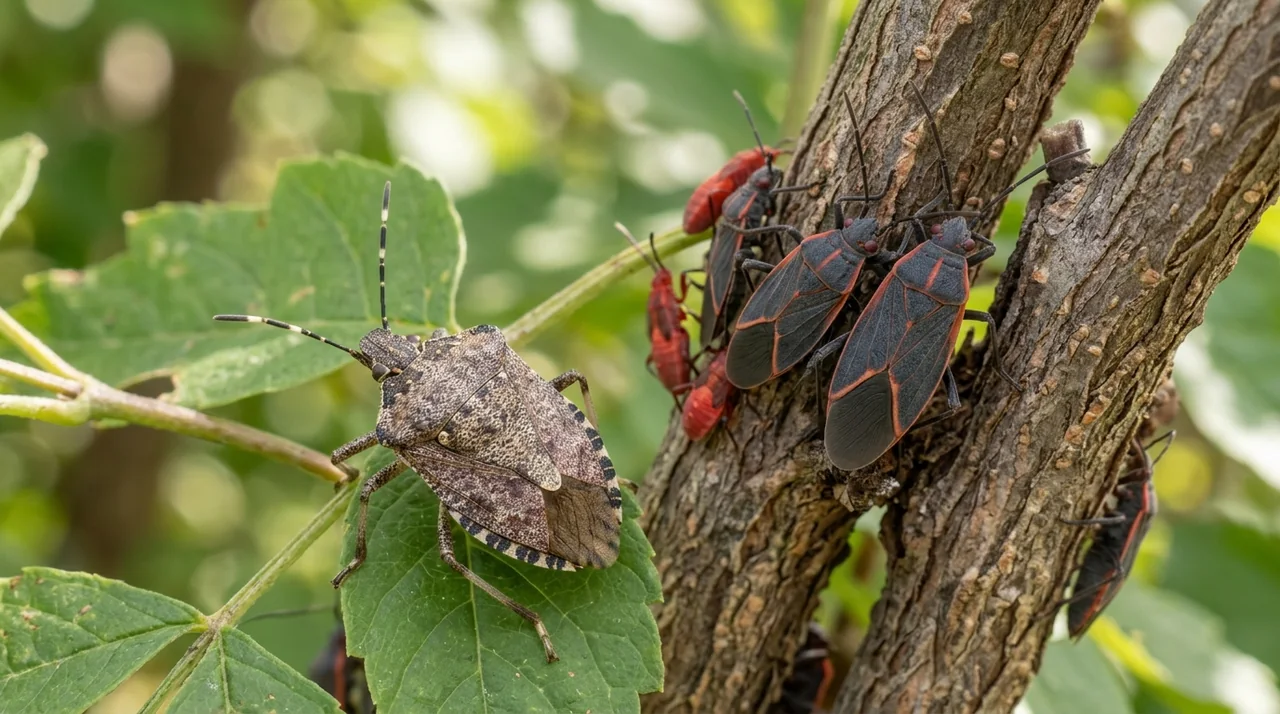
As days shorten in early fall, several insects begin looking for a warm, protected place to spend winter. Brown marmorated stink bugs and boxelder bugs are two of the most common "fall invaders," clustering on sunny exterior walls and slipping through gaps into attics, wall voids, and living space. They are a nuisance, not a danger, and understanding their behavior is the key to keeping them out, which is the focus of this seasonal-prevention section.
Know What You Are Dealing With
Brown marmorated stink bugs are shield-shaped, about half an inch long, mottled brown, with light bands on the antennae. When crushed or alarmed they release a lasting, unpleasant odor, which is exactly why you should never squash them indoors.
Boxelder bugs are black with three red-orange stripes on the back and red eyes, roughly half an inch long. They gather in large numbers on the south and west sides of buildings to bask in fall sun before seeking entry.
Neither insect bites, stings, breeds indoors, damages the house structurally, nor spreads disease. They do not feed or reproduce over winter; they simply shelter and become active again on warm days or in spring. The problem is their numbers and the staining or odor they can leave behind.
Seal Them Out Before They Enter
Exclusion is by far the most effective control, and the window is late summer into early fall, before the insects move in. Work around the exterior and close the gaps they use:
- Caulk cracks around windows, doors, siding, utility pipes, cables, and outdoor faucets.
- Repair or replace damaged window and door screens, and add screening behind attic and soffit vents and exhaust fan openings.
- Install or fix weatherstripping and door sweeps, including on the garage door.
- Seal gaps where wiring, plumbing, and the dryer vent pass through walls.
Timing is everything with exclusion. The bugs move toward buildings as nights cool, so finish sealing before the first sustained chilly spell in your region. Once a wall is closed up, insects already tucked into the void behind it are trapped there and may wander into living space through interior gaps, which is why sealing works best done early, from the outside in.
Handling the Ones That Get Inside
Insecticides are a poor solution indoors. Spraying wall voids can leave dead insects that attract carpet beetles, and killing stink bugs in place risks the odor. Instead, remove them physically:
- Vacuum them up, ideally with a shop vac or a knee-high stocking rigged inside the hose so they never touch the machine, then empty it promptly outdoors, since the smell can linger in a vacuum.
- Simply sweep or scoop small numbers into soapy water.