

What do ants eat?
Ants are omnivores with flexible diets that shift according to what the colony needs at the time. Broadly, they are after two things. They want sugars for quick energy to fuel foraging workers, and proteins to feed the growing larvae. Which one they hunt for changes with the species and the season. That is why a household ant like the odorous house ant might swarm sweets one week and greasy, protein-rich foods the next.
Typical ant foods include:
- Sugary substances: nectar, ripe fruit, syrup, and spilled drinks
- Honeydew, a sweet liquid ants "farm" from aphids and scale insects
- Seeds, which some ants gather and store
- Insects and other small invertebrates for protein
- Household crumbs, grease, and pet food
Why do ants seem to change what they want?
It often comes down to the colony's life cycle. When a colony is raising lots of larvae, typically in spring and early summer, workers seek out more protein and fat. Later in the season, the demand tilts back toward sugars. This is why an ant bait that worked in one month can seem ignored the next. The ants are chasing a different nutrient. Matching bait type to the season improves your results.
Do ants eat other ants?
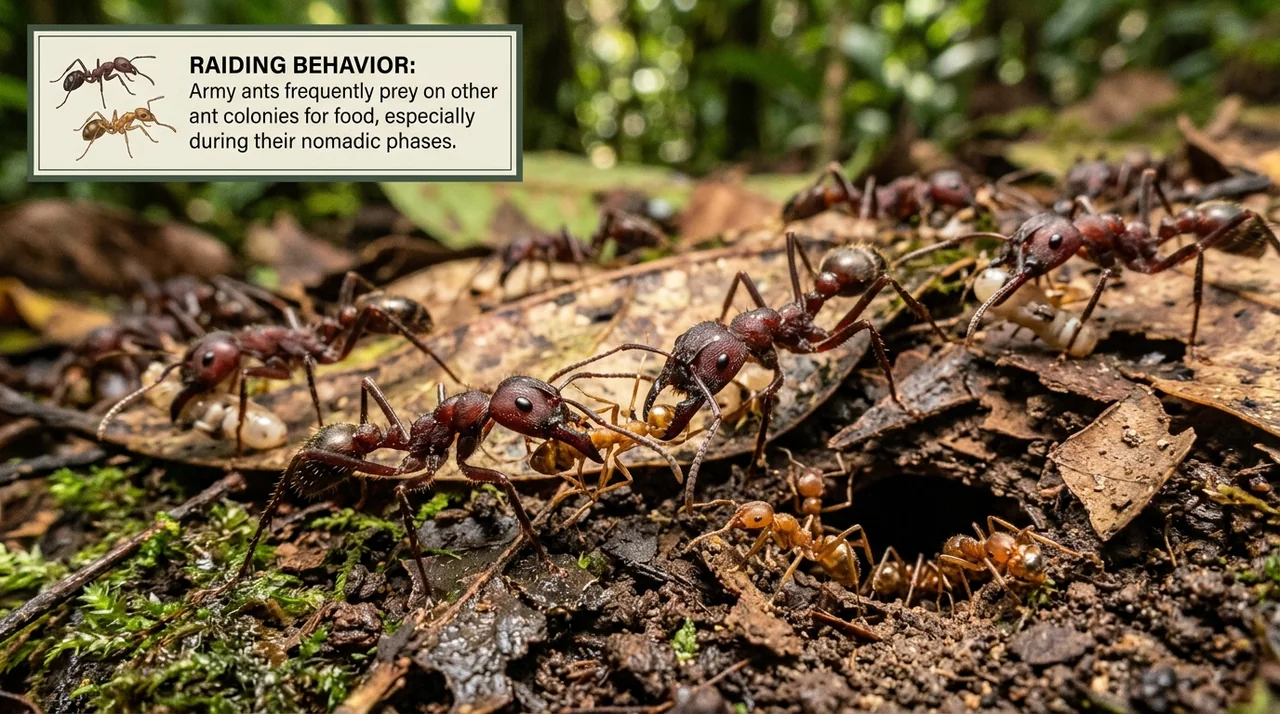
Yes, some do. Several ants are active predators that hunt other insects, and other ants are on the menu. Beyond hunting, rival colonies frequently go to war over territory and food. The victors may consume the defeated colony's workers and brood. Aggressive species such as the red imported fire ant (Solenopsis invicta) and invasive ants like the Argentine ant are well known for overwhelming and displacing rival ants.
Colonies are also thrifty with their own dead. Workers carry deceased nestmates to a refuse pile, and some species will recycle the nutrients. This "undertaking" behavior helps keep the nest clean and disease-free. It is part of why ant colonies are so resilient.
Do carpenter ants eat wood like termites?
This is a common and important misconception. Carpenter ants (Camponotus) chew through wood to hollow out galleries for their nest. But they do not eat the wood; they discard it as sawdust-like shavings. Their actual food is the same sugars and proteins other ants seek. Termites, by contrast, genuinely eat wood. So carpenter ant damage comes from excavation, not digestion.
How does knowing their diet help with control?
Ants are simply following accessible food, so control starts with removing it:
- Seal food in airtight containers and clean up crumbs, grease, and spills
- Rinse recyclables and empty trash regularly
- Fix leaks and dry up standing water, since ants need moisture too
- Use slow-acting baits per the EPA-registered label, so foraging workers carry the product back and share it with the colony, including the queen
Do ants store and share food?
Yes, and it is central to how colonies survive. Many ants share food mouth-to-mouth in a process called trophallaxis. A forager swallows liquid food, returns to the nest, and passes it to nestmates. This spreads a single meal through much of the colony. It is exactly why slow-acting baits work so well; a few workers carry the bait home and share it before the active ingredient takes effect. Some ants also store food more literally. Harvester and other seed-collecting ants stockpile seeds in underground granaries to carry the colony through lean periods.