

What can vinegar do against ants, and what can't it?
Vinegar is a handy kitchen tool against ants, but it is not a true insecticide. A strong vinegar solution is basically dilute acetic acid. It may kill a few ants it directly soaks, yet it leaves no lasting residue. It does nothing to the hundreds or thousands of ants, plus the queen and brood, back in the nest. Killing the scouts on your counter feels satisfying, but it does not shrink the colony.
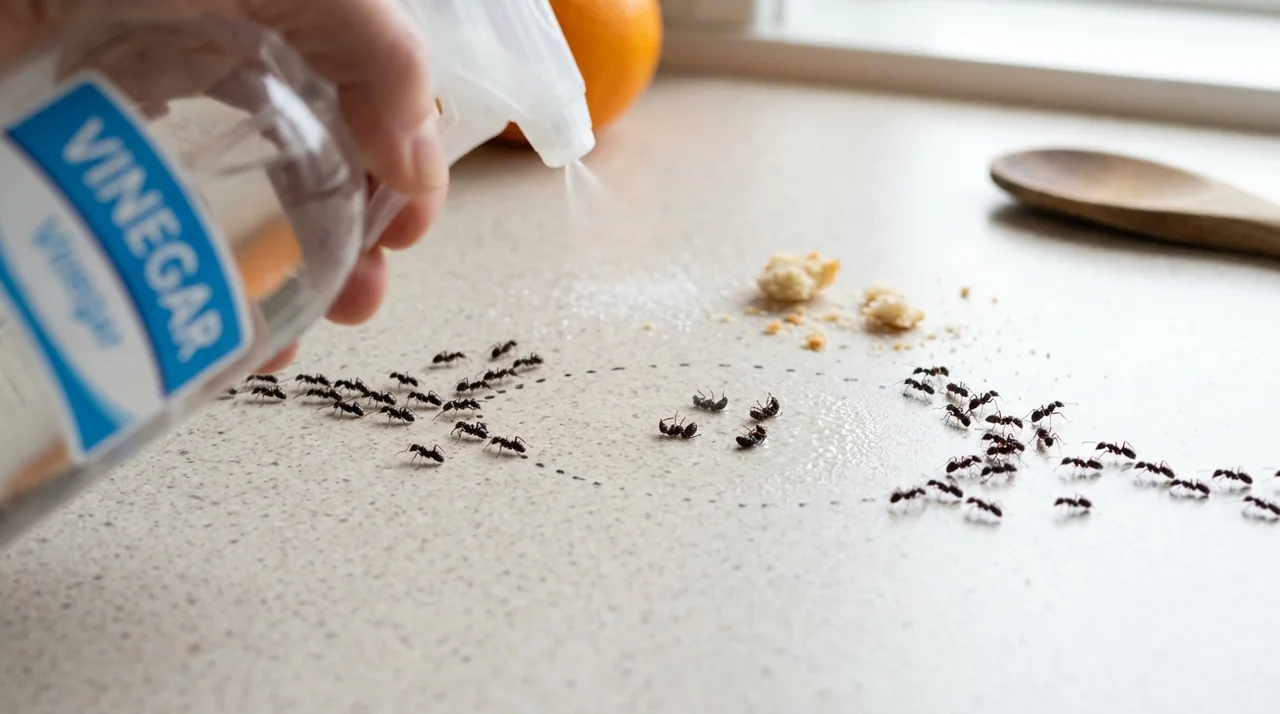
Where vinegar genuinely helps is with scent trails. Ants navigate by following pheromone trails their nestmates lay down. Wipe counters, baseboards, and entry points with a mix of roughly equal parts white vinegar and water. This removes those chemical cues and can briefly disrupt the steady parade to your kitchen.
How do you use vinegar for ants?
To get the most out of it:
- Mix equal parts white vinegar and water in a spray bottle (some people use straight vinegar on trails).
- Spray or wipe visible trails, entry points, and the areas where you see ants gathering.
- Clean up the dead ants and residue, so you are not just leaving food and scent behind.
- Repeat as needed, since ants will try to rebuild trails.
Does vinegar repel ants for good?
Not really. Vinegar can mask or erase a trail for a while, but it does not create a lasting barrier. Once it dries, ants can re-scent the path. Think of it as good housekeeping that buys time and reduces attraction, not a repellent that keeps a colony out for good.
Are there safer or better home options?
Vinegar is low-toxicity and fine for wiping surfaces, which is part of its appeal in kitchens. But for actually reducing an ant population, the proven approach is different:
- Keep food sealed, wipe counters, rinse recyclables, and take out trash to remove attractants.
- Seal cracks, gaps, and entry points ants use.
- Use EPA-registered ant baits according to the label. Workers carry the bait back to the nest, so it reaches the colony. That is what actually reduces numbers over days to weeks.
When is vinegar not enough?
Think of vinegar as a supporting player. It makes other steps more effective by erasing scent trails and keeping surfaces clean, but it will not solve a real infestation on its own. If ants keep returning despite cleaning and baiting, if you are dealing with a large colony, or if you suspect a species that damages wood such as carpenter ants, a licensed pest control professional can identify the species and treat the source directly. Persistent trails of ants like the odorous house ant often trace back to a nest that needs targeted treatment rather than another wipe-down.