

Why can't fruit flies bite?
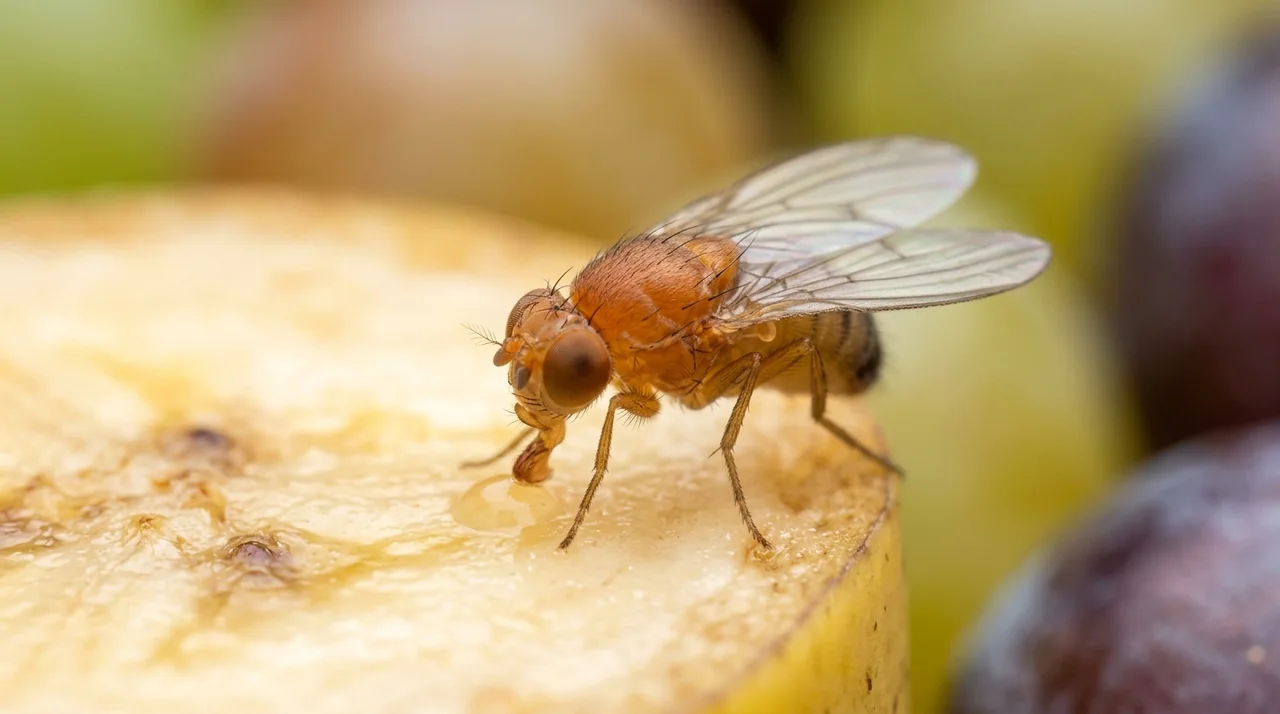
Fruit flies (Drosophila) feed by lapping, not piercing. Their mouthparts end in a soft, spongy pad called a labellum. It dabs up sugary liquid from overripe fruit, spilled soda, and fermenting residue. Biting insects like mosquitoes and midges have sharp, piercing structures to break skin and reach blood. Fruit flies simply do not. So when a fruit fly lands on your arm, the most it can do is walk around and tickle. It is physically incapable of biting you.
What might be biting me instead?
Do you feel small bites around the kitchen, bathroom, or garden? A look-alike is almost always responsible. The most common suspects are:
Biting midges (no-see-ums)
Biting midges are tiny, gnat-like flies that absolutely do bite, often around dawn and dusk. Their bites can feel surprisingly sharp for such a small insect, and they may leave itchy welts. Because they are so small, people often blame the fruit flies buzzing nearby.
Fungus gnats
Fungus gnats are dark, delicate, long-legged flies. They rise from the soil of overwatered houseplants. They are a nuisance around windows and plants, but they do not bite people.
Other small flies
Drain flies, phorid flies, and various small gnats also share kitchens and drains with fruit flies. People frequently mistake them for fruit flies, though none of these bite.
How do I tell fruit flies from biting look-alikes?
A few features help you identify the real fruit fly:
- Fruit flies are tan or light brown, often with bright red eyes, and hover around ripe fruit, drains, and recycling.
- Fungus gnats are darker, more slender, and cling to windows and plant soil.
- Biting midges are extremely small, may look like moving specks of pepper, and are active near dusk.
Are fruit flies harmful in any way?
Fruit flies do not bite, sting, or transmit disease to people through contact. The realistic concern is sanitation. They travel between drains, trash, and fresh food, so they can move bacteria from one surface to another. That is a reason to keep them out of food-prep areas, but it is not a reason for alarm. Their nuisance value comes from their numbers, not from any harm they do directly.
How do I get rid of fruit flies?
Control comes down to removing the food and moisture that feed the larvae:
- Toss or refrigerate overripe produce.
- Empty and rinse trash and recycling often.
- Clean drains, garbage disposals, and the gaps under and behind appliances where a slimy film can build up.
- Set a simple trap: a little apple cider vinegar with a drop of dish soap in a cup catches the adults you already have.
When should I see a doctor about bites?
Do you have persistent, unexplained bites, an itchy rash, or a reaction, and you are not sure what is causing it? Do not assume the fruit flies are to blame. A doctor or your local health department can help identify the source. It could be biting midges, another insect, or a skin condition unrelated to pests. Getting the culprit right is the first step to relief.