
Biting Midge
Culicoides spp. (Ceratopogonidae) · also called no-see-ums, sand flies, punkies
Quick answer
Biting midges (Culicoides species), often called no-see-ums or sand flies, are gnat-sized flies with a painful, itchy bite far out of proportion to their size. Small enough to pass through ordinary window screens, they swarm at dawn and dusk near marshes, ponds, and coastlines, especially in the Southeast and Gulf Coast.
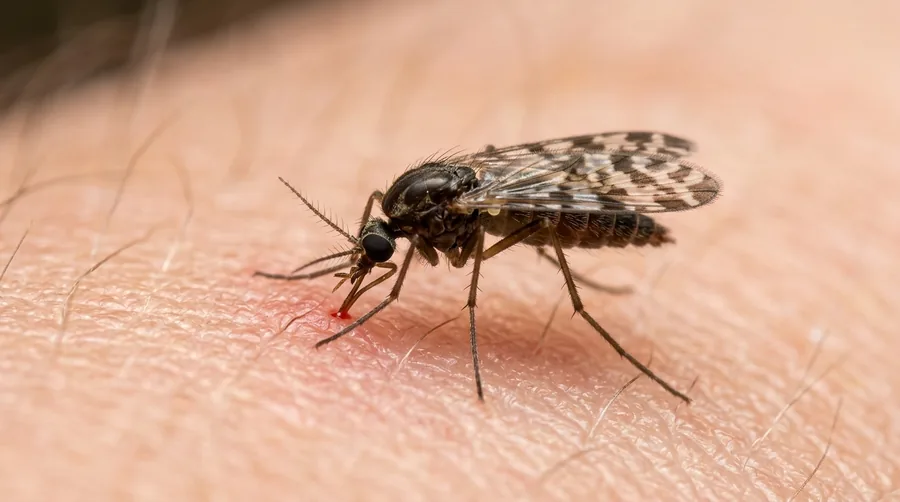
Extremely small biting midge with patterned wings on human skin
Recommended Products
See the full ranking →


What it does
Only female biting midges bite, feeding on blood to develop eggs. Despite being almost too small to see, their bite delivers a sharp sting and an intensely itchy welt. They swarm at dawn and dusk, are worst on calm, humid days, and can pass through standard window and door screens because of their tiny size.
Where it lives
Biting midges breed in moist, organically rich habitats: salt marshes, muddy pond edges, wet sand, tree holes, and damp soil rich in decaying matter. Adults stay near these breeding sites, so coastal and wetland areas suffer most, especially the Southeast and Gulf Coast, though the flies occur nationwide near water.
How it breeds
Females lay eggs on moist soil, mud, or the surface of wet organic matter. Larvae develop in the damp substrate or shallow water, then pupate before emerging as adults. Several generations can occur in a warm season, keeping biting pressure high through spring, summer, and fall in favorable areas.
What it eats
Adult females feed on the blood of people, livestock, and wildlife; males and non-feeding females take nectar. The larvae feed on tiny organisms and organic matter in wet soil, mud, and shallow water.
Identification
Biting midges are minute, 1-3 mm, gray to tan flies with spotted or patterned wings folded flat over the back at rest, and they appear reddish when engorged with blood. They are far smaller than mosquitoes, which is why they are often felt biting before they are ever seen.
Signs of an infestation
- Sharp, itchy bites with no visible insect present
- Tiny welts appearing at dawn or dusk near water
- Biting worst on calm, humid, still evenings
- Being bitten despite closed window screens
- Clusters of bites on ankles, arms, and hairline
Prevention tips
- Stay indoors around dawn and dusk during peak season
- Use fine no-see-um mesh on windows, doors, and tents
- Apply an EPA-registered repellent to exposed skin
- Run fans on patios, since midges are weak fliers
- Reduce standing water and damp organic debris near the home
Professional solutions
Biting midges breed over broad wetland and coastal areas that individuals cannot treat, so control focuses on protection and exclusion rather than area spraying. Some coastal communities run midge-control programs. For a home, fine mesh screening, repellents, and fans are the most reliable defenses; professional yard treatment offers limited, short-lived relief.
Health & safety
In the US, biting midges are chiefly a painful nuisance; bites are very itchy and can cause localized swelling or allergic reactions, but they are not important human disease vectors here. They do transmit bluetongue and related viruses among livestock and deer. Treat bites with anti-itch care and watch for secondary infection from scratching.
Relevant Products


Frequently asked questions
Why can't I see what is biting me at dusk?
It is likely a biting midge, or no-see-um, which is only 1-3 mm long, small enough to be felt biting before it is seen. They swarm at dawn and dusk near water, bite exposed skin, and can even pass through ordinary window screens, which is why they seem invisible.
How do I keep no-see-ums out of my house?
Because they slip through standard screens, install fine no-see-um mesh on windows and doors, run fans on porches since they are weak fliers, and stay in around dawn and dusk during peak season. Apply an EPA-registered repellent and reduce damp organic debris and standing water nearby.
Do biting midges spread disease to people?
In the US, biting midges are mainly a painful, itchy nuisance and are not important carriers of human disease. They do transmit viruses such as bluetongue among livestock and deer. The main concern for people is the itchy bite and possible allergic reaction or scratching infection.
Fact-checked by Morgan Vance, Editorial Director (editorial review, not a professional pest-control or medical sign-off). Last reviewed July 30, 2026. We correct anything a reader shows us is wrong — see our corrections policy.