
Asian Tiger Mosquito
Aedes albopictus · also called Asian tiger mosquito, forest mosquito, tiger mosquito
Quick answer
The Asian tiger mosquito (Aedes albopictus) is a small black-and-white striped mosquito that bites aggressively during the day. It breeds in tiny containers of standing water and can transmit dengue, Zika, chikungunya, and dog heartworm. Now established across much of the eastern and southern US, it is a persistent backyard biter.
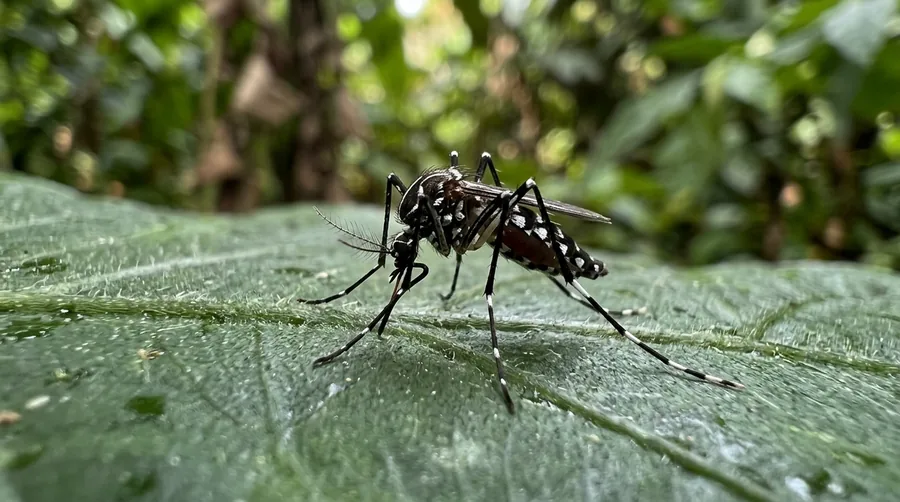
Black and white striped Asian tiger mosquito with a single white back stripe on skin
Recommended Products
See the full ranking →

What it does
Unlike many mosquitoes, the Asian tiger mosquito is a daytime biter, most active in the morning and late afternoon, and it bites aggressively and repeatedly. Only females feed on blood, needed for egg development, while males take nectar. It is a low, close-range flier that stays near where it emerged, making backyards its main hunting ground.
Where it lives
This species breeds in very small containers of standing water: flowerpot saucers, buckets, tarps, bottle caps, tires, tree holes, and clogged gutters. Adults rest in shaded vegetation nearby. Native to Asia, it is now established across much of the eastern, southern, and central US and continues to expand its range.
How it breeds
Females lay eggs just above the waterline in containers; the eggs can survive drying for months and hatch when reflooded. Larvae (wrigglers) and pupae (tumblers) develop in the water, and adults can emerge in as little as a week to ten days in warm weather, producing many overlapping generations each season.
What it eats
Adult females feed on the blood of people and animals to produce eggs, while males feed only on nectar and plant juices. The aquatic larvae filter tiny organic particles and microorganisms from the container water where they develop.
Identification
The Asian tiger mosquito is small, 2-10 mm, black with striking white banding on the legs and a single bright white stripe running down the center of the head and back. That single lengthwise stripe distinguishes it from the yellow fever mosquito, which has a curved, lyre-shaped pattern.
Signs of an infestation
- Aggressive mosquito bites during daylight hours
- Small striped mosquitoes near patios and gardens
- Wriggling larvae in flowerpot saucers or buckets
- Biting concentrated close to the ground and ankles
- Persistent backyard mosquitoes despite few visible puddles
Prevention tips
- Empty and scrub any container holding water weekly
- Dump saucers, buckets, tarps, tires, and toys after rain
- Keep gutters clear and clean so water cannot pool
- Treat water features you cannot drain with Bti dunks
- Use EPA-registered repellent and screens during the day
Professional solutions
For persistent yard infestations, professionals combine thorough source reduction with larvicides in standing water and targeted adulticide or barrier treatments on shaded resting sites. Because this mosquito breeds in tiny, easily overlooked containers, eliminating every water source is the most important and effective step, whether done yourself or by a service.
Health & safety
The Asian tiger mosquito can transmit dengue, Zika, chikungunya, West Nile virus, and dog heartworm, making it a genuine public-health concern where these viruses circulate, though most US bites cause only itchy welts. Its day-biting habit increases contact with people. Prevent bites, remove breeding water, and follow local health advisories during outbreaks.
Relevant Products




Frequently asked questions
Why am I getting bitten by mosquitoes during the day?
The Asian tiger mosquito is a daytime biter, most active in morning and late afternoon, unlike many mosquitoes that bite at dusk. It stays low and close to where it breeds, so daytime bites in the yard often point to this species. Removing container water is the key control.
How do I stop Asian tiger mosquitoes in my yard?
Eliminate the tiny water sources they breed in: empty and scrub saucers, buckets, tarps, tires, and toys weekly, and clear gutters. Treat water you cannot drain with Bti dunks. Because they breed in very small containers, thorough source reduction matters more than spraying adults.
What diseases does the Asian tiger mosquito carry?
It can transmit dengue, Zika, chikungunya, West Nile virus, and dog heartworm where those pathogens are present, though most bites in the US cause only itching. Its day-biting behavior raises human contact, so preventing bites and removing breeding water are worthwhile precautions.
Fact-checked by Morgan Vance, Editorial Director (editorial review, not a professional pest-control or medical sign-off). Last reviewed July 22, 2026. We correct anything a reader shows us is wrong — see our corrections policy.