
Malaria Mosquito (Anopheles)
Anopheles spp. · also called malaria mosquito, Anopheles mosquito, marsh mosquito
Quick answer
Malaria mosquitoes (Anopheles species) are the mosquitoes that can carry malaria. They rest with the abdomen tilted up at an angle and bite mainly from dusk to dawn. Larvae develop in clean, still water. Malaria is rare in the US today, but Anopheles remain widespread and occasional locally transmitted cases still occur.
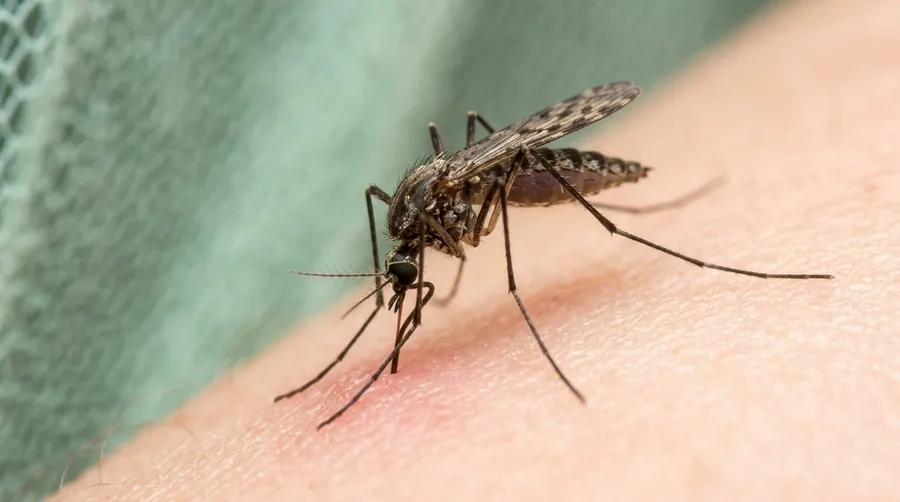
Anopheles malaria mosquito resting with its abdomen tilted upward on skin
Recommended Products
See the full ranking →


What it does
Anopheles mosquitoes bite mainly from dusk through the night, resting during the day in cool, shaded, humid spots. A distinctive habit is resting with the head down and the abdomen angled upward, unlike other mosquitoes that hold their bodies parallel to the surface. Only females feed on blood, which they need to develop eggs.
Where it lives
Larvae develop in clean, still, or slow-moving water: swamps, marsh edges, ponds, ditches, seepage areas, and grassy pools, often among aquatic vegetation. Adults rest in vegetation, animal shelters, and outbuildings. Anopheles species occur across the US, and were historically common in the malarious South before the disease was eliminated here.
How it breeds
Females lay single eggs on the water surface, each with tiny floats. Larvae lie flat parallel to the surface, without the breathing siphon other mosquito larvae have, then pupate before adults emerge. In warm weather the cycle takes roughly one to two weeks, producing multiple overlapping generations through the season.
What it eats
Adult females feed on the blood of people and animals to produce eggs; males feed only on nectar and plant sugars. The aquatic larvae feed on algae, microorganisms, and fine organic particles at the surface of the water where they develop.
Identification
Anopheles are slender brown mosquitoes 5-8 mm long, and many species have dark blotches or spots on the wings. The clearest field clue is posture: at rest the body tilts with the abdomen pointing up and away from the surface, and the palps are as long as the proboscis.
Signs of an infestation
- Mosquitoes resting at a steep, tilted, tail-up angle
- Night and dusk biting indoors and outdoors
- Larvae lying flat along the surface of still water
- Mosquito activity near marshes, ponds, or ditches
- Spotted-wing mosquitoes in shaded resting areas
Prevention tips
- Remove or drain standing water in ditches and containers
- Keep ponds stocked or aerated and clear of stagnant edges
- Treat still water you cannot drain with Bti larvicide
- Screen windows and doors and repair any tears
- Use EPA-registered repellent and cover up at dusk and night
Professional solutions
For persistent yard problems, professionals reduce standing-water breeding sites, apply larvicides to still water, and use targeted barrier treatments on resting vegetation. Where locally transmitted malaria is detected, public-health mosquito-control programs lead the response with surveillance and area treatment. Homeowners contribute most by eliminating standing water and preventing bites.
Health & safety
Anopheles mosquitoes are the only mosquitoes that transmit human malaria, and they can also carry dog heartworm. Malaria was eliminated in the US decades ago, so nearly all US cases are travel-related, but rare locally transmitted cases still occur and Anopheles remain widespread. Most bites just itch; prevent bites and remove breeding water, and seek care for fever after travel to malaria areas.
Relevant Products


Frequently asked questions
Can you still get malaria from mosquitoes in the US?
Malaria was eliminated in the US decades ago, so almost all cases are acquired during travel abroad. However, Anopheles mosquitoes that can carry it are still widespread, and rare locally transmitted cases have occurred. The everyday risk is low, but bite prevention and removing standing water still matter.
How can I recognize an Anopheles mosquito?
The easiest clue is its resting posture: an Anopheles tilts its body with the abdomen angled up and away from the surface, while most other mosquitoes rest roughly parallel to it. Many Anopheles species also have spotted wings and long palps alongside the proboscis.
Where do malaria mosquitoes breed?
Anopheles larvae develop in clean, still, or slow-moving water such as marsh edges, ponds, ditches, and grassy pools, often among vegetation. Draining or treating standing water with a Bti larvicide, plus screens and repellent, is the practical way to reduce them around a home.
Fact-checked by Morgan Vance, Editorial Director (editorial review, not a professional pest-control or medical sign-off). Last reviewed August 8, 2026. We correct anything a reader shows us is wrong — see our corrections policy.