
Yellow Fever Mosquito
Aedes aegypti · also called yellow fever mosquito, dengue mosquito, Aedes aegypti
Quick answer
The yellow fever mosquito (Aedes aegypti) is a small dark mosquito with white lyre-shaped markings on its back. A daytime biter that prefers people, it breeds in household containers and transmits yellow fever, dengue, Zika, and chikungunya. It thrives in the southern US and is one of the most medically important mosquitoes worldwide.
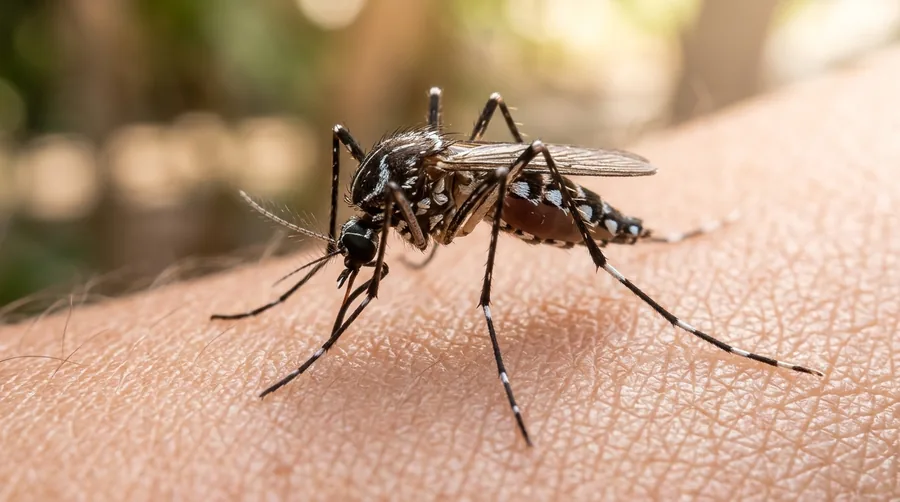
Dark yellow fever mosquito with white lyre-shaped markings on its back on skin
Recommended Products
See the full ranking →

What it does
The yellow fever mosquito is a daytime biter that strongly prefers human blood and often lives closely with people, biting indoors and around homes. Only females feed on blood to make eggs; males take nectar. It is a cautious, low flier that frequently bites the ankles and legs and takes several small meals from different people, which aids disease spread.
Where it lives
It is a container specialist, breeding in artificial water sources in and around homes: vases, buckets, drums, saucers, tires, and clogged drains. Adults rest indoors in closets and dark corners and outdoors in shaded vegetation. In the US it is established across the South, from the Southeast and Gulf Coast into Texas and the Southwest.
How it breeds
Females lay drought-resistant eggs on the damp sides of containers just above the water; the eggs can survive dry for months and hatch when flooded. Larvae and pupae develop in the water, and adults can emerge in about a week to ten days in warm weather, producing many rapid generations each season.
What it eats
Adult females feed on blood, strongly favoring humans, to produce eggs; males feed on nectar and plant juices. The aquatic larvae feed on microorganisms and fine organic matter in the container water where they develop.
Identification
The yellow fever mosquito is a small, 4-7 mm, dark mosquito with white banding on the legs and a distinctive set of curved white lines forming a lyre or violin shape on the top of the thorax. That lyre pattern separates it from the Asian tiger mosquito, which has a single straight white stripe.
Signs of an infestation
- Daytime mosquito bites indoors and near the home
- Small dark mosquitoes resting in closets and corners
- Larvae wriggling in vases, buckets, or saucers
- Repeated bites on the ankles and lower legs
- Mosquito activity centered on the house, not the woods
Prevention tips
- Empty, scrub, and dry containers holding water weekly
- Cover water storage drums and barrels tightly
- Remove or drain tires, saucers, and clutter that holds water
- Treat containers you cannot empty with Bti larvicide
- Screen windows and doors and use EPA-registered repellent
Professional solutions
Because this mosquito breeds in and around homes and bites indoors, control combines diligent container source reduction with larviciding and, during disease outbreaks, coordinated professional or public-health adulticide programs. Eliminating every household water source is the most effective step; services add larvicide and targeted indoor and shaded resting-site treatments.
Health & safety
The yellow fever mosquito is a primary global vector of yellow fever, dengue, Zika, and chikungunya, and its preference for biting people makes it especially important to public health where these viruses occur. Most US bites cause only itching, but during local outbreaks the risk is real. Prevent bites, destroy breeding water, and heed local health guidance.
Relevant Products


Frequently asked questions
How is the yellow fever mosquito different from the Asian tiger mosquito?
Both are dark, day-biting container breeders, but the yellow fever mosquito has curved white lines forming a lyre shape on its back, while the Asian tiger mosquito has one straight white stripe. The yellow fever mosquito also prefers human blood and bites indoors more readily.
What diseases does Aedes aegypti spread?
It is a primary carrier of yellow fever, dengue, Zika, and chikungunya where those viruses circulate. Most bites in the US cause only itching, but during local outbreaks the risk becomes real, which is why bite prevention and removing breeding water matter in affected southern areas.
Where does the yellow fever mosquito breed?
It breeds almost entirely in artificial containers in and around homes, such as vases, buckets, drums, saucers, and tires. Its eggs survive drying for months and hatch when reflooded, so emptying and scrubbing containers weekly and covering water storage are the most effective controls.
Fact-checked by Morgan Vance, Editorial Director (editorial review, not a professional pest-control or medical sign-off). Last reviewed August 10, 2026. We correct anything a reader shows us is wrong — see our corrections policy.