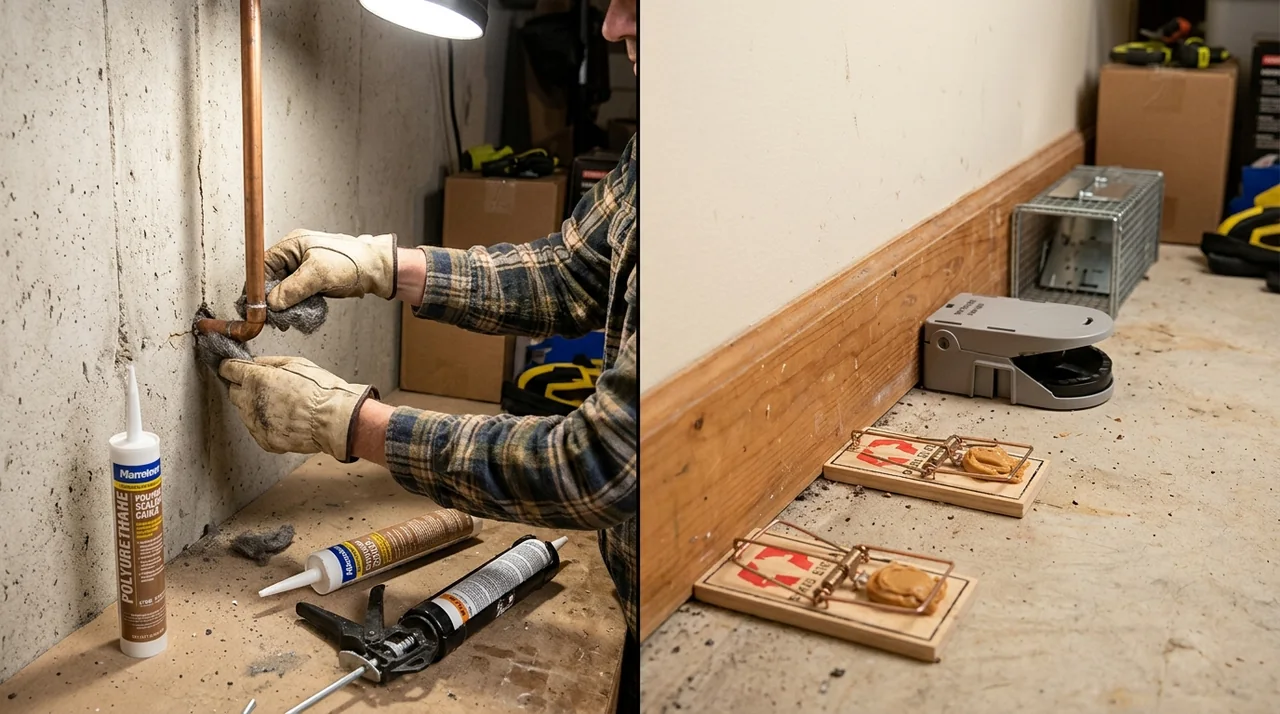


Getting rid of mice comes down to two tasks done together: closing the gaps that let them in, and removing the ones already inside. Do only one and the problem persists, seal without trapping and you trap survivors indoors, trap without sealing and new mice keep arriving. This guide walks through both, and pairs with the materials-and-placement companion in this section.
Find and Seal the Entry Points
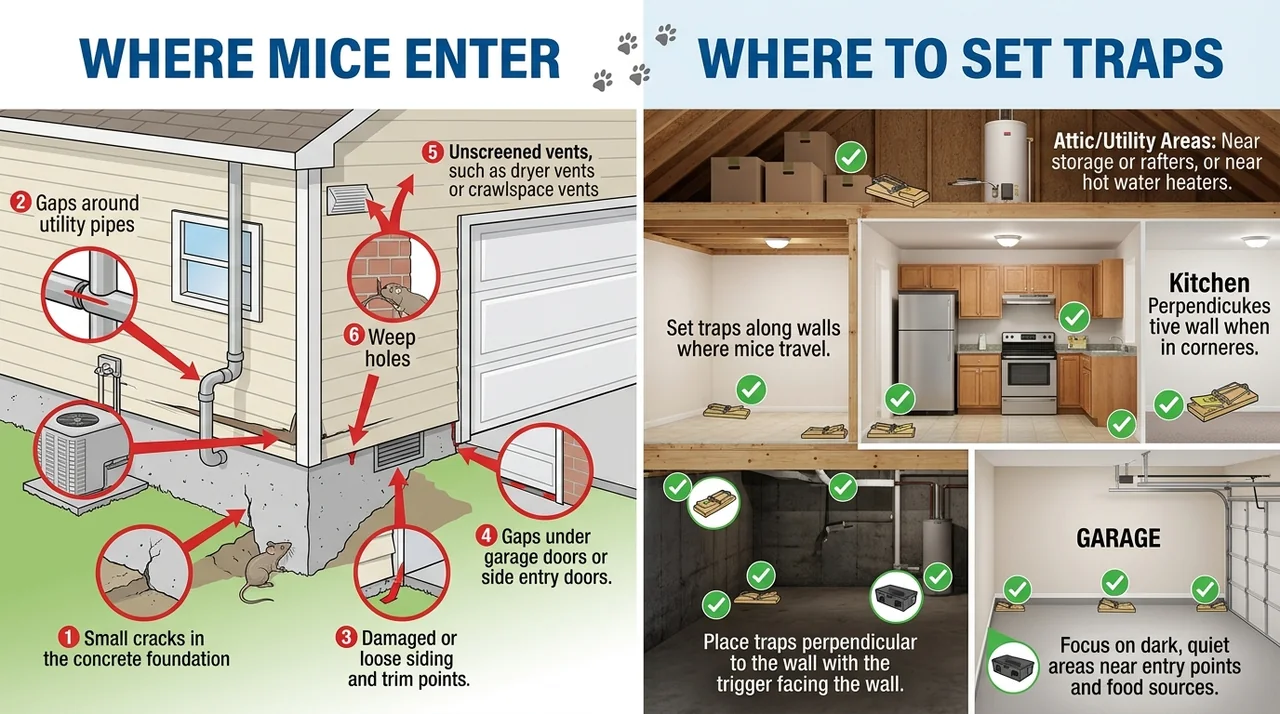
Mice are remarkably compressible: an adult can squeeze through a gap about the size of a dime, roughly a quarter-inch. So the inspection has to be thorough. Walk the exterior and the interior perimeter looking for:
- Gaps where pipes, wires, cables, and the dryer vent pass through walls.
- Openings under and around exterior doors and the garage door.
- Foundation cracks, gaps at the sill plate, and spaces behind siding.
- Vents, weep holes, and the area around the AC line set.
Set Traps Where Mice Actually Travel
Placement matters more than the type of trap. Mice run along walls and edges, rarely crossing open floor, and they explore with their whiskers, so:
- Position traps flush against the wall, with the trigger end toward the baseboard, so a mouse encounters it while running its usual route.
- Place traps close together, every few feet, in areas with droppings, gnaw marks, or grease trails.
- Focus on hidden runways: behind appliances, under sinks, in cabinet corners, along garage walls, and in the attic if there is activity there.
- Bait sparingly with something sticky, a dab of peanut butter works well, so the mouse has to work at it and triggers the trap.
Handle and Monitor Safely
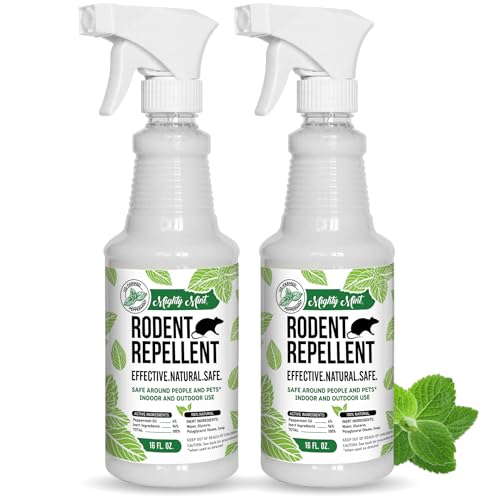
Wear disposable gloves when handling traps and dead mice, and place carcasses and droppings in a sealed bag for disposal; avoid stirring up dust from droppings, which can carry disease. When cleaning a soiled area, dampen droppings with a disinfectant first rather than sweeping or vacuuming them dry. Keep traps out of reach of children and pets, or use enclosed trap stations. Check traps daily, reset as needed, and keep going until activity stops. You will know the population is under control when fresh droppings, new gnaw marks, and nighttime scratching noises stop appearing; leave a few traps in place afterward to catch any newcomers. If you choose to use rodenticide bait instead of or alongside traps, follow the EPA-approved label exactly and use tamper-resistant stations; for any accidental exposure to a person or pet, call Poison Control at 1-800-222-1222.