
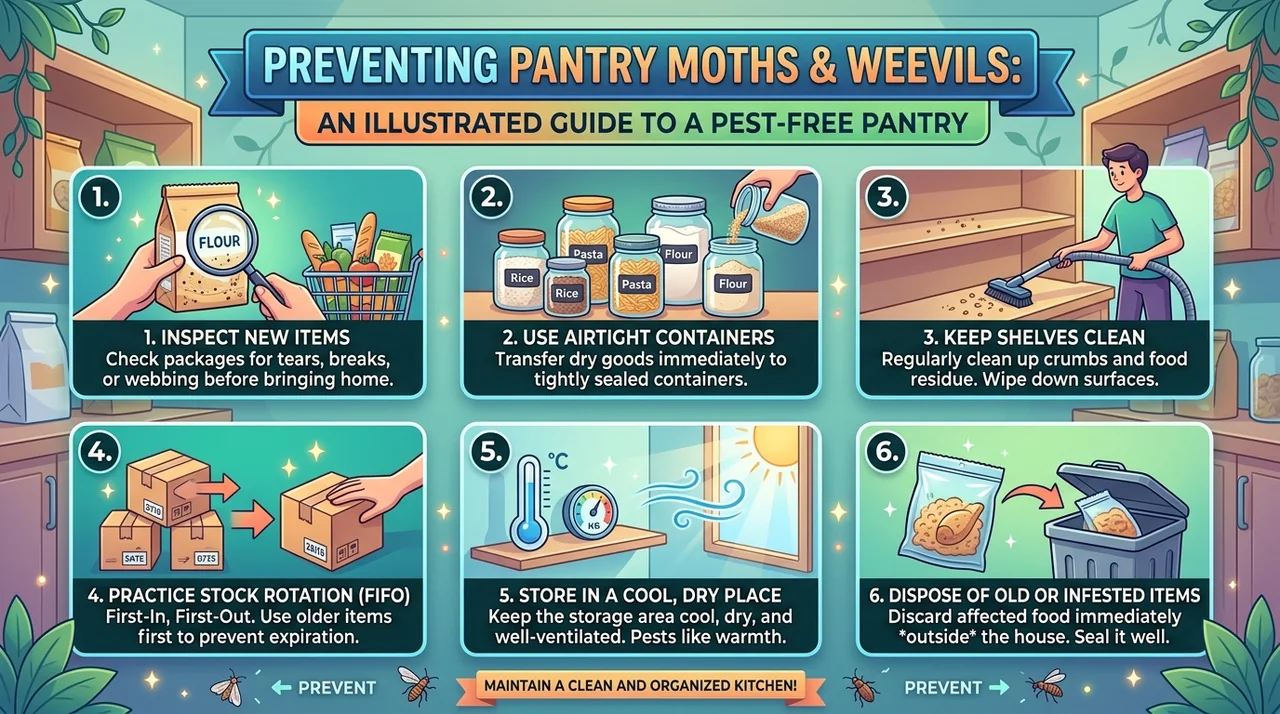


Pantry pests, chiefly Indianmeal moths and weevils, infest stored dry foods like flour, grains, cereal, rice, pet food, and dried fruit. What surprises most people is that these insects usually arrive inside the packaging you bring home, not from the house itself. Preventing them is about controlling what comes in and denying them a place to breed, which this guide covers alongside the broader food-storage protection in this section.
Know the Culprits
Indianmeal moths are the most common pantry moth. The small adult moths (with distinctive two-toned wings) are harmless themselves, but their larvae, small caterpillars, are the feeding stage, and they leave behind silky webbing in and around infested food. You may notice the webbing, larvae, or moths flying near the ceiling before you find the source.
Weevils (including rice, granary, and flour weevils) are small beetles, some with a distinctive snout, that infest whole grains, rice, and flour. The "bran bugs" or "flour bugs" people find are usually these beetles or their larvae.
Neither is dangerous to eat accidentally, and they do not damage the home or bite. The problem is contamination and waste: an infestation can spread from one opened bag to every susceptible food in the pantry.
Stop Them at the Door
Because these pests typically hitchhike in on food, prevention starts at purchase and storage:
- Inspect packaging at the store and at home; avoid bags or boxes that are torn, damaged, or past date.
- Transfer dry goods into airtight containers of glass, metal, or hard plastic as soon as you get home. This both keeps new pests out and traps any that arrived, preventing spread to other foods. Original paper and cardboard packaging is easily chewed through.
- Buy in amounts you will use within a reasonable time, and rotate stock so older items are used first.
- Freeze vulnerable items for several days after purchase; deep cold kills any eggs or larvae hiding in flour, grains, or nuts.
- Keep the pantry clean and dry, wiping up spilled flour and crumbs where larvae can develop.
If You Find an Infestation
Finding webbing, moths, or beetles means acting decisively:
- Discard infested and any potentially contaminated open packages in an outdoor trash bin.
- Empty the pantry completely and vacuum shelves, corners, cracks, and crevices, where larvae pupate, then wipe down surfaces. Empty the vacuum outdoors afterward.
- Check every susceptible item, including unopened packages and pet food, since larvae can chew into sealed bags.
- Store the salvaged and replacement goods in airtight containers going forward.