
Indianmeal Moth
Plodia interpunctella · also called Indian meal moth, pantry moth, grain moth
Quick answer
The Indianmeal moth (Plodia interpunctella) is the most common pantry moth, recognized by forewings that are pale gray at the base and coppery at the tips. Its caterpillars spin silk webbing through flour, cereal, dried fruit, nuts, and pet food. The larvae, not the adults, cause the damage and contamination.
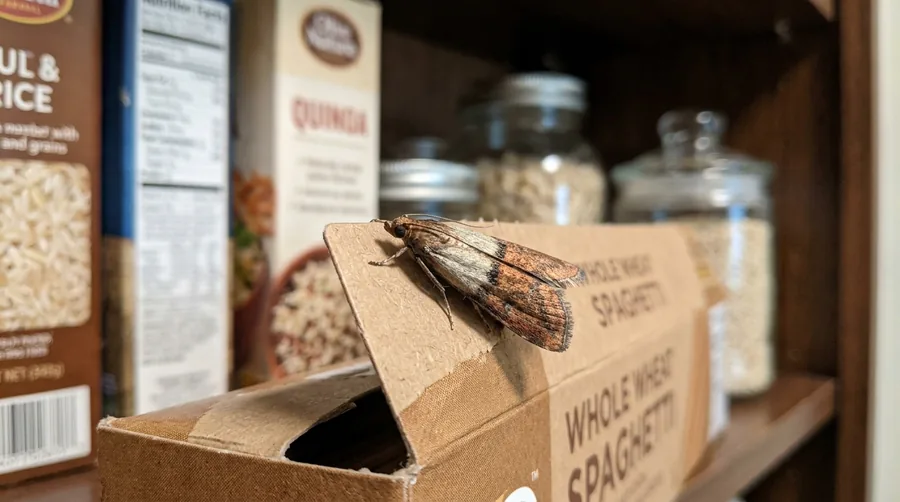
Small moth with pale gray base and coppery wingtips resting on a pantry shelf
Recommended Products
See the full ranking →

What it does
Only the larvae feed; adults do not eat and live just to mate and lay eggs. Caterpillars tunnel through dry food, spinning silk webbing that mats the surface and binds particles together. When mature, larvae often crawl away from the food to pupate on walls and ceilings, and adults flutter in a distinctive zigzag near the pantry.
Where it lives
The Indianmeal moth infests dry stored foods in home pantries, kitchens, grocery stores, and warehouses. Larvae are found in flour, cereal, grains, dried fruit, nuts, seeds, chocolate, pet food, and birdseed. It is one of the most common stored-food pests nationwide and thrives at normal indoor temperatures.
How it breeds
A female lays up to a few hundred tiny eggs on or near food. Larvae hatch, feed and web for several weeks, then pupate in a silk cocoon, often away from the food. Several overlapping generations occur each year indoors, so an infestation can persist and rebound if any source is missed.
What it eats
Larvae eat a wide range of dry foods: flour, cereal, cornmeal, grains, dried fruit, nuts, seeds, chocolate, spices, pet food, and birdseed. This broad diet lets infestations jump between many pantry items if products are left open or unsealed.
Identification
Adults have a roughly 5/8-inch wingspan, with forewings pale gray toward the body and coppery-bronze toward the tips, a very distinctive two-tone pattern. Larvae are off-white to pinkish caterpillars up to about 1/2 inch, often found trailing silk. Silk webbing in food is a hallmark sign.
Signs of an infestation
- Silk webbing clumping cereal, flour, or grain
- Small caterpillars in or on dry food
- Two-tone copper-and-gray moths flying near the pantry
- Cocoons or larvae on walls, shelf edges, and ceilings
- Clumped, webbed pet food or birdseed
Prevention tips
- Store dry foods in airtight glass or hard-plastic containers
- Inspect and use older packages first
- Freeze grains, nuts, and dried fruit for several days after buying
- Clean shelf cracks, corners, and spilled crumbs
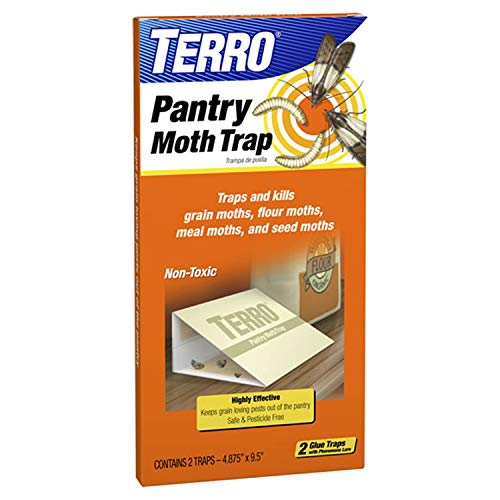
- Use pantry moth pheromone traps to monitor for adults
Professional solutions
Most Indianmeal moth problems are solved without a pro by finding and discarding every infested item, deep-cleaning shelves and cracks, and using airtight storage plus pheromone traps to monitor. Persistent or store-wide infestations, or ones where the source cannot be found, warrant a professional inspection and treatment.
Health & safety
Indianmeal moths do not bite, sting, or transmit disease, and they do not damage the home structure. The issue is contamination of stored food with larvae, webbing, and droppings. Eating a small amount accidentally is not considered harmful, but infested food should be discarded.
Relevant Products


Frequently asked questions
What are the little moths flying around my kitchen?
Small moths with pale gray wings tipped in coppery-bronze, flying in a zigzag near the pantry, are almost certainly Indianmeal moths. They come from larvae feeding in stored dry foods like flour, cereal, nuts, or pet food, so the next step is to find and discard the infested source.
Do pantry moth traps get rid of Indianmeal moths?
Pheromone traps attract and catch adult males and are excellent for monitoring and confirming an infestation, but they do not stop the larvae doing the damage. The real fix is finding and throwing out infested food and deep-cleaning, with traps used to track whether the problem is resolved.
How do I keep Indianmeal moths from coming back?
Store all dry goods in airtight containers, freeze new grains, nuts, and dried fruit for a few days to kill hidden eggs, and clean shelf cracks and spills. Using older stock first and monitoring with pheromone traps helps catch any new activity early.
Fact-checked by Morgan Vance, Editorial Director (editorial review, not a professional pest-control or medical sign-off). Last reviewed July 7, 2026. We correct anything a reader shows us is wrong — see our corrections policy.