
Merchant Grain Beetle
Oryzaephilus mercator · also called merchant grain beetles, saw-toothed grain beetle look-alike
Quick answer
The merchant grain beetle (Oryzaephilus mercator) is a tiny, flat, dark-brown beetle with six sawtooth-like projections along each side of its thorax. It infests processed foods like cereal, oats, nuts, and pet food in pantries and warehouses. It does not bite or spread disease, but contaminates stored food and breeds quickly indoors.
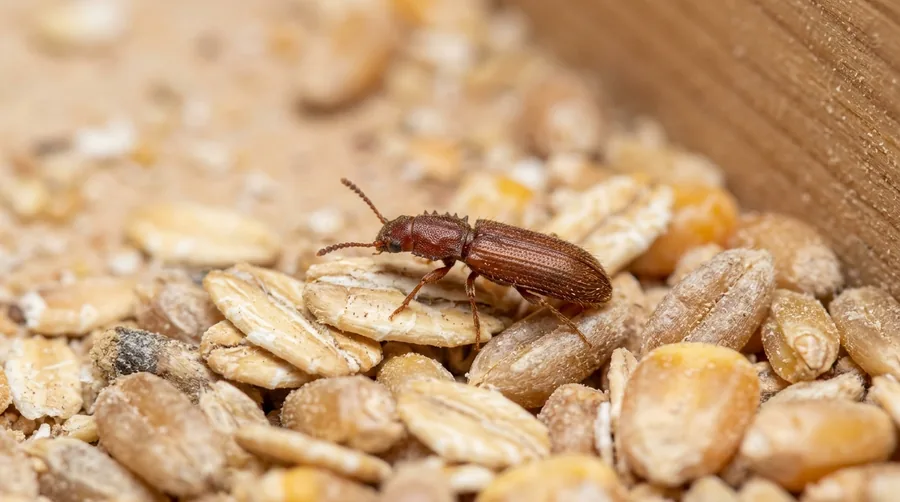
Tiny flat dark-brown merchant grain beetle with sawtooth-edged thorax on spilled cereal
Recommended Products


What it does
Merchant grain beetles are active scavengers that crawl through packaged and bulk food, both adults and larvae feeding on the contents. Adults can fly and are drawn to light, helping them spread between packages and rooms. Their flat bodies let them slip inside cardboard boxes and paper bags that look sealed.
Where it lives
They live wherever processed, oil-rich foods are stored: home pantries, cabinets, and pet-food bins, plus warehouses, mills, and grocery shelves. They favor cereal, oatmeal, nuts, dried fruit, chocolate, and seeds. Unlike weevils, they cannot bore into sound whole grain and instead exploit broken or processed material nationwide.
How it breeds
Females lay small white eggs loosely in or near food. Pale, slender larvae hatch, feed, and pupate within the food, completing a generation in roughly three to five weeks under warm conditions. Several overlapping generations a year are common in heated storage, so numbers build fast once established.
What it eats
They prefer processed, high-oil foods such as cereal, rolled oats, nuts, seeds, dried fruit, and pet food, and will also feed on flour, pasta, and grain dust. They cannot attack undamaged whole kernels and rely on already-broken or milled products.
Identification
Adults are about 1/8 inch, flat, and dark brown, with six tooth-like projections on each side of the thorax. They look nearly identical to the sawtoothed grain beetle; the merchant species has larger eyes and can fly, while the sawtoothed cannot. Larvae are tiny, cream-colored, and worm-like.
Signs of an infestation
- Small brown beetles crawling in or near packaged foods
- Beetles wandering on pantry shelves and counters
- Fine powder, webbing-free residue, or holes chewed in packaging
- Live insects found when opening cereal, oats, or pet food
- Beetles gathering at windows or lights after flying
Prevention tips
- Store dry goods in airtight glass or hard-plastic containers
- Use older stock first and check expiration dates
- Wipe up spilled grain, flour, and crumbs in cabinets
- Inspect new packages before adding them to the pantry
- Freeze susceptible foods for a few days to kill hidden eggs
Professional solutions
Most home infestations are solved without a pro by finding and discarding the source, then cleaning shelves thoroughly. A pest professional is worth calling for recurring problems, warehouse or retail settings, or when the source cannot be located, where they can inspect, treat cracks and voids, and set monitoring.
Health & safety
Merchant grain beetles do not bite, sting, or transmit disease, and they do not damage the home structure. The main issue is food contamination and waste; infested products should be discarded. Accidentally eating a few in processed food is not considered harmful, but spoiled food should be thrown out.
Relevant Products


Frequently asked questions
How did merchant grain beetles get in my sealed pantry?
They usually arrive already inside a food package from the store, since their flat bodies fit through tiny gaps in cardboard and paper. Once inside, adults can fly to other packages. Checking and freezing new dry goods, and using airtight containers, helps stop them from spreading.
Are merchant grain beetles harmful to eat?
They are not known to bite, sting, or carry disease, and swallowing a few in processed food is not considered dangerous. Still, infested food is contaminated and should be discarded, both for quality and because populations grow quickly if the source is left in place.
How do I get rid of merchant grain beetles?
Find and throw out every infested package, vacuum shelf cracks and corners, and wipe cabinets clean. Store remaining dry goods in airtight containers and freeze anything suspect for several days. This source-removal approach solves most home infestations without insecticides.
Fact-checked by Morgan Vance, Editorial Director (editorial review, not a professional pest-control or medical sign-off). Last reviewed June 18, 2026. We correct anything a reader shows us is wrong — see our corrections policy.