Imported Cabbageworm
Pieris rapae · also called cabbage white, cabbageworm, imported cabbage worm
Quick answer
The imported cabbageworm (Pieris rapae) is the velvety green caterpillar of the common white cabbage butterfly. It chews large, ragged holes in cabbage, broccoli, kale, and other cole crops and leaves dark green droppings. Introduced from Europe, it is a familiar garden pest across the US. It is harmless to people but can quickly damage vegetables.
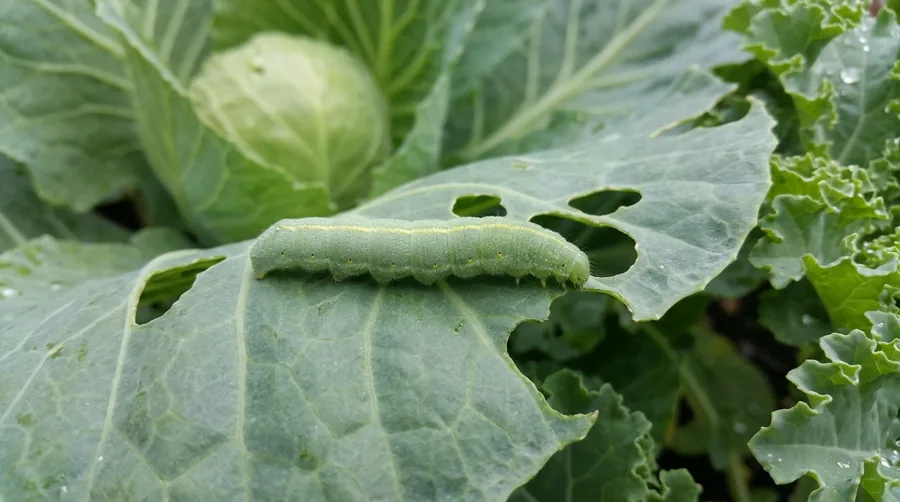
Velvety green imported cabbageworm caterpillar feeding on a chewed cabbage leaf
Recommended Products


What it does
Imported cabbageworms chew large, irregular holes in the leaves of cole crops and bore into cabbage and broccoli heads. Their color blends with the foliage, so damage and droppings are often noticed before the caterpillar. The white adult butterflies flutter over gardens by day, laying eggs, while the caterpillars feed steadily for a couple of weeks.
Where it lives
This pest is found wherever cole crops grow: home vegetable gardens, market gardens, and farms across the entire US and southern Canada. Adults are active in sunny gardens and fields; the caterpillars stay on the host plants, favoring cabbage, broccoli, cauliflower, kale, collards, and related mustards.
How it breeds
There are several generations a year, more in warm climates. The butterfly lays single, bullet-shaped yellow eggs on the undersides of leaves. Caterpillars hatch, feed for one to two weeks through several instars, then form a chrysalis on the plant or nearby. It overwinters as a chrysalis, with adults emerging in spring.
What it eats
The caterpillars eat the leaves and heads of plants in the cabbage family, including cabbage, broccoli, cauliflower, kale, collards, turnips, and radishes. Adult butterflies sip flower nectar and do no crop damage. They do not feed on unrelated plants or anything indoors.
Identification
The caterpillar is velvety green with a faint yellow stripe down the back and broken yellow dashes along the sides, growing to about an inch. It is sluggish and well camouflaged. The adult is a white butterfly with black wing tips and one or two black spots per forewing. Ragged holes and green pellet droppings are common clues.
Signs of an infestation
- Large, ragged holes chewed in cole-crop leaves
- Dark green pellet droppings on and between leaves
- Velvety green caterpillars along leaf veins and in heads
- White butterflies flitting over the garden by day
- Bored, contaminated cabbage and broccoli heads
Prevention tips
- Cover cole crops with floating row covers to block egg-laying butterflies
- Handpick caterpillars and crush eggs on leaf undersides
- Encourage parasitic wasps and other natural enemies
- Rotate crops and clear old cole-crop debris after harvest
- Inspect plants often, since early control is easiest
Professional solutions
Imported cabbageworm is usually manageable without professional help. Row covers, handpicking, and biological sprays such as Bt (Bacillus thuringiensis) or spinosad, applied while caterpillars are small and following the label, give good control. For larger plantings, a garden advisor or applicator can recommend a labeled spray program that protects pollinators.
Health & safety
The imported cabbageworm is harmless to people and pets; it does not bite, sting, spread disease, or irritate skin. The concern is purely garden damage: caterpillars can riddle leaves and contaminate cabbage and broccoli heads with droppings. Soaking harvested heads in salt or vinegar water helps flush out any hidden caterpillars before cooking.
Relevant Products


Frequently asked questions
What is eating holes in my cabbage and kale?
The most common culprit is the imported cabbageworm, a velvety green caterpillar that blends into the leaves. Look for large ragged holes, dark green pellet droppings, and small white butterflies over the garden. Handpicking, row covers, and Bt sprays while caterpillars are small keep them in check.
How do I get rid of cabbageworms naturally?
Cover plants with floating row covers to stop the butterflies laying eggs, handpick caterpillars, and crush the yellow eggs on leaf undersides. The biological insecticide Bt targets caterpillars specifically and spares pollinators. Encouraging parasitic wasps and rotating crops also reduces their numbers over time.
Are cabbageworms safe if I accidentally eat one?
Yes. Cabbageworms are not toxic and pose no health risk if eaten, just an unappetizing surprise. To clean infested heads, soak them in salt water or a vinegar solution for a few minutes so any hidden caterpillars float out, then rinse before cooking.
Fact-checked by Morgan Vance, Editorial Director (editorial review, not a professional pest-control or medical sign-off). Last reviewed August 8, 2026. We correct anything a reader shows us is wrong — see our corrections policy.