
Cankerworm
Alsophila pometaria (fall); Paleacrita vernata (spring) · also called inchworm, looper, spanworm
Quick answer
Cankerworms are the looping inchworm caterpillars of two native moths, the fall cankerworm (Alsophila pometaria) and spring cankerworm (Paleacrita vernata). They chew holes in the leaves of shade and fruit trees each spring, and in outbreak years can defoliate whole canopies. They do not bite or harm people, and healthy trees usually recover.
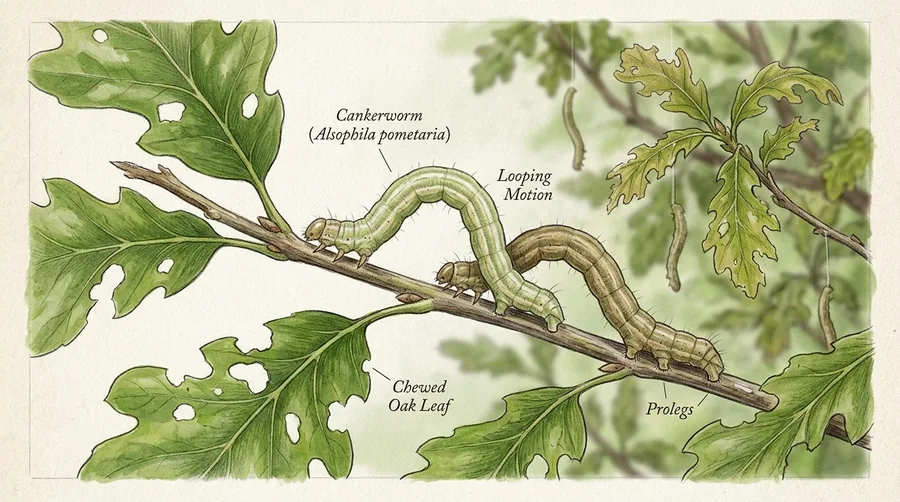
Green cankerworm inchworm looping along a tree leaf it has chewed full of holes
Recommended Products


What it does
Cankerworms are inchworms: they move by looping the body, since they lack the middle legs. In spring the caterpillars chew small holes in newly opened leaves, expanding to eat all but the veins in heavy years. They dangle from trees on silk threads to disperse on the wind. Repeated defoliation stresses trees, though a single year is rarely fatal.
Where it lives
Cankerworms feed in deciduous shade, forest, and fruit trees such as elm, oak, maple, apple, and linden, in yards, streets, and woodlands. The wingless females crawl up trunks to lay eggs, so infestations often recur on the same trees. They are widespread across the eastern, midwestern, and southeastern US.
How it breeds
There is one generation a year. Wingless female moths climb tree trunks in late fall (fall cankerworm) or early spring (spring cankerworm) to lay eggs on twigs and bark. Eggs hatch as buds open in spring, and the caterpillars feed for several weeks, then drop to pupate in the soil until the adults emerge.
What it eats
The caterpillars eat the leaves of many hardwood and fruit trees, chewing holes and, in outbreaks, stripping foliage to the midribs. Adult moths do not feed on leaves. They do not attack conifers, garden vegetables, or anything indoors.
Identification
Caterpillars are about an inch long, green to brownish with thin pale stripes along the sides, and loop as they crawl. Fall and spring cankerworms look similar and are hard to tell apart in the field. The adult female is a drab, wingless moth; the male is gray-winged. Look for looping larvae, chewed leaves, and silk threads.
Signs of an infestation
- Small holes chewed in expanding spring leaves
- Looping green or brown inchworms on foliage
- Caterpillars dangling from trees on silk threads
- Heavy leaf loss or bare branches in outbreak years
- Frass (droppings) raining down under infested trees
Prevention tips
- Wrap sticky bands around trunks in fall to trap climbing wingless females
- Encourage birds and natural predators that eat the caterpillars
- Keep trees vigorous with proper watering and mulch to aid recovery
- Monitor buds in spring and act early if leaves show chewing
- Rake and remove leaf litter to reduce pupae where practical
Professional solutions
Most cankerworm damage is cosmetic and healthy trees releaf, so control is often unnecessary. For valued or repeatedly defoliated trees, an arborist can apply a well-timed biological spray such as Bt (Bacillus thuringiensis) or spinosad while caterpillars are small, or install sticky bands. Large or tall trees are best treated by professionals with proper equipment.
Health & safety
Cankerworms pose no health risk to people or pets. They do not bite, sting, spread disease, or cause the skin irritation of some hairy caterpillars. The nuisance is caterpillars dropping on silk and frass falling from trees. The real cost is to trees, since repeated defoliation over years can weaken or occasionally kill them.
Relevant Products


Frequently asked questions
What are the little inchworms dropping from my trees?
In spring, dangling green or brown looping caterpillars are usually cankerworms. They hatch as tree buds open, chew holes in the leaves, and drop on silk threads to disperse. They are harmless to people but can heavily defoliate shade and fruit trees in outbreak years.
Do cankerworms kill trees?
Usually not from a single year. Healthy trees releaf after spring defoliation. The risk comes from repeated, heavy defoliation over several years, which stresses a tree and can leave it vulnerable to other problems. Keeping trees vigorous and using sticky bands or well-timed sprays helps protect valued trees.
How do I stop cankerworms on my trees?
Wrap sticky bands around trunks in fall and early spring to trap the wingless females before they lay eggs. For active caterpillars on valued trees, a biological spray like Bt applied while they are small works well. Many homeowners simply tolerate the temporary damage, since trees recover.
Fact-checked by Morgan Vance, Editorial Director (editorial review, not a professional pest-control or medical sign-off). Last reviewed May 14, 2026. We correct anything a reader shows us is wrong — see our corrections policy.