Box Tree Moth
Cydalima perspectalis · also called box tree moth, boxwood moth, box moth
Quick answer
The box tree moth (Cydalima perspectalis) is an invasive pest whose green, black-striped caterpillars feed only on boxwood shrubs. Introduced from Asia and first found in the US in 2021, they strip leaves and spin webbing, and can defoliate or kill a hedge. The adult moth is harmless to people; the threat is to ornamental boxwoods.
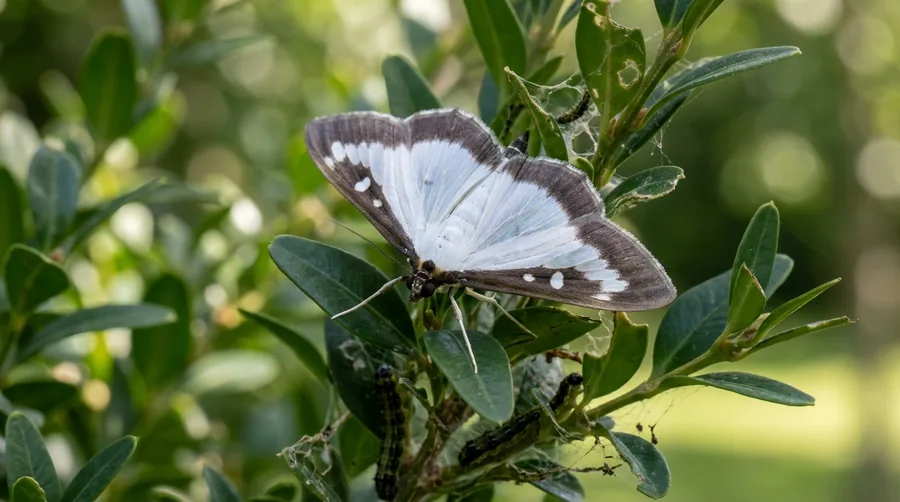
Green box tree moth caterpillar with black stripes feeding on a boxwood shrub laced with webbing
Recommended Products


What it does
Box tree moth caterpillars feed inside boxwood shrubs, hidden by webbing they spin among the leaves and stems. They chew leaves down to the skeleton and strip green bark, which can kill branches or whole plants. Damage often goes unnoticed until a hedge suddenly browns. Adult moths fly at night and are drawn to lights.
Where it lives
This invasive lives only where boxwood grows: home landscapes, formal gardens, hedges, and nurseries. Native to East Asia, it was first confirmed in the US in New York in 2021 and has since been found across parts of the Northeast, Midwest, and Southeast. It spreads mainly through the movement of infested nursery boxwood.
How it breeds
There are typically two to three generations a year. Females lay pale eggs in clusters on the undersides of boxwood leaves. Caterpillars feed and grow through several instars, then pupate in webbing within the shrub. Late-stage caterpillars overwinter tucked in the plant, resuming feeding in spring.
What it eats
In North America the caterpillars feed exclusively on boxwood (Buxus species), eating leaves and stripping bark. Adult moths sip nectar and do no plant damage. They attack no other landscape plants and nothing in the home.
Identification
Caterpillars are green-yellow with black stripes, white spots, and a black head, up to about 1.5 inches. The moth usually has white wings with a thick brown border, though a darker brown form exists, with a wingspan near 1.7 inches. Webbing, black frass, and skeletonized boxwood leaves are strong supporting clues.
Signs of an infestation
- Webbing spun through boxwood foliage
- Skeletonized or notched boxwood leaves
- Green-black striped caterpillars inside the shrub
- Green-black frass (droppings) on and under the plant
- Sudden browning or dieback of boxwood hedges
Prevention tips
- Inspect boxwoods often, especially new nursery plants, for caterpillars and webbing
- Buy boxwood only from reputable, inspected sources
- Handpick caterpillars and clip out webbed, infested shoots
- Use pheromone traps to detect adult moths early
- Report suspected box tree moth to your state agriculture department
Professional solutions
Because box tree moth is a regulated invasive, report suspected finds and follow local guidance before moving or disposing of boxwood. Small infestations respond to biological sprays such as Bt (Bacillus thuringiensis) or spinosad, timed to young caterpillars. Landscapers and licensed applicators can treat larger plantings and advise on saving valued hedges.
Health & safety
Box tree moths and their caterpillars are not harmful to people or pets. They do not bite, sting, or spread disease, and are not known to cause the skin irritation some other caterpillars do. The damage is strictly horticultural: loss of boxwood hedges and shrubs, which can be a significant landscape and financial loss.
Relevant Products




Frequently asked questions
What does box tree moth damage look like?
You will see boxwood leaves chewed to a skeleton or notched, fine webbing spun through the foliage, and green-black droppings on and under the shrub. Green caterpillars with black stripes hide inside. Badly hit boxwoods brown and can die, sometimes seemingly overnight once the leaves are stripped.
How do I get rid of box tree moth caterpillars?
For a few shrubs, handpick caterpillars, clip out webbed shoots, and spray a biological insecticide like Bt or spinosad while caterpillars are small. Pheromone traps help you catch outbreaks early. Because it is an invasive pest, also report finds to your state agriculture department.
Does box tree moth harm anything besides boxwood?
In North America the caterpillars feed only on boxwood (Buxus). They do not attack other landscape plants, vegetables, or trees, and the adult moth does no feeding damage. The concern is entirely for boxwood hedges and shrubs, which the caterpillars can defoliate and kill.
Fact-checked by Morgan Vance, Editorial Director (editorial review, not a professional pest-control or medical sign-off). Last reviewed August 12, 2026. We correct anything a reader shows us is wrong — see our corrections policy.